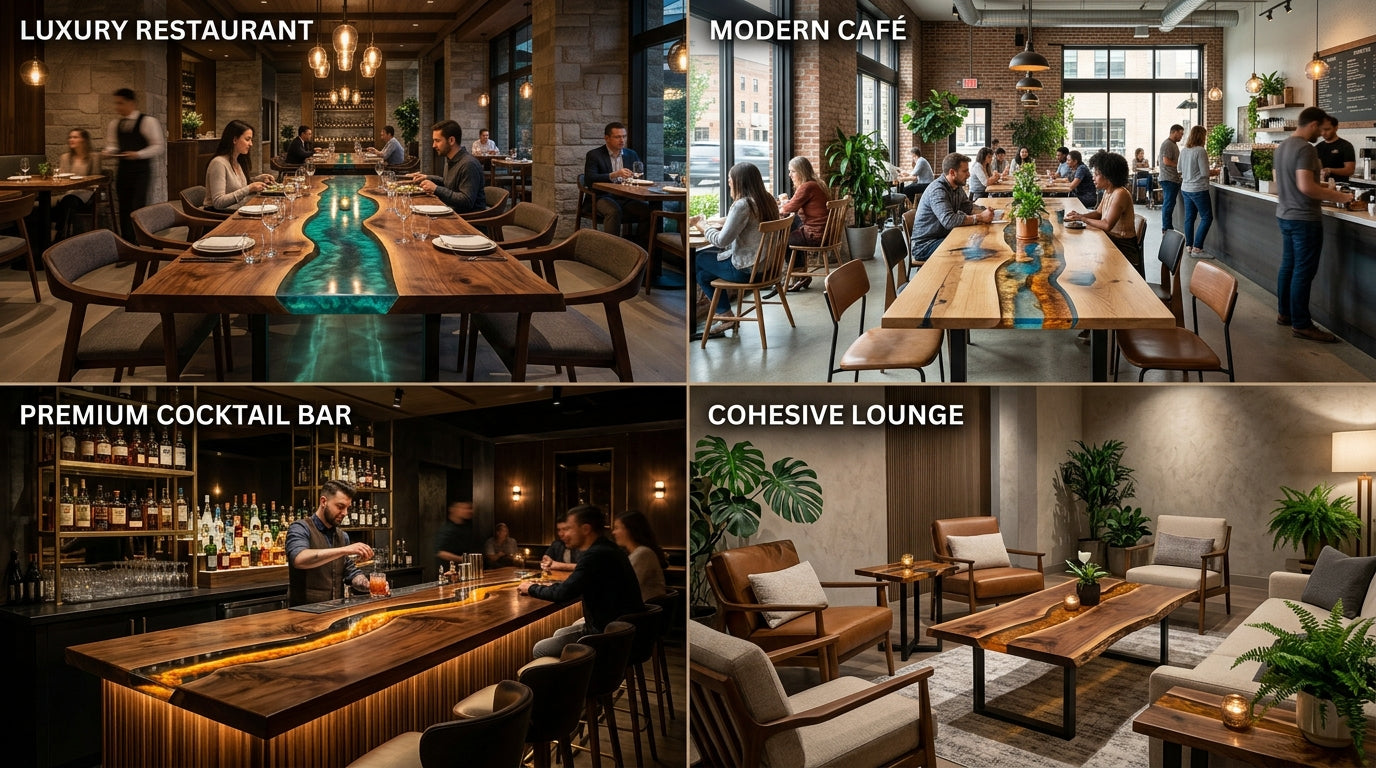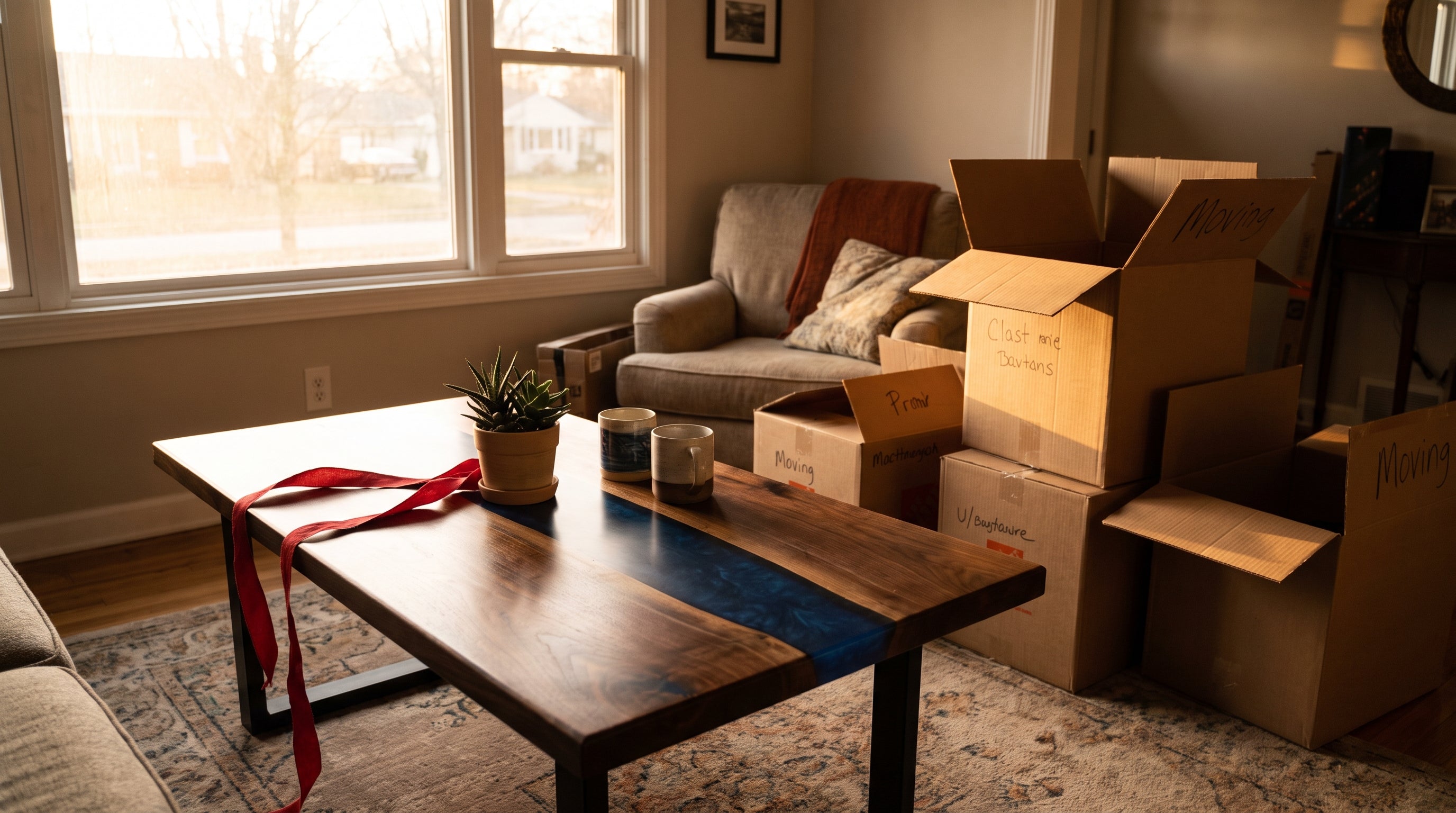
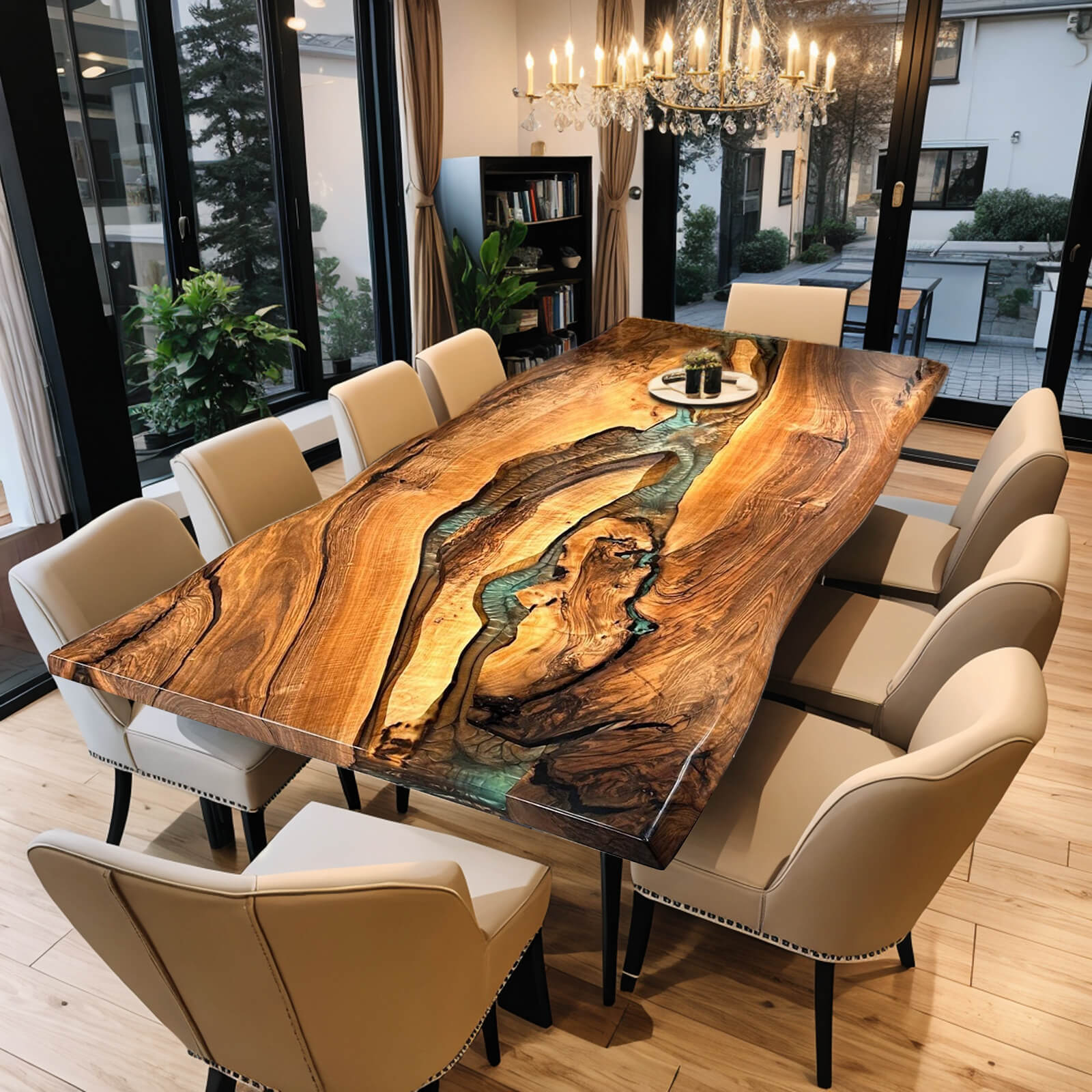
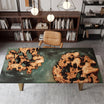
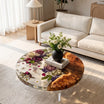
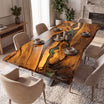


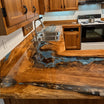


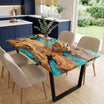
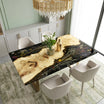
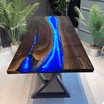
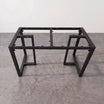




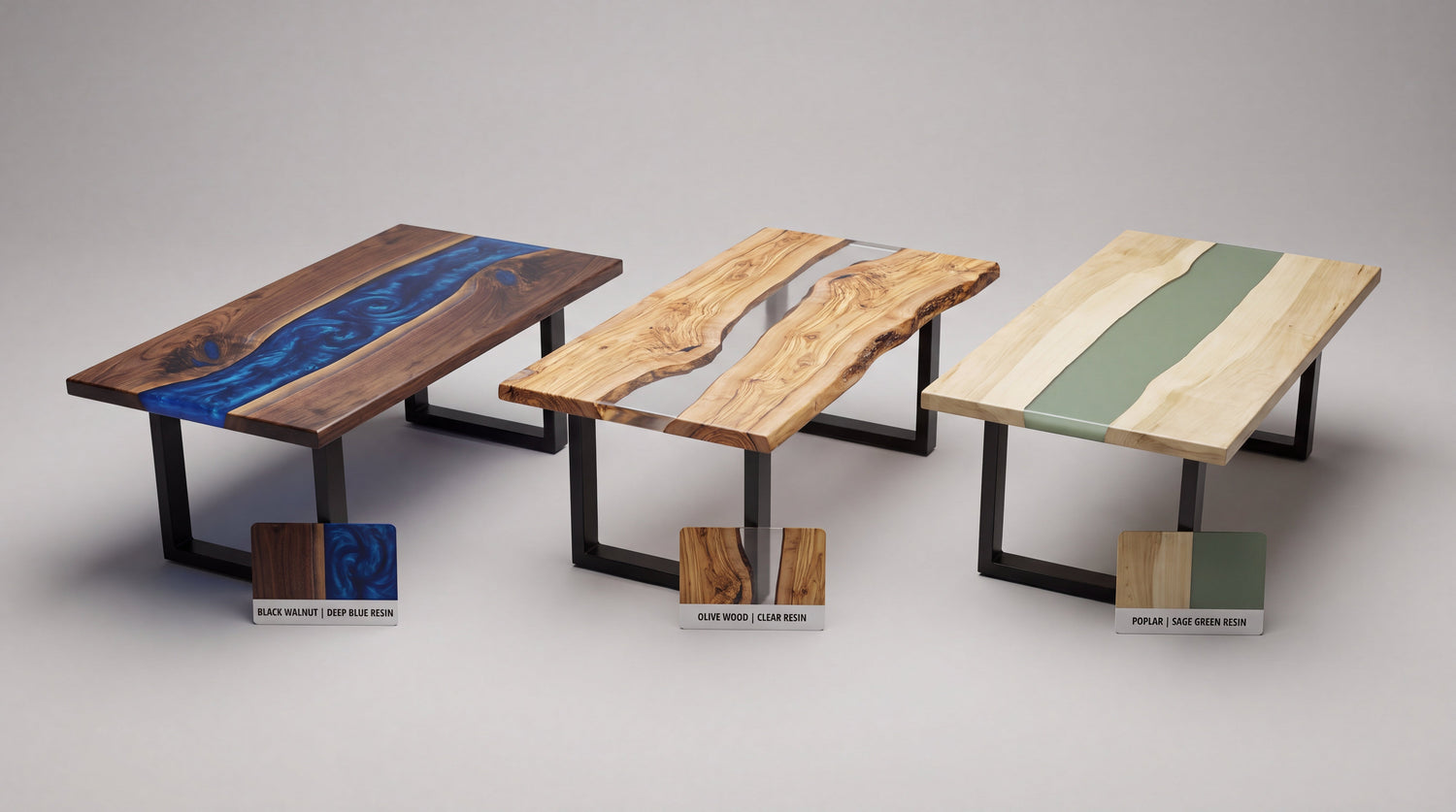
Quick Answer: For the boldest, darkest grain and top-tier long-term value, Black Walnut is the best choice. For a warmer, swirling grain at a mid-range price, Olive Wood wins. For the most budget-friendly option with a clean, pale canvas that takes resin color beautifully, Poplar is the smart pick. All three are genuine hardwood slabs, kiln-dried and epoxy-sealed, built to last generations rather than seasons.
If you've spent any time researching a custom epoxy resin table, you've already run into the same question three different ways: which slab do I actually pick? Unlike mass-produced furniture, a river table isn't a spec sheet — it's a piece of raw material that will define how your table looks, feels, and holds up for decades. As more homeowners move away from disposable, trend-chasing furniture and toward heirloom-quality furniture they can pass down, choosing the right wood has become the single most consequential decision in the design process. Below, we break down the three most popular slab options on the only three variables that actually matter: grain, durability, and price.
Black Walnut: The Statement Piece

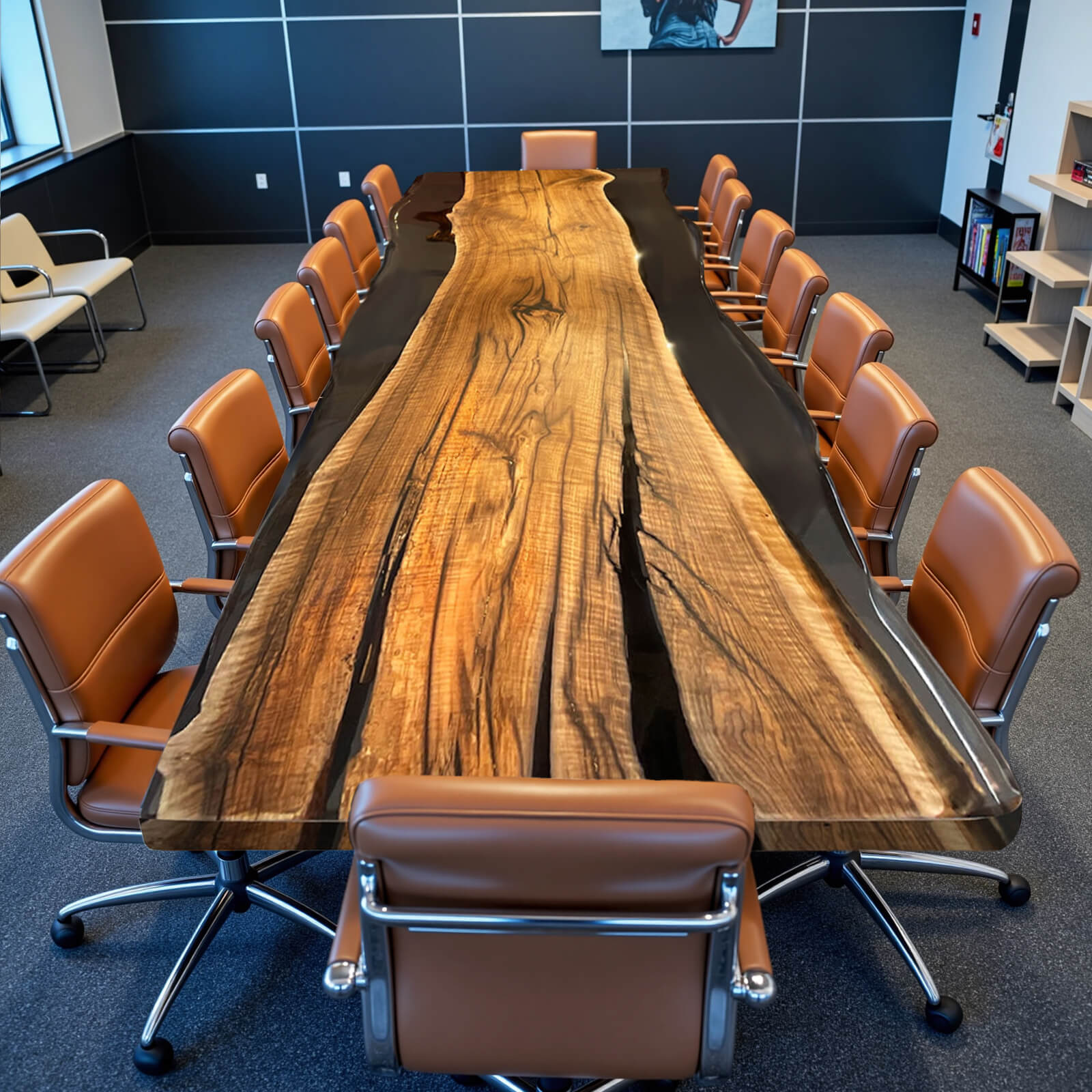
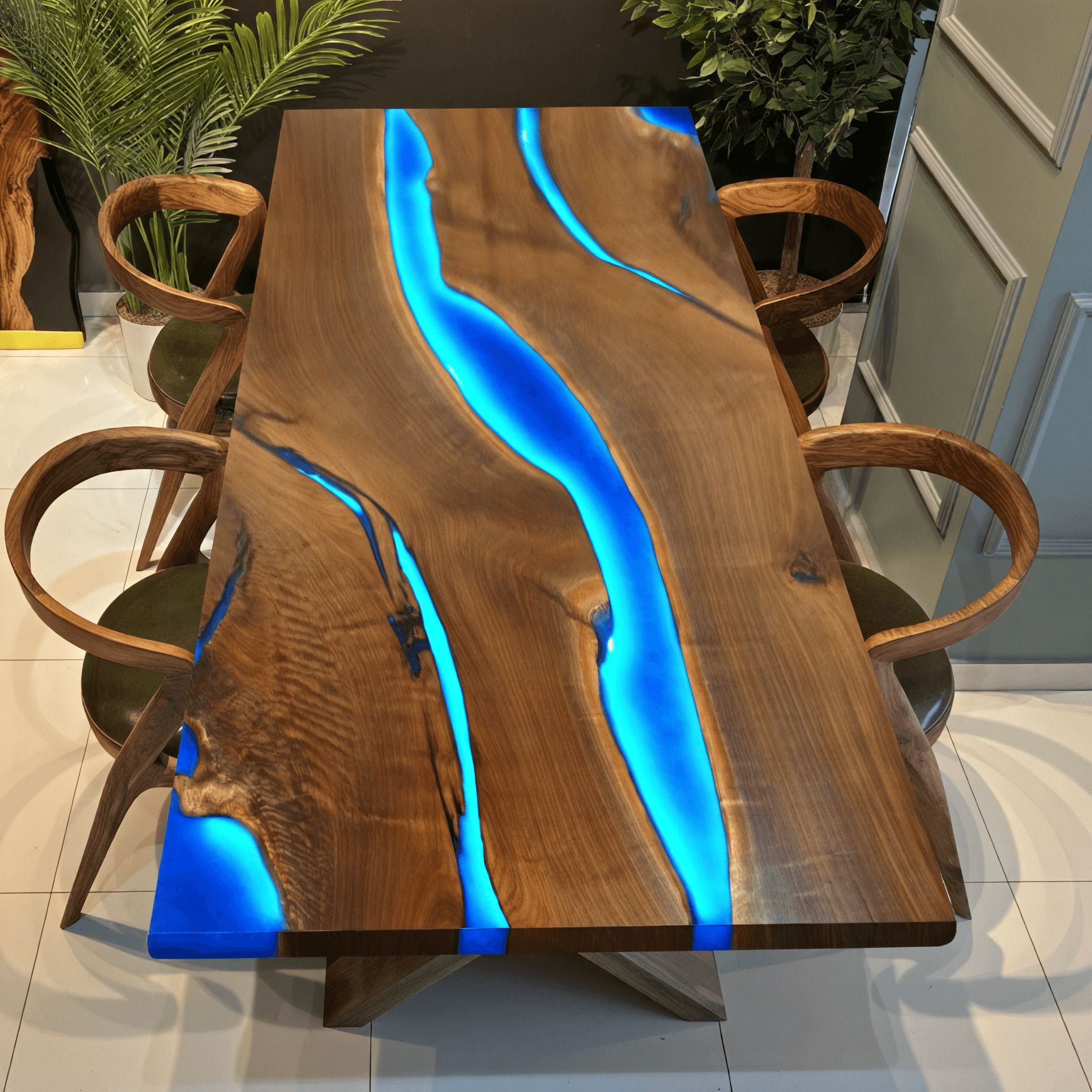
Black Walnut is the wood most people picture when they imagine a luxury river table — deep chocolate-brown tones, dramatic contrast, and a tight, straight grain that photographs beautifully under any lighting. It's also one of the most stable American hardwoods, meaning it resists warping and expansion better than most alternatives, which matters enormously once resin is poured and cured around it.
Grain: Rich, dark, and highly consistent, with occasional lighter sapwood streaks that add character without looking chaotic.
Durability: Excellent. Walnut is dense, dent-resistant, and ages gracefully — it tends to deepen in color over time rather than fade.
Price: The most expensive of the three, reflecting both slower tree growth and consistently high demand.
Black Walnut is the choice for anyone building a one-of-a-kind centerpiece meant to anchor a formal dining room or an executive office — a genuine investment piece rather than a trend purchase.
Olive Wood: The Warm Middle Ground

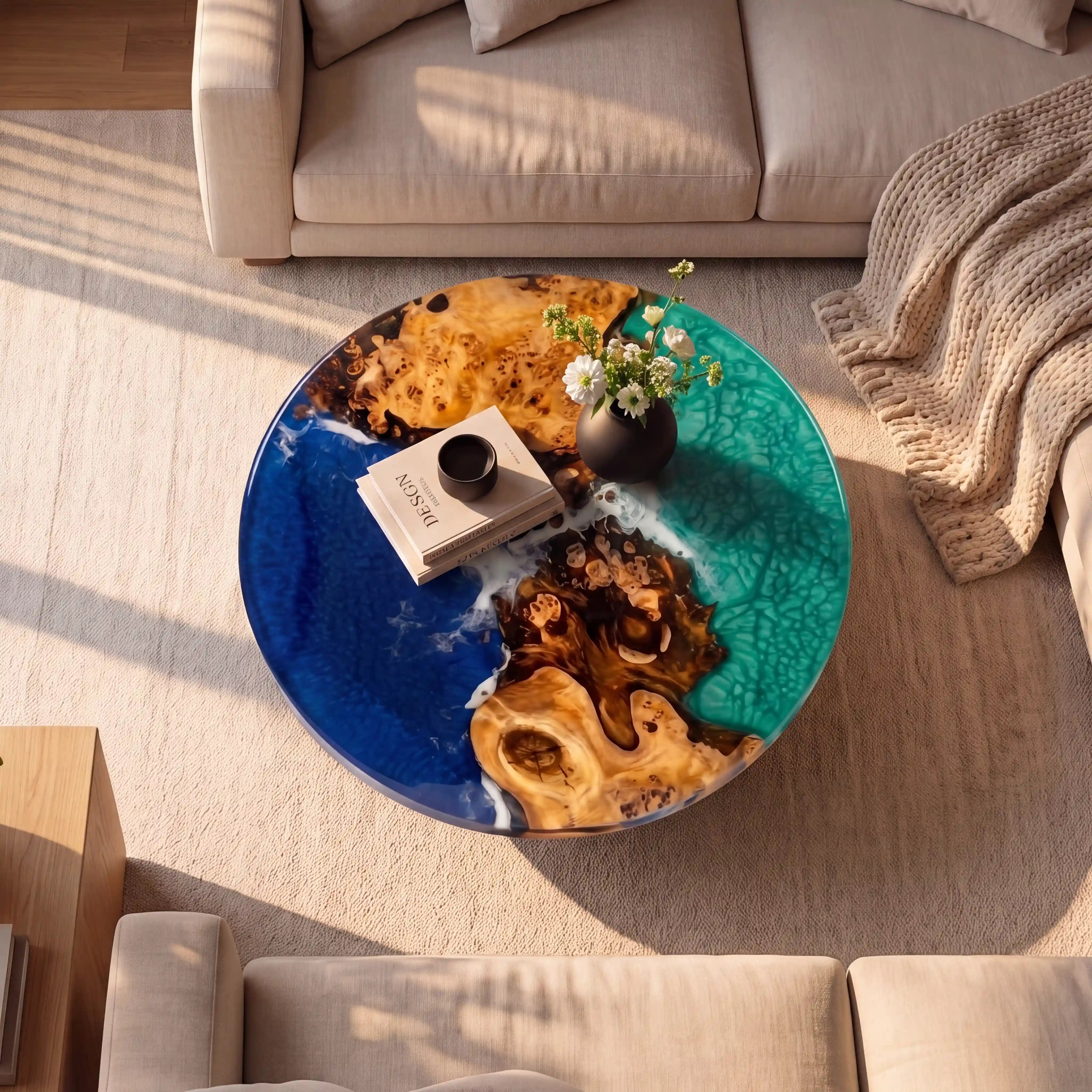
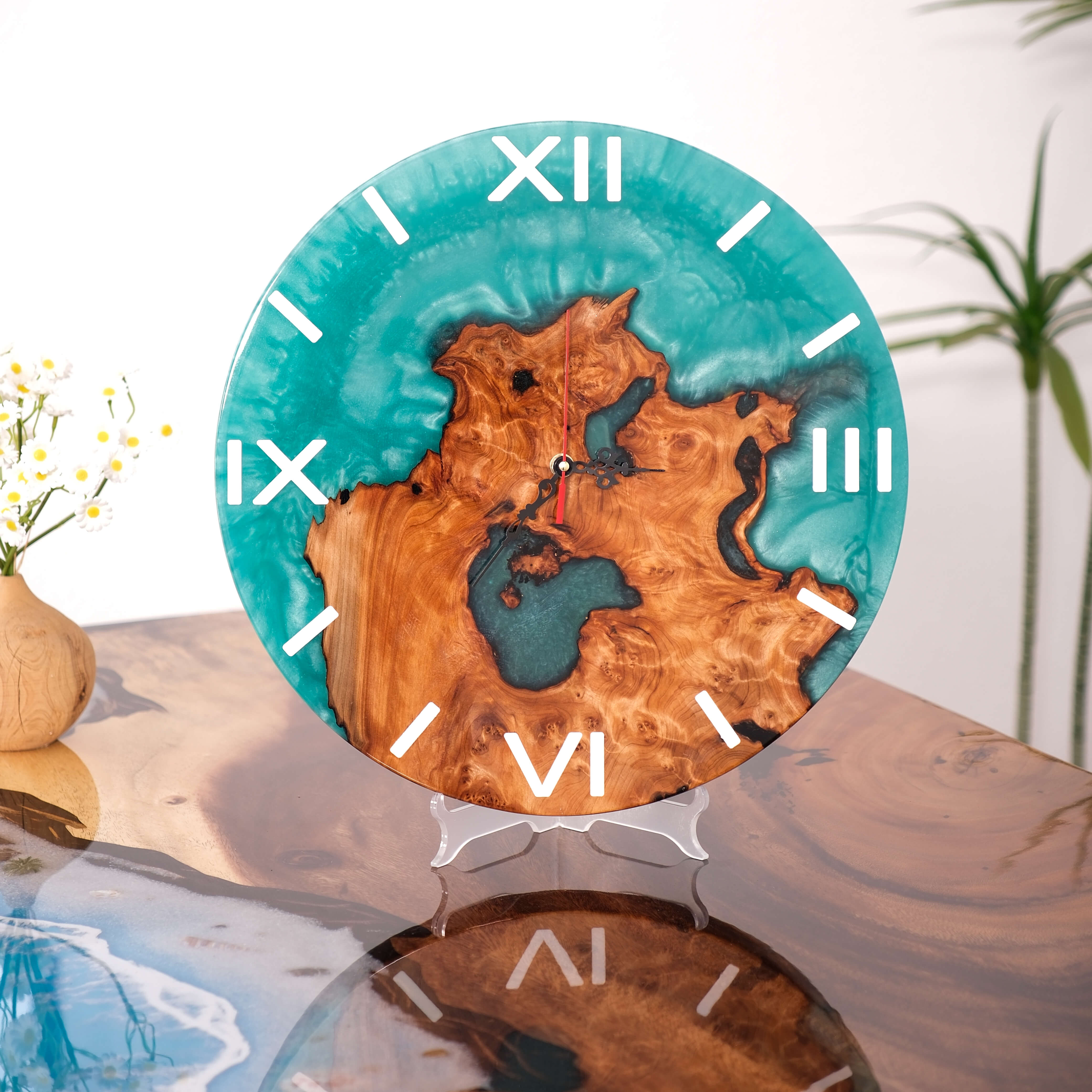
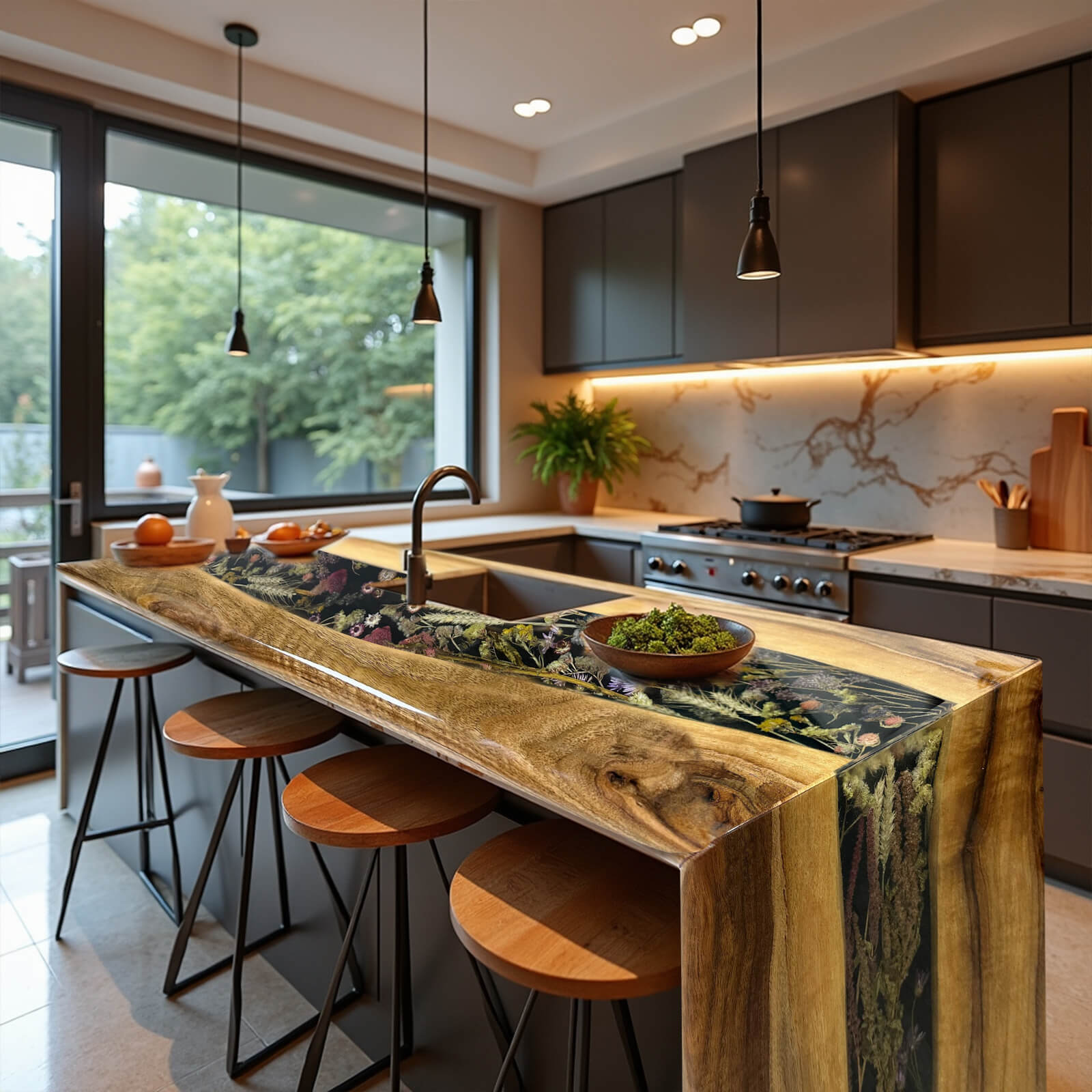
Olive Wood brings something neither of the other two can: a swirling, almost marbled grain pattern in warm honey and cream tones. It's imported, denser than most domestic hardwoods, and finishes with a natural sheen that pairs especially well with lighter resin colors.
Grain: Highly figured and irregular — no two slabs ever look alike, which is a major selling point for buyers drawn to sustainable furniture and natural imperfection over factory uniformity.
Durability: Very good. Olive is dense and naturally resistant to moisture, though it can be more prone to small surface checking (hairline cracks) than walnut if not properly stabilized.
Price: Mid-range — a meaningful step down from Black Walnut while still delivering a premium, designer look.
Poplar: The Smart Value Pick

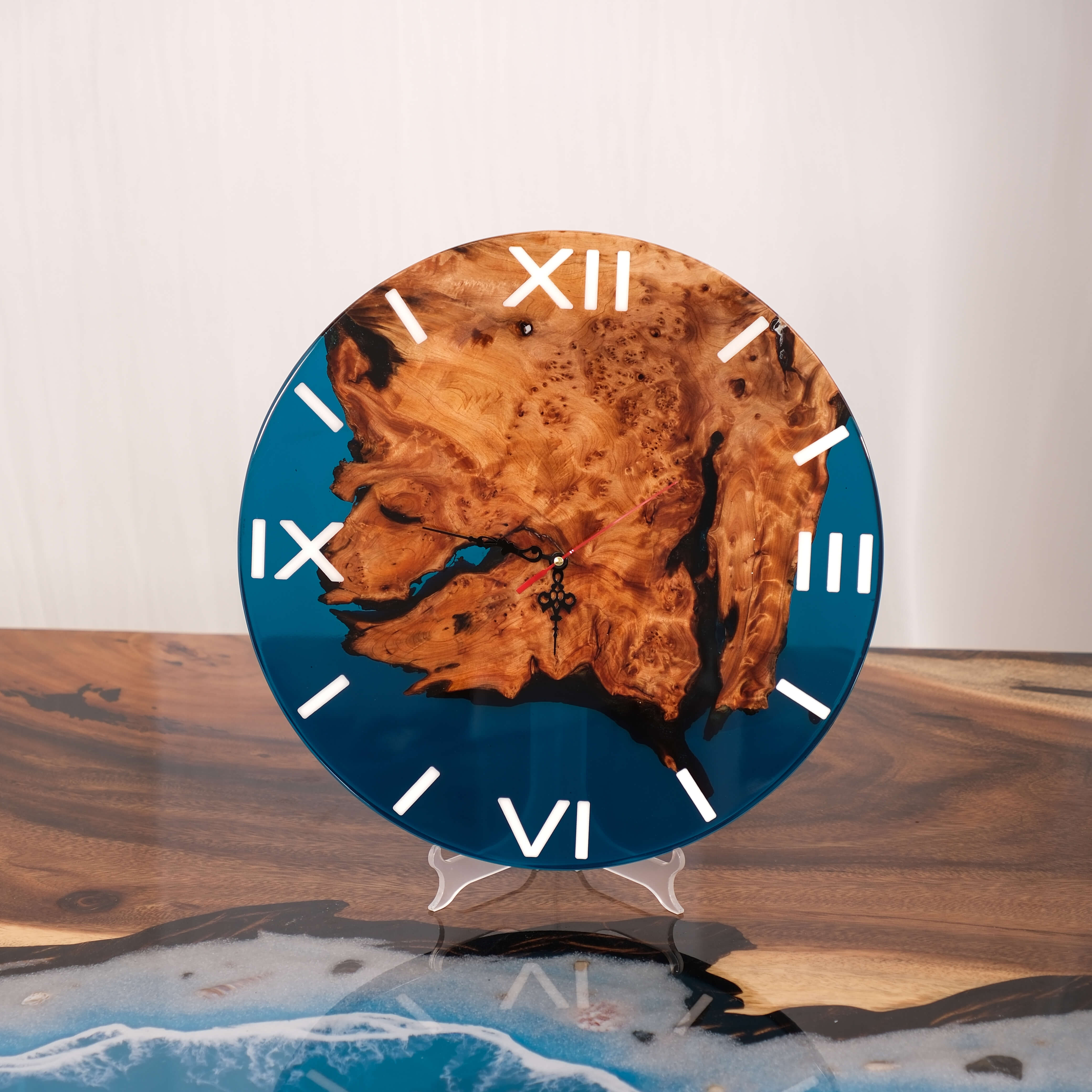
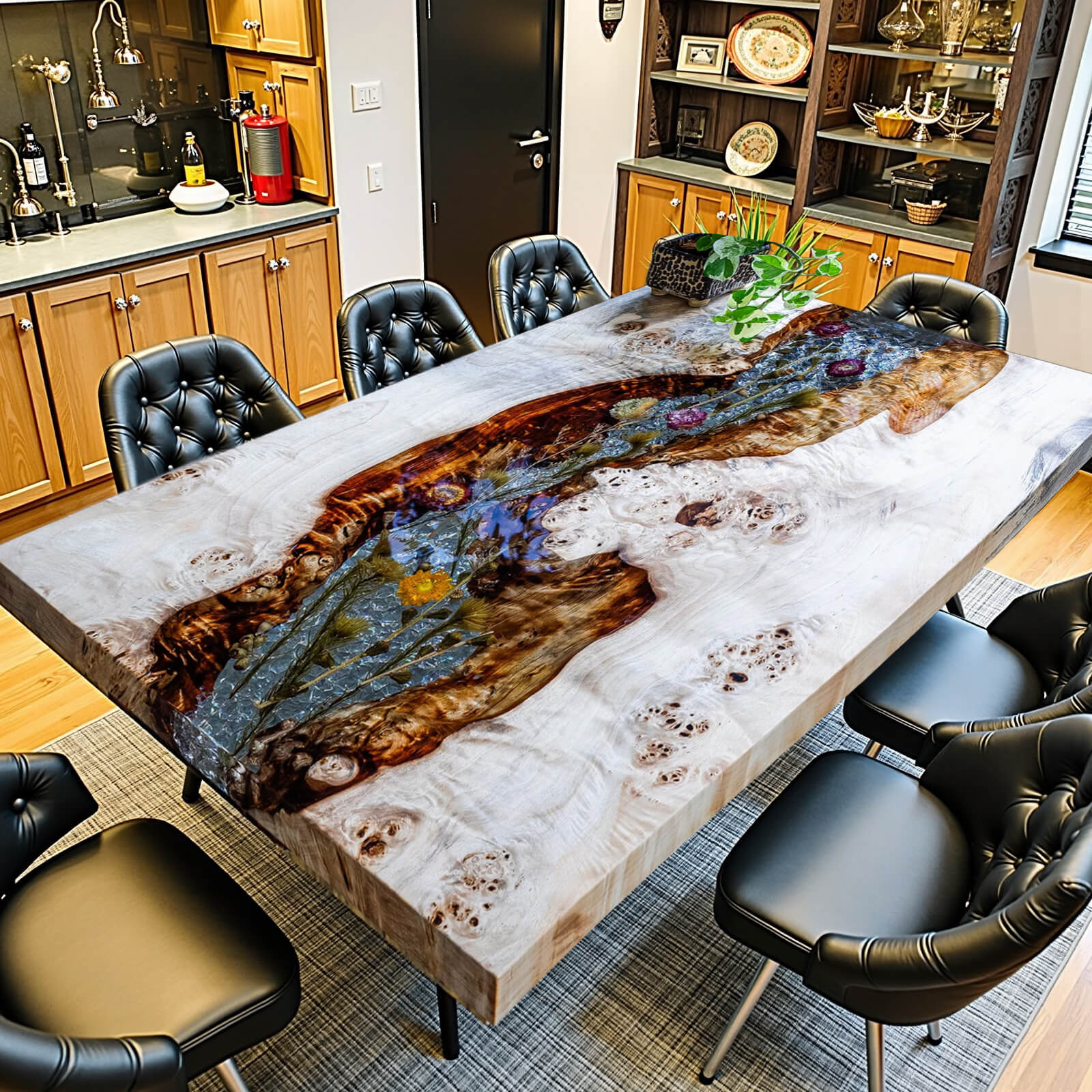
Poplar doesn't get the same design-magazine attention as walnut or olive, but it's quietly become one of the most popular choices for first-time custom furniture buyers — and for good reason. Its pale, almost blank canvas is ideal for anyone who wants the resin color, not the wood grain, to be the star of the table.
Grain: Light, subtle, sometimes with faint green or gray mineral streaks that add gentle character.
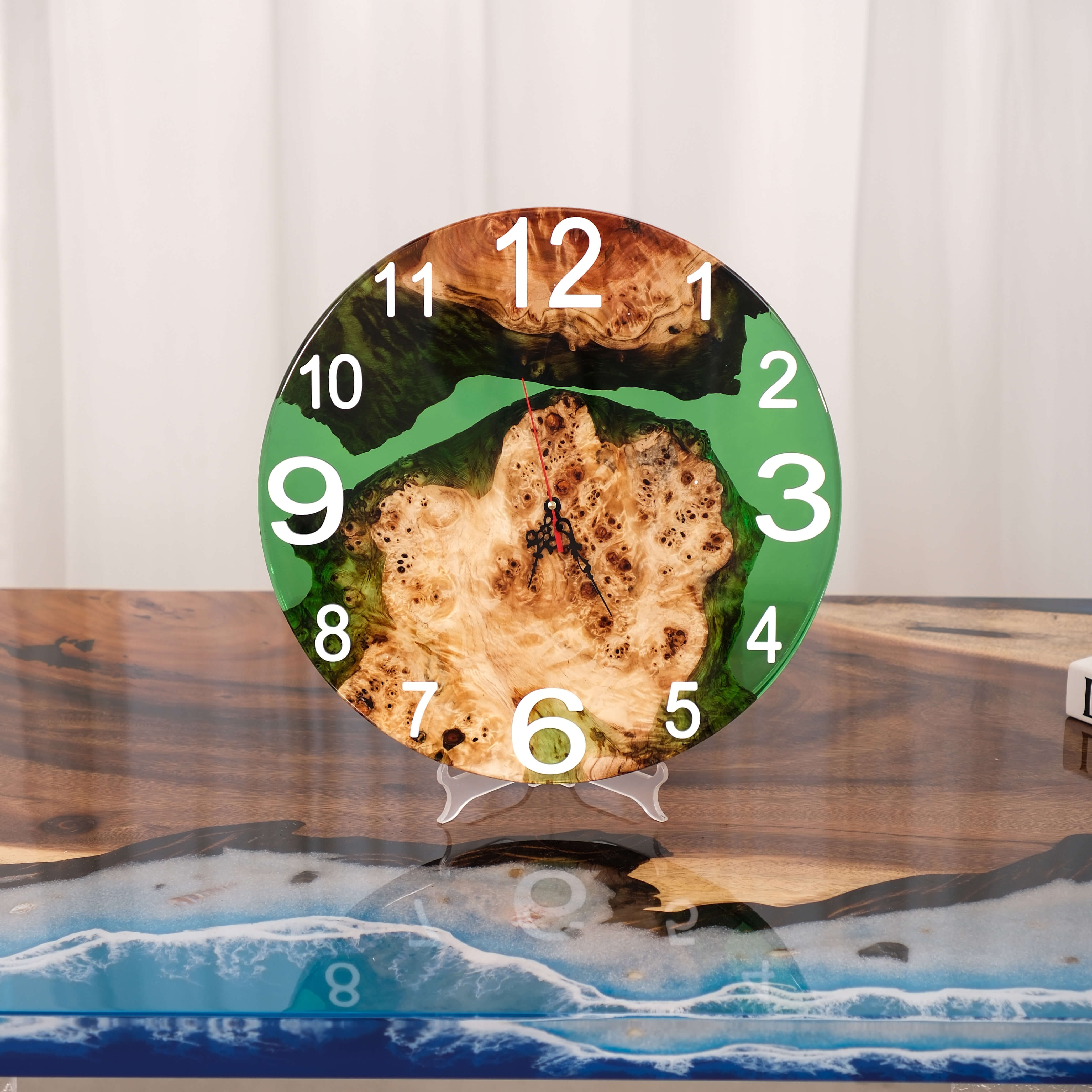
Durability: Good for indoor use. Poplar is softer than walnut or olive, so it's better suited to lower-traffic surfaces like accent tables, desks, or wall clocks rather than a daily family dinner table.
Price: The most accessible entry point into custom solid wood furniture, making it the go-to for anyone testing the epoxy resin table category for the first time.
Grain, Durability & Price: Side-by-Side
|
|
Black Walnut |
Olive Wood |
Poplar |
|
Grain |
Dark, dramatic, consistent |
Swirling, highly figured |
Light, subtle, minimal |
|
Durability |
Excellent |
Very good |
Good (light-to-medium use) |
|
Price |
Highest |
Mid-range |
Most affordable |
|
Best for |
Statement dining/conference tables |
Design-forward living spaces |
First-time buyers, accent pieces |
How to Actually Decide

If budget isn't the deciding factor, let the room lead. A dark, moody study calls for Black Walnut. A bright, Mediterranean-inspired kitchen leans naturally toward Olive Wood. A minimalist space where you want the resin — not the wood — to do the talking points straight to Poplar.
It's also worth remembering that every slab used in a genuine custom furniture build is a raw, once-in-existence piece of a tree — not a catalog SKU. That's the core appeal of live edge river tables in the first place: the wood was never meant to be identical to anyone else's.
Final Thought
There's no universally "best" wood — only the best wood for your room, your budget, and how the table will actually be used every day. If you want help narrowing it down, our design team can walk you through real slab photos for your specific space before you commit to a single board foot.