










The Neurological Necessity of Visual Hierarchy
In the realm of high-end interior design, the concept of the focal point transcends mere decoration; it is a fundamental architectural strategy rooted in human psychology and visual perception. When an individual enters a space, their brain instantaneously scans the environment for order. This search for stability is driven by the brain's innate desire to reduce cognitive load. A well-defined focal point acts as a visual anchor, providing an immediate sense of orientation and hierarchy. Without this singular element to arrest the eye, a room can feel chaotic, unsettling, or bland, regardless of the quality of its individual furnishings.
Research into spatial cognition indicates that interiors possessing a clear, dominant visual element significantly increase perceived comfort and clarity. This is particularly relevant in the modern era, where "visual noise"—the accumulation of clutter, technology, and disparate design elements—can induce subconscious stress. The focal point functions as the conductor of the visual orchestra; it dictates the rhythm of the eye's movement and establishes the narrative of the room. It leverages the Gestalt principle of Figure-Ground organization, where the focal object becomes the "figure" that stands out against the "ground" of the surrounding space.
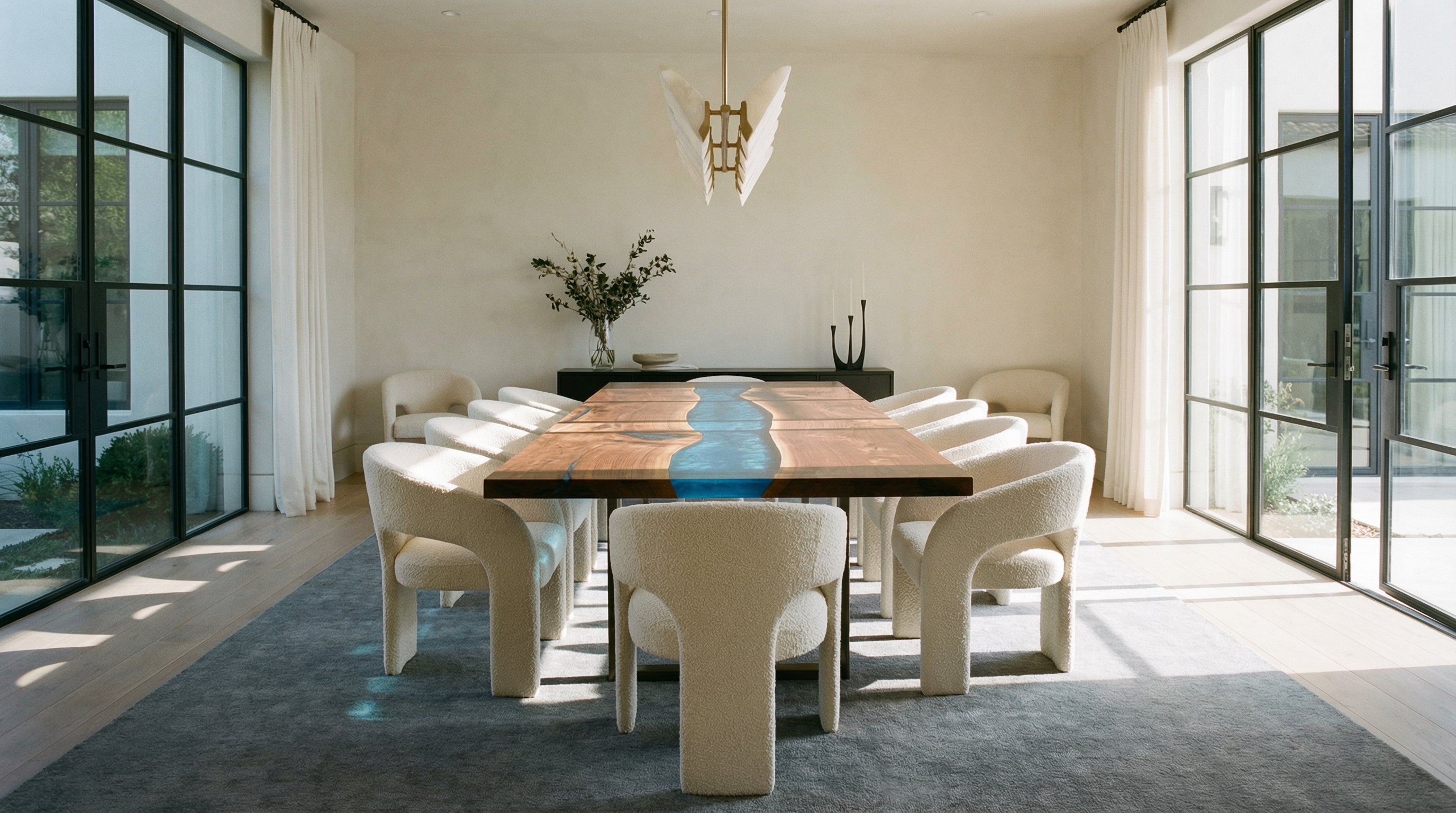
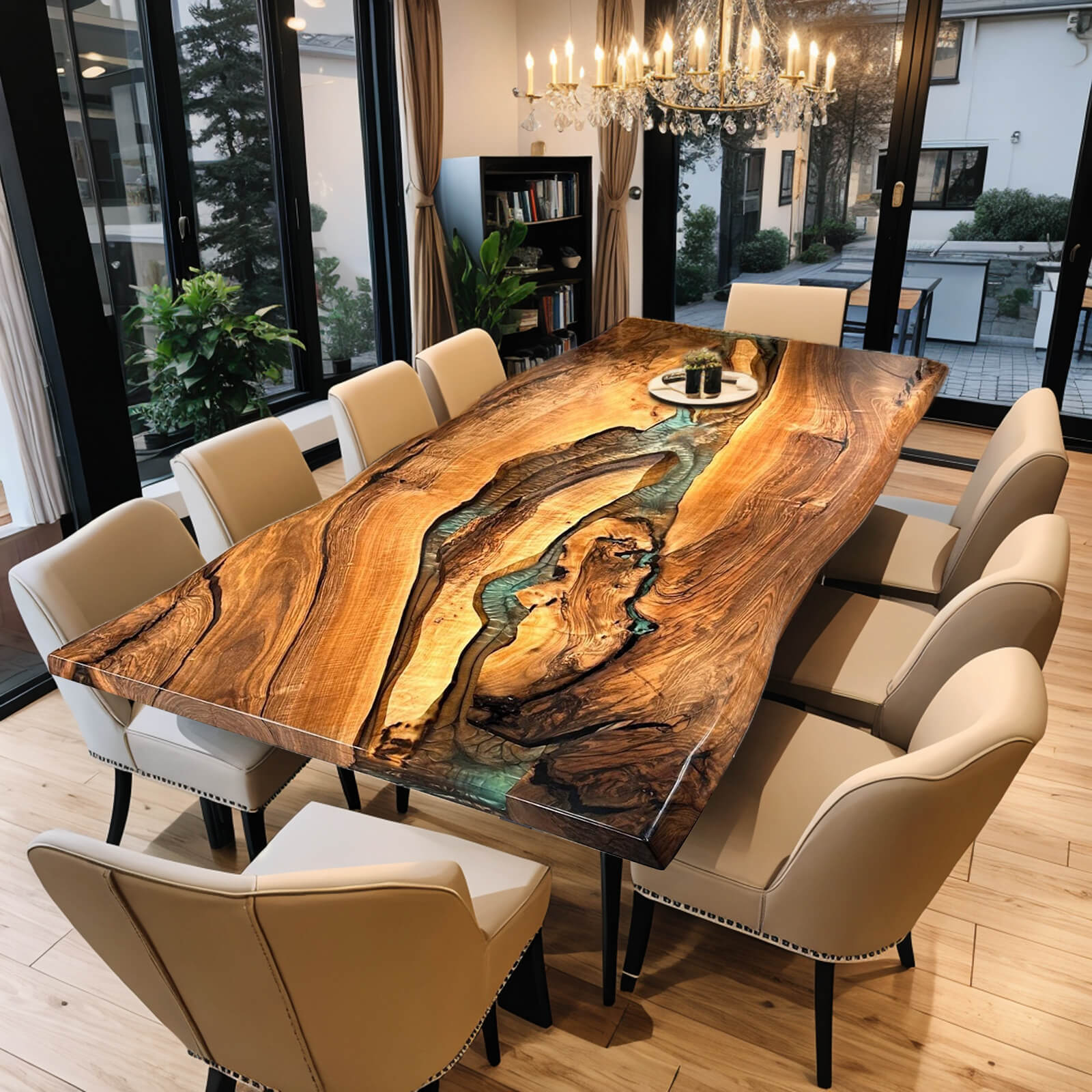
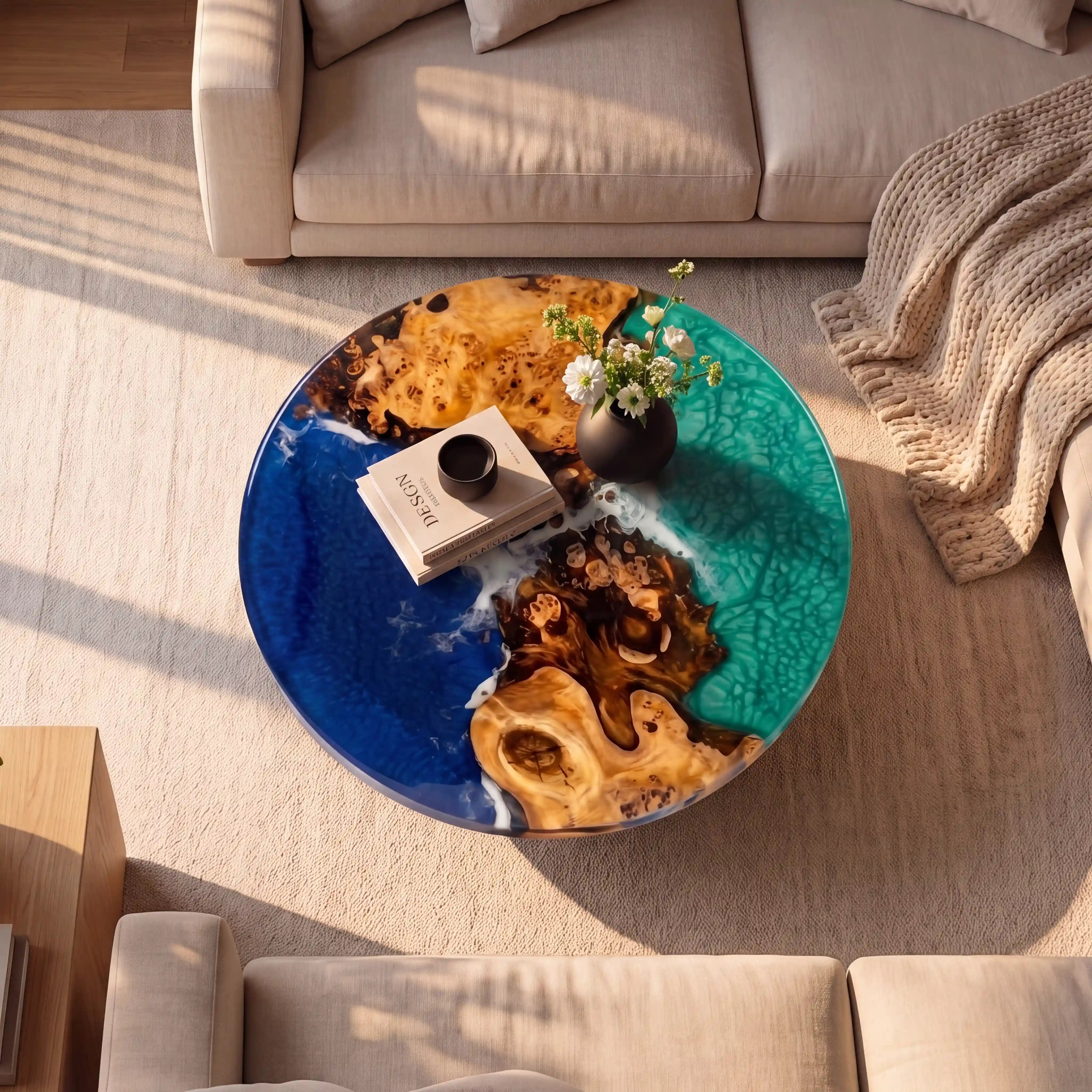
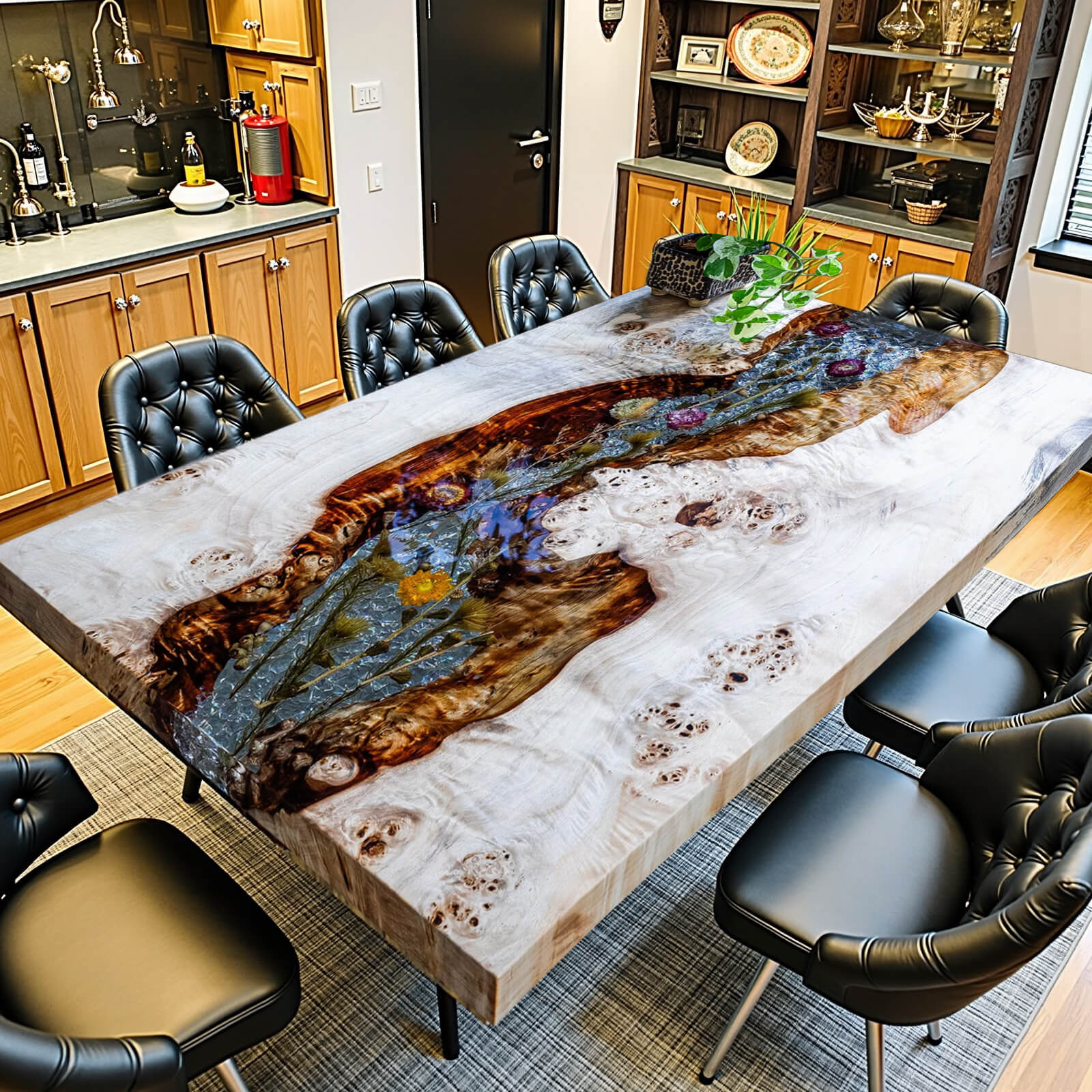
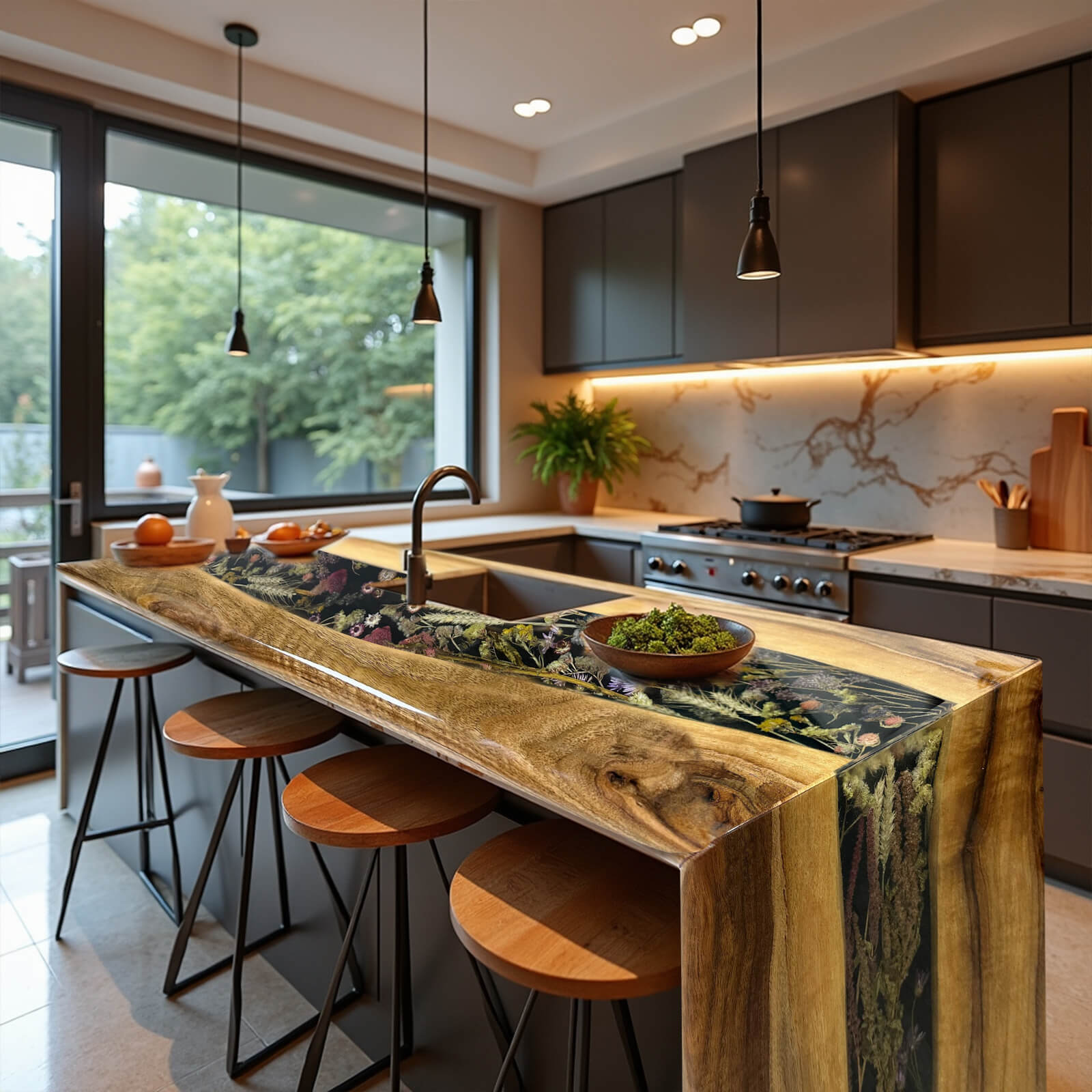
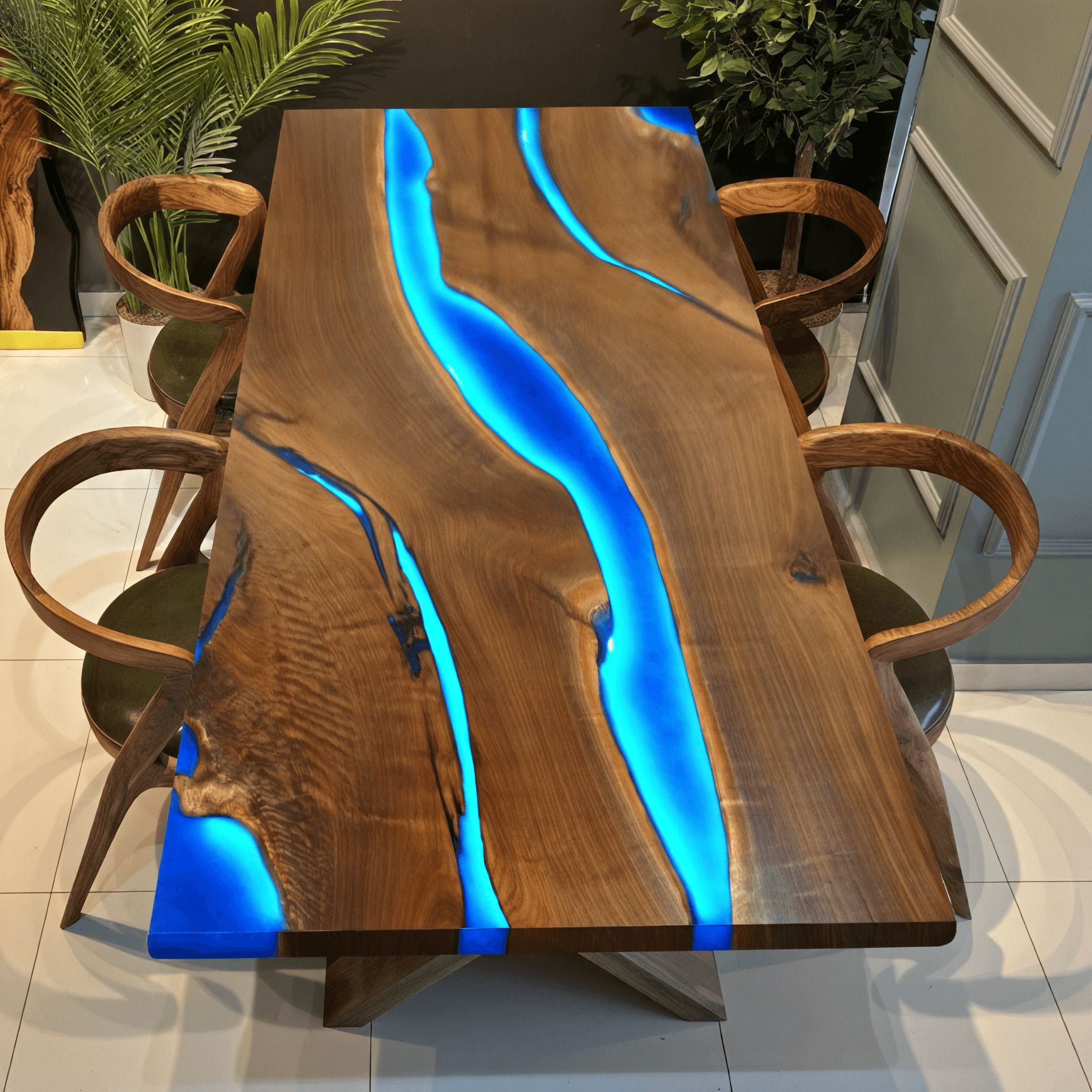
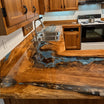
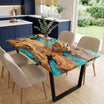
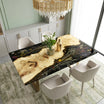
In the context of the dining room, the dining table is the natural candidate for this role. However, size alone does not constitute a focal point. True dominance is achieved through contrast—be it in color, texture, material, or form. A standard wooden table in a room with wooden floors may recede into the background. In contrast, a piece that defies the prevailing aesthetic of the shell—such as a live-edge river table combining raw timber with high-gloss resin—demands attention through its material dichotomy. This "Statement Piece" becomes the pivot around which all other design decisions rotate, from lighting placement to chair selection.
The Subtraction Principle and Negative Space
The efficacy of a focal point is inversely proportional to the amount of competition it faces. A common pitfall in luxury design is the "gallery effect," where every wall, corner, and surface serves as a display for a statement object. When everything screams for attention, silence is lost. Therefore, the The Art of the Focal Point is inextricably linked to the Subtraction Principle—the disciplined removal of non-essential elements to elevate the primary subject.
This principle champions the use of negative space (or white space). Negative space is not empty; it is active. It frames the focal point, giving it room to "breathe" and allowing its details to be appreciated without visual interference. For a dining room centered around a spectacular resin and wood table, this might mean leaving the surrounding walls relatively bare, perhaps adorned only with subtle wainscoting or a single, large-scale abstract canvas that complements rather than competes with the table's color palette.
Visual Clutter vs. Visual Weight
It is crucial to distinguish between visual clutter and visual weight. Visual weight refers to the perceived "heaviness" of an object based on its color, size, and texture. A black marble vase has more visual weight than a clear glass vase of the same size. A successful focal point usually possesses high visual weight. Visual clutter, conversely, is the accumulation of low-value visual stimuli—cords, excessive small decor items, disparate patterns—that fragment the viewer's attention.
The goal of the designer is to consolidate visual weight into the focal point while ruthlessly eliminating visual clutter from the periphery. This creates a high-contrast environment where the hierarchy is unmistakable. For example, replacing a collection of small potted plants with one significant architectural tree, or swapping a gallery wall of twenty small frames for one massive piece of art, reduces cognitive load and strengthens the focal point.
The Cultural Resonance of the "Statement Piece"
The function of the focal point extends beyond aesthetics into the realm of cultural expression and social signaling. In many cultures, particularly within the Middle East and the UAE, the dining and living areas (Majlis) are theaters of hospitality. Here, the "Statement Piece" serves as a proxy for the host's status and their esteem for their guests.
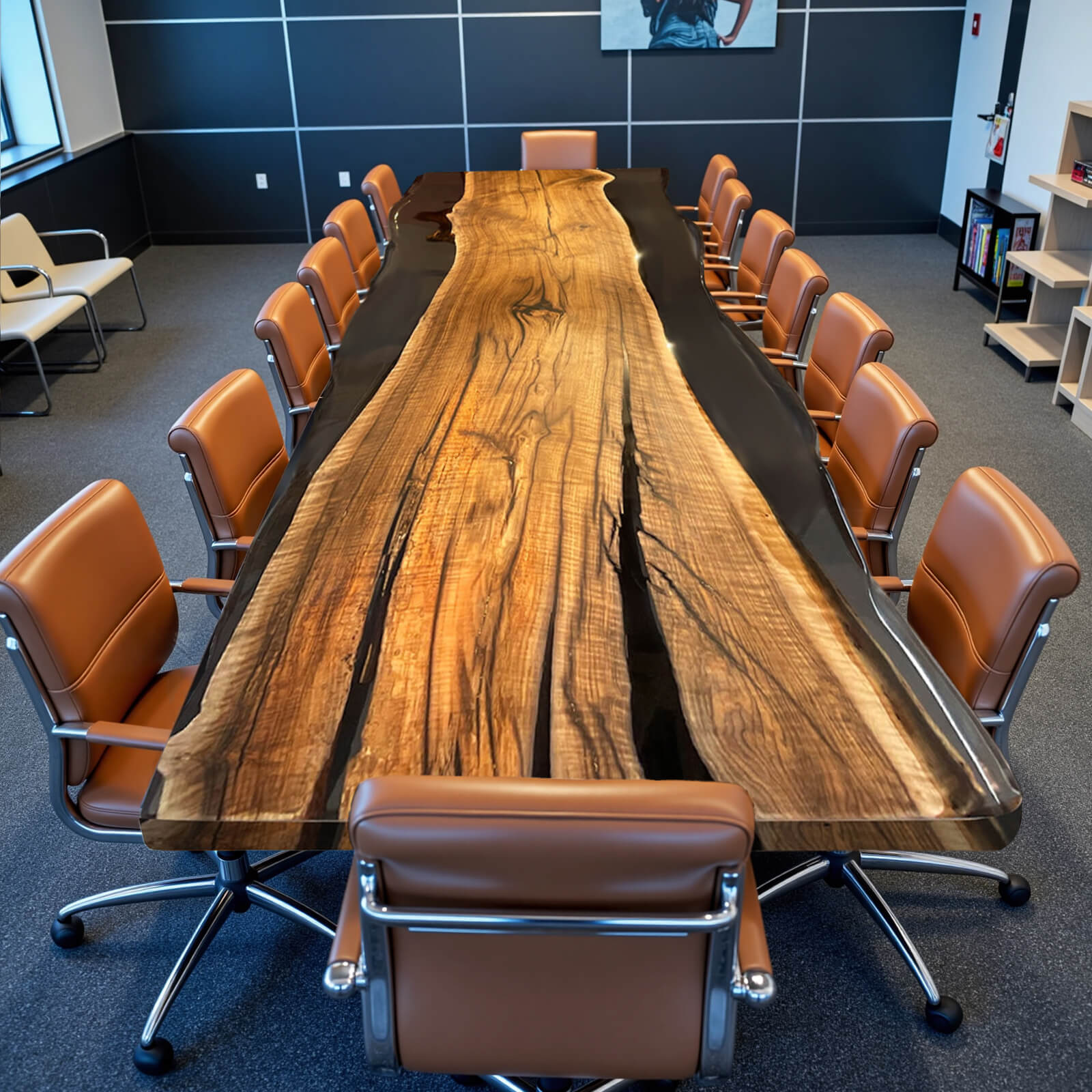
In these contexts, the focal point often scales with the architecture. High ceilings and expansive floor plans, common in luxury Emirati villas, demand furniture of significant magnitude. A standard 8-foot dining table might look diminutive in a double-height room. Thus, custom-commissioned oversized river tables or grand sculptural lighting installations become necessary to bridge the gap between human scale and architectural scale. The preference for symmetry in these regions further reinforces the need for a central anchor; the room is often designed on an axis, with the focal point sitting at the precise center of the visual flow, creating a sense of majesty and formality.
Conversely, in Western minimalist traditions, the statement piece is often a declaration of values rather than just status. A handcrafted table made from reclaimed wood signals a commitment to sustainability and an appreciation for organic authenticity. The "statement" here is one of conscious curation—choosing one perfect object over mass-produced excess.
 Once the focal point is established, the supporting elements must be arranged to direct the eye toward it, not away from it. This often involves the Rule of Odds, a composition guideline suggesting that an odd number of elements (three, five, seven) is more visually engaging than an even number. The brain creates a center point when viewing odd numbers, whereas even numbers tend to split the focus.
In a dining context, this might manifest as a cluster of three pendant lights suspended at varying heights above the table, or a centerpiece arrangement consisting of three distinct vessels of varying heights and materials (e.g., ceramic, glass, wood). These triads create a triangular visual path that keeps the eye moving within the vicinity of the focal point.
Triangulation is another technique used to balance visual weight. If a heavy focal point (like a dark walnut table) sits in the center, the designer might place two smaller, visually heavy objects (like dark art frames or charcoal lamps) in the corners of the room to create a "triangle" of visual weight. This anchors the room and prevents the center from feeling too isolated or heavy-handed.
The Evolution of the Centerpiece: From Ornament to Architecture
Historically, the "centerpiece" was a temporary decoration—flowers, fruit, or silverware—placed upon the table. In modern design, the table is the centerpiece. The rise of River Tables and Live Edge slabs has transformed the furniture itself into a permanent art installation. These pieces, often featuring exotic woods like Claro Walnut or Guanacaste, possess such intense visual activity (chatoyancy, grain patterns, resin depth) that they require little to no additional decoration.
In fact, "styling" these tables often requires a minimalist hand to avoid obscuring the art beneath. A simple, low-profile bowl or a single branch in a clear vase is often sufficient. The transparency of the resin "river" also plays a structural role in visual hierarchy: it allows light to pass through the table, reducing its perceived bulk and preventing it from dominating the room too heavily. This transparency invites the viewer to look into the table, adding a vertical dimension to the focal point that traditional solid wood tables lack.
Data Insight: Visual Weight of Dining Room Elements
The following table categorizes common dining room elements by their inherent "Visual Weight," helping designers balance the equation when establishing a focal point.
|
Element Category |
High Visual Weight (Anchor) |
Medium Visual Weight (Supporter) |
Low Visual Weight (Negative Space) |
|
Furniture |
Solid Wood Slab Table, Black Velvet Chairs, Heavy Sideboard |
Glass Top Table, Rattan Chairs, Open Shelf Console |
Acrylic Ghost Chairs, Thin Metal Legs, Floating Shelves |
|
Materials |
Dark Walnut, Iron, Concrete, Velvet |
Oak, Brass, Linen, Leather |
Clear Resin, Glass, Lucite, Pale Ash |
|
Lighting |
Massive Chandelier, Opaque Drum Shade |
Glass Pendants, Rattan Shade |
Recessed Lighting, Thin LED Strips |
|
Color |
Black, Navy, Charcoal, Emerald |
Beige, Terracotta, Sage, Grey |
White, Cream, Pastels, Transparent |
Table: Visual Weight Hierarchy. To create a strong focal point, the central element should generally be drawn from the "High Visual Weight" category, supported by items from Medium and Low to prevent overcrowding.
 Conclusion
The creation of a successful focal point is the defining act of interior design. It is the decision that creates a "Sense of Place." Whether through the dramatic sweep of a live-edge river table, the sculptural imposition of an architectural chandelier, or the bold contrast of a singular art piece, the focal point anchors the human experience. It satisfies our neurological need for order and our cultural need for expression. However, its power lies not just in its presence, but in the silence of the space around it. By mastering the Subtraction Principle and understanding the mechanics of visual weight, the designer transforms a room from a collection of objects into a curated, cohesive narrative. The focal point serves as the "North Star" of the room—a constant, grounding force in an ever-shifting world.