





















Executive Summary: In this article, we explain how artificial intelligence (AI) is revolutionizing modern furniture design. We show that generative AI tools enable entirely new levels of customization and personalization – letting designers rapidly iterate countless variations to meet individual client desires. By combining human creativity with AI’s speed, furniture can now be tailored in shape, material, and function for each buyer. Key points include the rise of AI design platforms (e.g. Midjourney, Planner 5D) used by designers, the benefits of predictive ergonomic optimization and sustainability, and the collaborative “human+AI” future of craft. We draw on industry reports noting that AI-driven design offers “more choices than ever” to explore form and function and enables “innovative and personalized pieces” through rapid prototyping. The post outlines current tools, case examples, and market trends, with an emphasis on how AI helps designers create bespoke luxury furniture faster and more precisely than before.
The Emergence of AI in Furniture Design
Artificial intelligence has permanently entered interior and furniture design. Designers now leverage AI-powered platforms to generate hundreds of design options in minutes – a process that used to take days of manual drafting. Tools such as Midjourney, DALL·E, Planner 5D and specialized furniture‐design apps use generative AI to rapidly create photorealistic concepts. For example, designers can input style cues (“Scandinavian walnut dining table with sculptural legs”) and instantly receive multiple high-fidelity renders. This shift is akin to having an AI design assistant that expands creative possibilities. As one industry author notes, “AI is revolutionizing furniture design… enabling designers to create more innovative and personalized pieces by generating and testing countless design iterations in a fraction of the time”.
This capability underpins personalized customization – each client’s exact needs and tastes can be input, and the AI adapts accordingly. In luxury markets where buyers expect unique, tailor-made furnishings, this is game-changing. AI also helps align designs with broader trends (color palettes, forms) through predictive analytics, as tools suggest choices based on user preferences or even forecast upcoming style shifts. In essence, AI tools act as a design collaborator, not a replacer: the human designer guides vision and taste, while AI handles complex calculations and novel ideation.
Generative Design Tools for Custom Furniture

A variety of AI-powered tools are now transforming how furniture is conceived. For instance, SolidWorks with AI modules, SketchList 3D, and Pro100 incorporate machine learning to optimize designs and layouts. These tools help designers experiment with organic shapes or hidden structures that might be difficult to envision manually. On a conceptual level, designers use AI image generators (e.g. Midjourney, Stable Diffusion) to “dream up new concepts” with unusual yet practical forms. Meanwhile, interior-focused platforms like Planner 5D and Leaperr allow quick 3D room planning so clients can instantly see proposed furniture in situ.
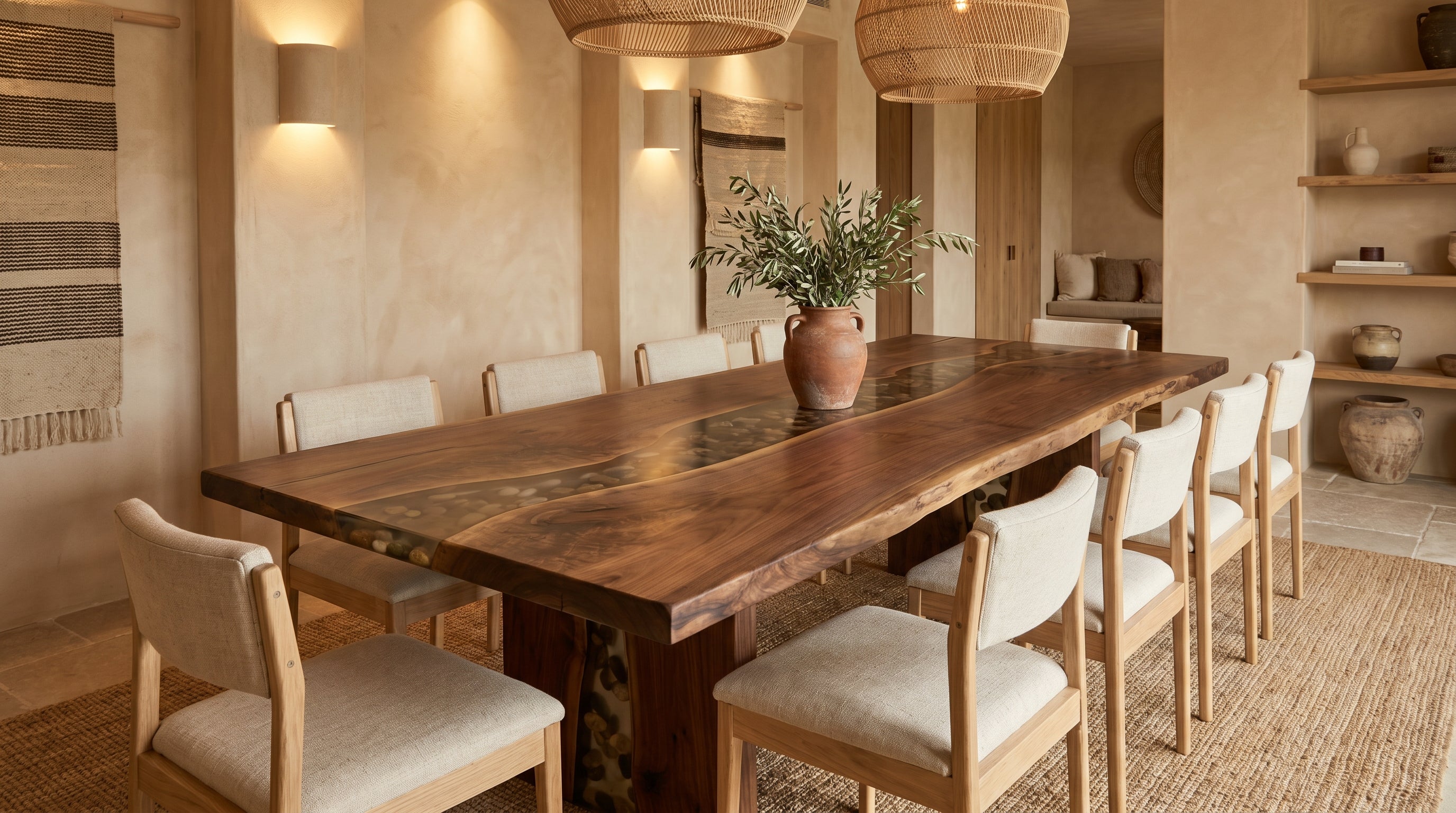
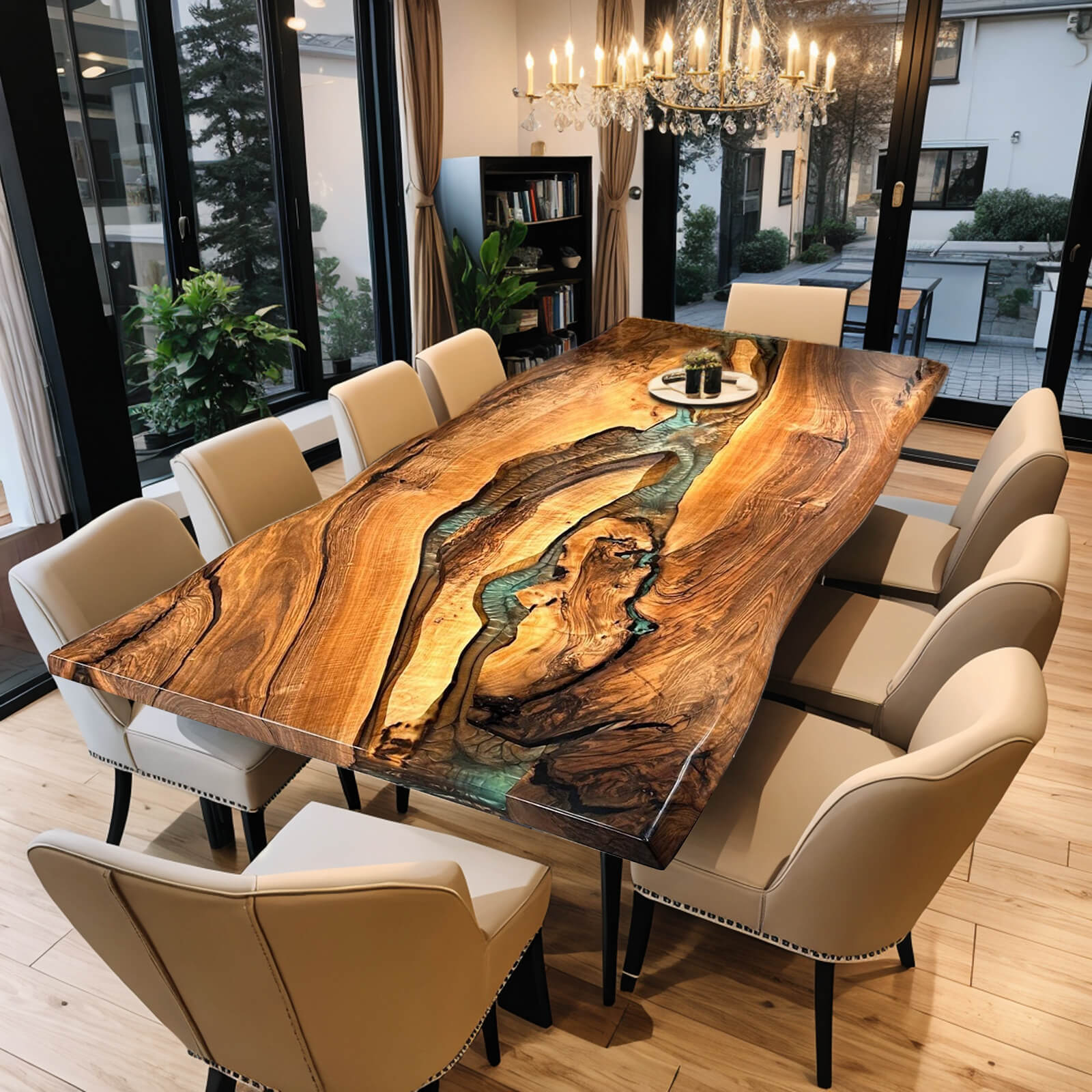
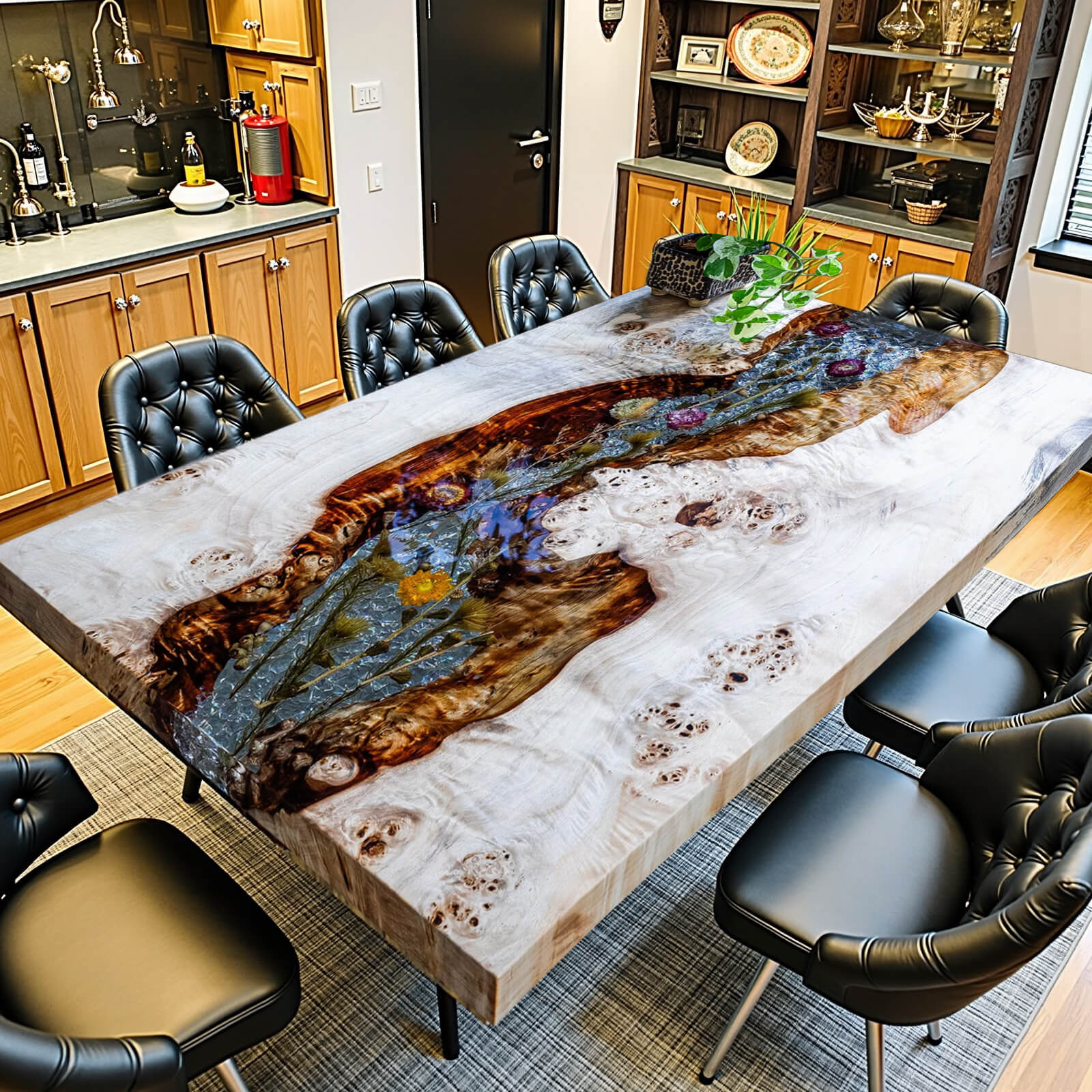
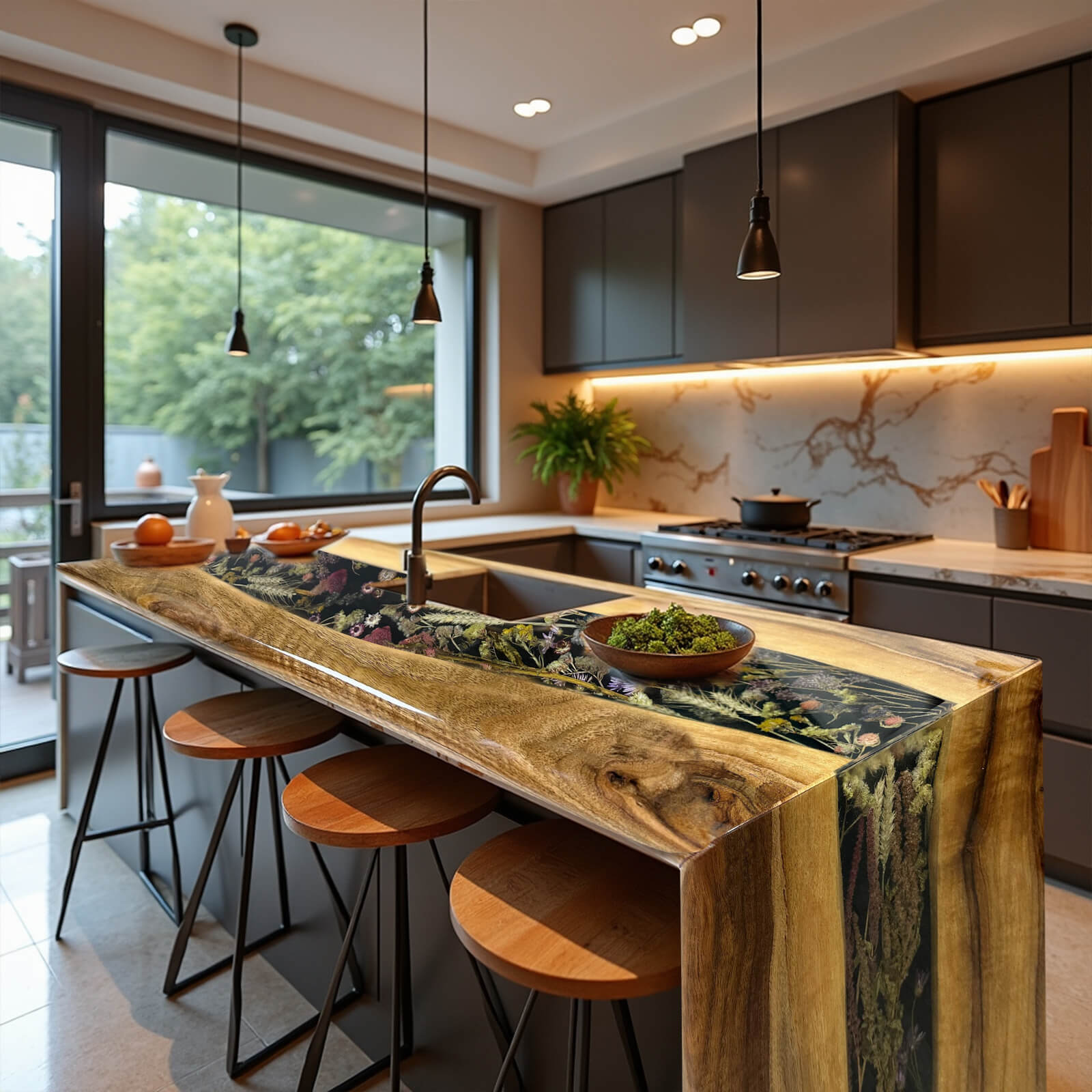
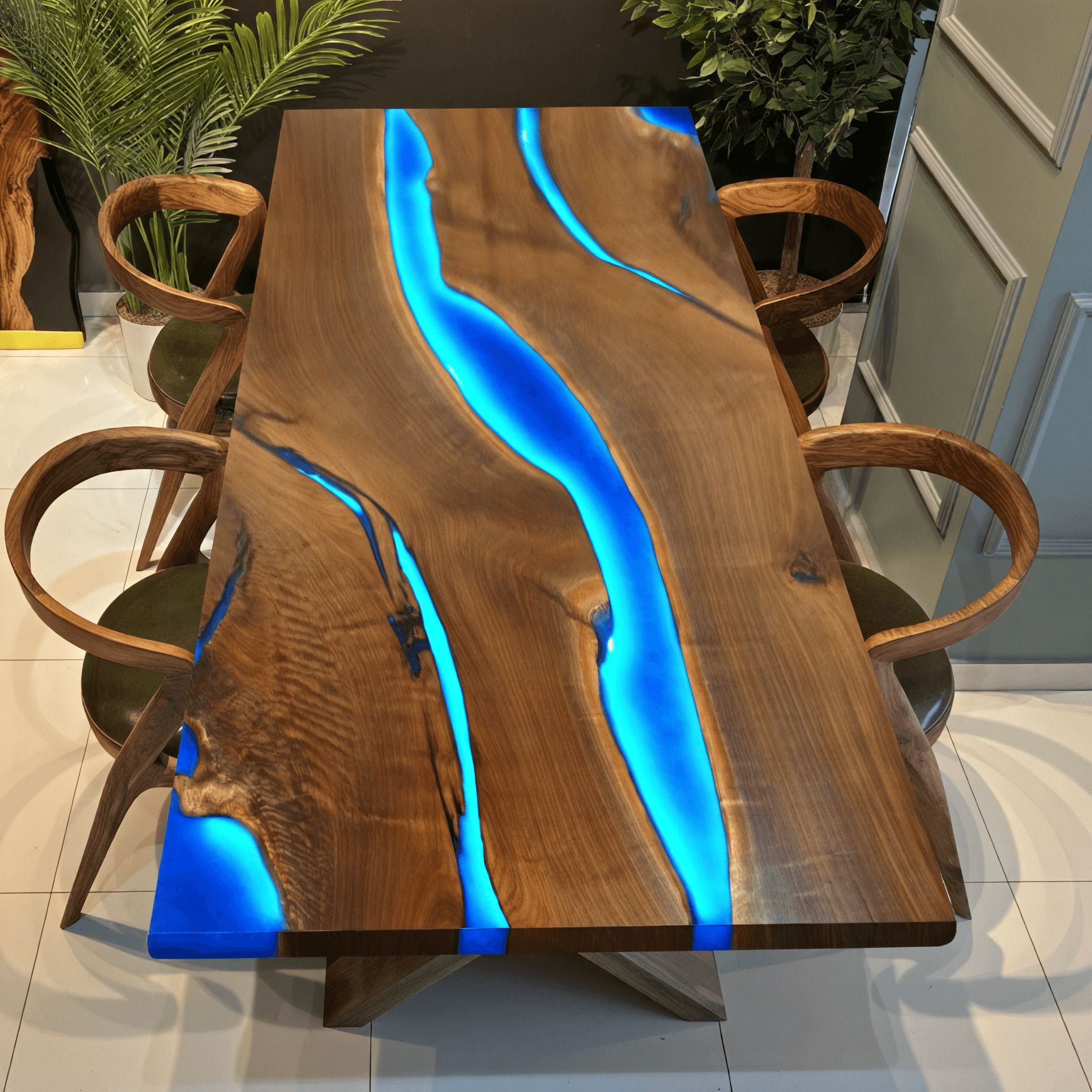
AI also automates mundane tasks: it can suggest material layouts to minimize waste and improve sustainability. As Podium reports, AI in manufacturing “enables companies to access materials, curb waste” and optimize efficiency. In high-end furniture shops, this means complex wood-epoxy slabs can be precisely mapped to resin flows, maximizing yield from each timber.
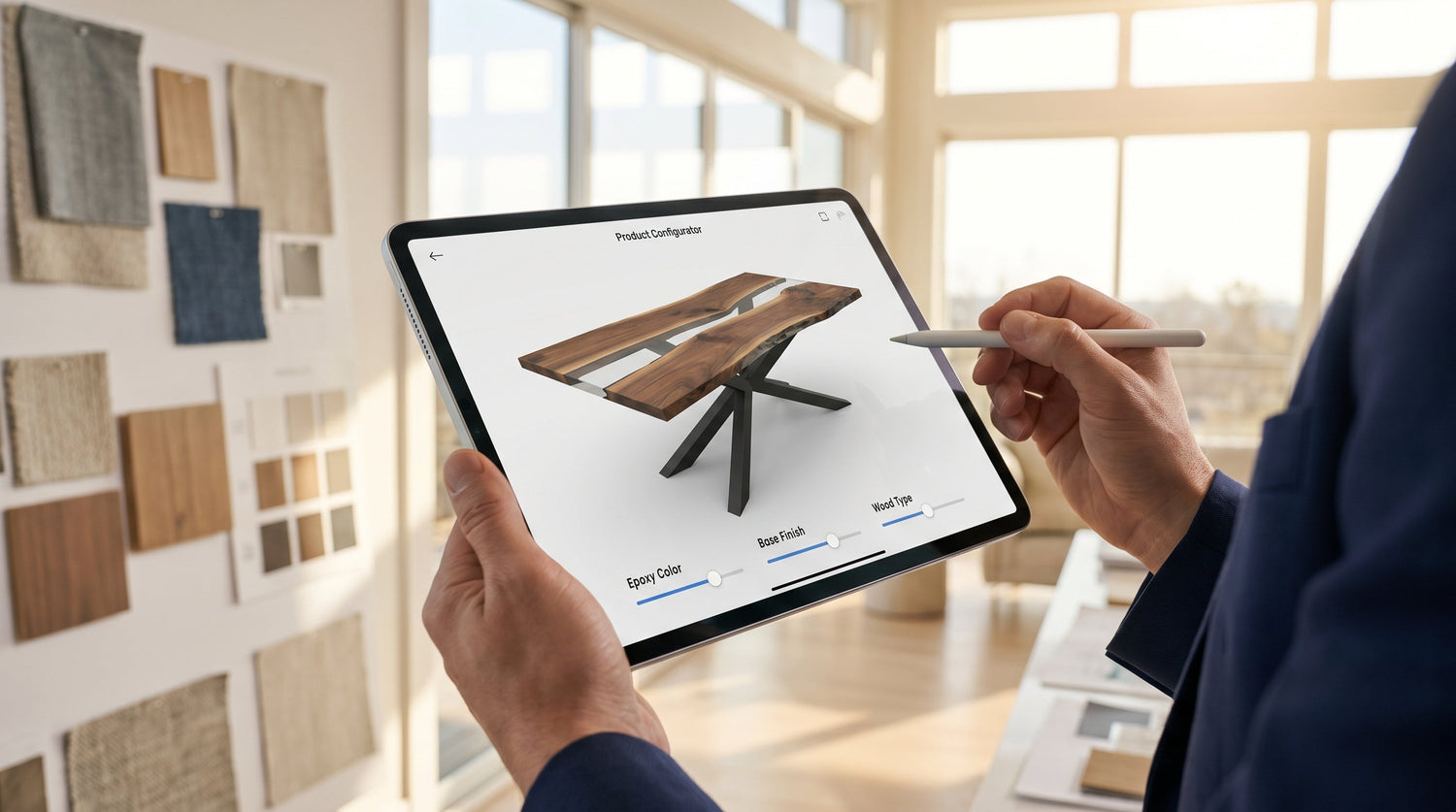
At the same time, customer-facing AI features (AR/VR showrooms, configurators) are enabling hyper-customization. A buyer can use an AR app to place a virtual table in their home, then tweak dimensions, color, or embedded tech in real time. According to one review, brands are already offering “AI-powered furniture customization” that lets consumers personalize to exact specs. Our AI keywords here would include “furniture AI customization”, “generative furniture design tools”, “personalized custom furniture”, and “AI-driven interior design” to capture these trends.
AI-Driven Benefits: Ergonomics, Sustainability, and Efficiency
AI isn’t just flair – it brings concrete improvements. For example, AI can analyze ergonomic data and optimize comfort. Designers may input human metrics, and the AI adjusts chair or desk contours for better posture, blending beauty and function. Podium highlights that AI helps combine “sustainability, ergonomics, and efficiency” without sacrifice. In practical terms, algorithms can select eco-friendly materials or recommend design tweaks to lower environmental impact while reducing costs.
From a client perspective, AI shortens lead times and enhances satisfaction. Virtual try-on tools reduce the risk of ordering mismatched pieces, cutting returns. As Marymount University notes, designers can now generate “realistic renderings of spaces in a matter of minutes”, meaning clients quickly see exactly how a custom table or sofa will look. This instant feedback loop not only delights customers but “makes it possible to explore truly novel concepts” efficiently.
In summary, AI in furniture design yields faster ideation, higher personalization, and more sustainable production. The result is truly bespoke, high-end furniture crafted with unprecedented precision and speed.
Challenges and the Future of AI in Furniture

No technology is perfect. Ethical and practical challenges remain: AI designs raise questions of intellectual property, and many firms lack the infrastructure to fully integrate these tools. Designers must also ensure AI output aligns with brand style and quality standards. However, experts agree that the future is human+AI collaboration. As one report concludes, “Smart use of this technology can help designers generate ideas faster, deliver more optimized designs, and stay in tune with changing market needs”.
Looking ahead, expect AI customization to become a luxury standard in furniture retail. In emerging practices, companies already embed AI into every step – from user preference algorithms guiding design to on-demand CNC fabrication. The “Metaverse of Interiors” may even allow clients to walk through fully custom virtual homes before anything is built. In any case, AI promises to keep pushing epoxy and wood furniture from mass-producible items toward artful, personalized luxury pieces that evolve with each homeowner’s vision.