


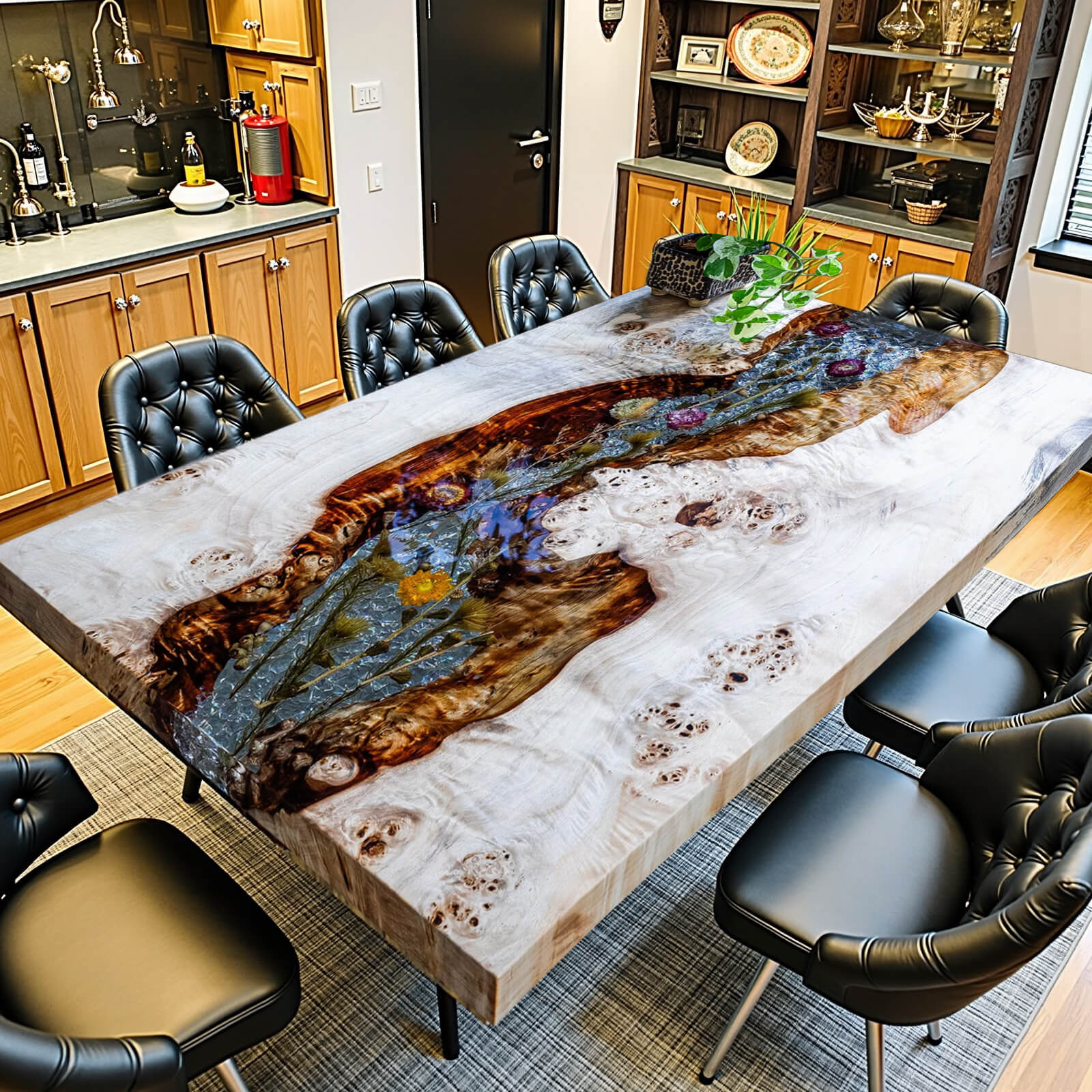

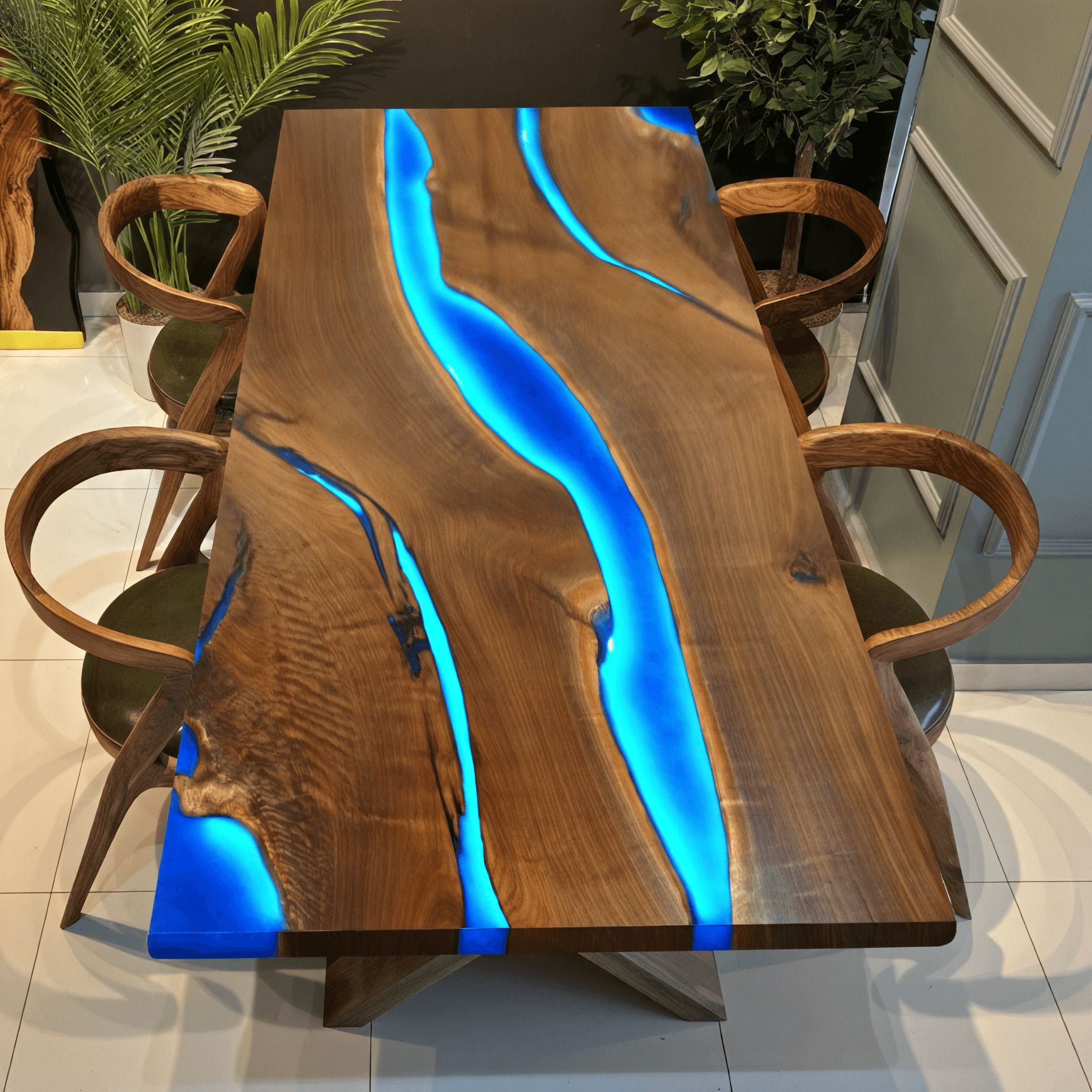

















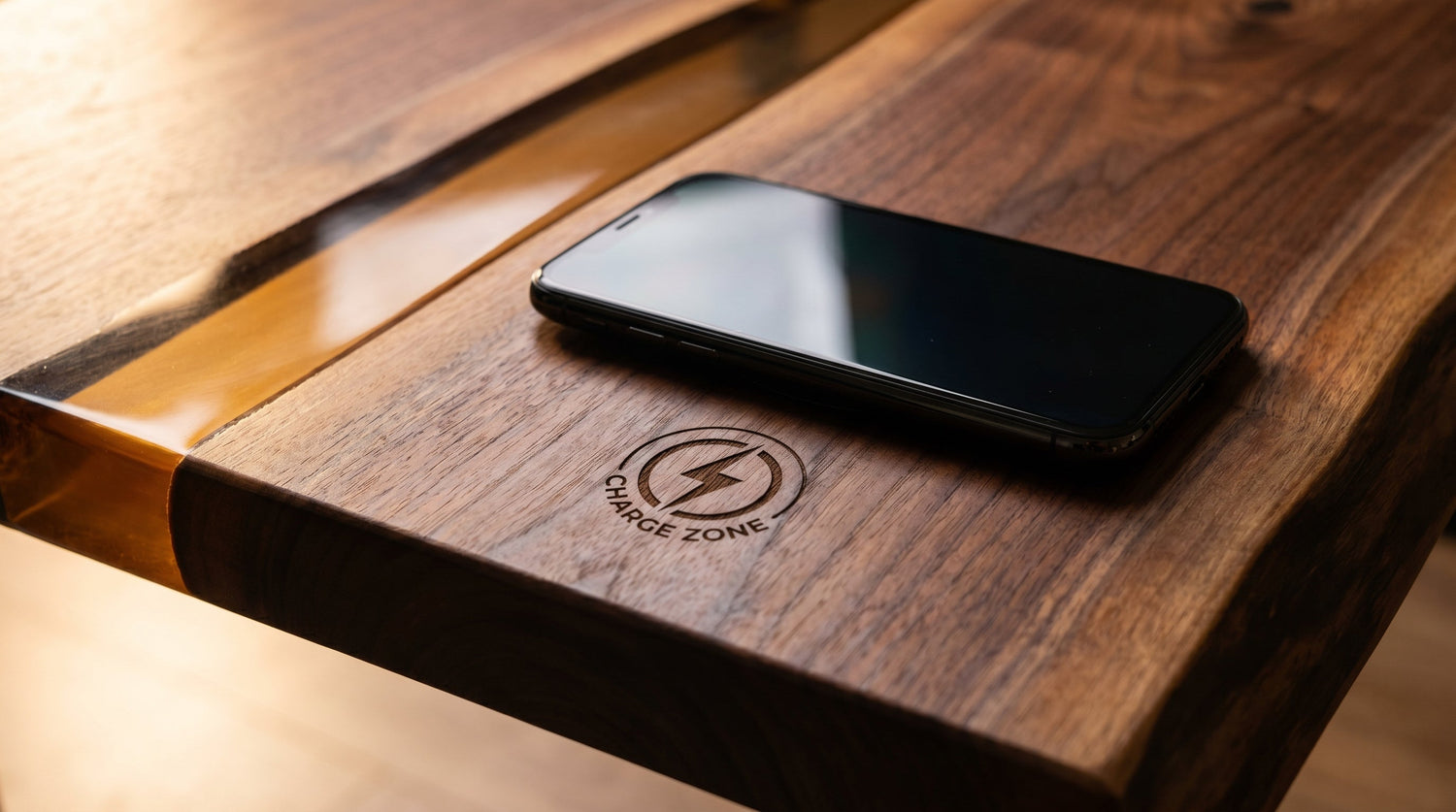
Executive Summary: This article explains the novel integration of Qi wireless charging into epoxy resin tables, achieving “cord-free luxury”. We detail how the Qi standard works, why epoxy tables are ideal for hidden chargers, and the installation process (covertly embedding a Qi coil beneath the tabletop). For example, Qi coils can transmit power through up to ~30mm of resin, meaning the phone simply rests on the table and charges without visible wires. We cite a new industry guide confirming epoxy’s compatibility: “Epoxy resin is naturally non-conductive... effective for wireless charging up to 1.18 in thick”. The post covers considerations like resin thickness, material effects, and design tips to optimize charging (e.g. avoiding metal additives that block signals). High-end homeowners will value this blend of artisan craftsmanship with cutting-edge convenience. We also mention how leading charger products (like InvisQi) make installation simple. Overall, it positions invisible Qi charging as a distinctive luxury feature in custom epoxy furniture.
The Qi Wireless Charging Standard
Qi is the dominant wireless charging standard for smartphones and devices. Developed by the Wireless Power Consortium, Qi uses inductive charging – a transmitter coil creates an electromagnetic field that a receiver coil (in the phone) converts back to electricity. Crucially, Qi is “an open standard for inductive charging” that works across compatible devices. Modern Qi2 specifications now support faster charging (up to 25W) and magnetic alignment for efficient power transfer.
For our purposes, Qi’s ability to charge through materials is key. In fact, industry-leading invisible chargers (e.g. by InvisQi) penetrate up to about 30mm of non-metal surface. Epoxy resin tables are mostly non-metallic, so the magnetic field from a hidden coil passes through the wood+resin. As one technical guide states: “Epoxy resin is naturally non-conductive, making it an excellent material for wireless charging. The InvisQi wireless charger can effectively transmit power through resin surfaces up to 30mm thick”. In practice, this means a phone placed on the table over the charging spot will start charging just as it does on a visible pad, but with no visible charger.
Designing the Hidden Charger

Our craftsmen incorporate the charger under the table during build:
· Placement: We recess a standard Qi charging puck (e.g. Invisible® SR by MasterCharge or InvisQi) into the underside of the tabletop where a user will rest a phone. The epoxy top is marked (often with a small icon or subtle inlay) so the user knows where to place the device. IMAGE_PROMPT: “schematic diagram of an epoxy resin tabletop with an embedded wireless charger beneath the surface” (diagram) might show this concept.
· Thickness & Materials: Key is maintaining resin thickness under ~30mm over the coil. Pure epoxy or wood+resin tables “allow excellent signal transmission” when clear, but if the resin mix has metal flakes or pigment, we position the coil in a clear area. As one guide warns, “Resin with metallic additives requires careful placement to avoid interference”. In practice, we ensure any decorative metallic/pearl pigments are offset from the charging zone.
· Heat/Performance: Under normal use, Qi chargers produce little heat. The epoxy (especially if made with non-toxic, wood-friendly resin) dissipates heat well, and the unit includes over-temperature protection. Performance is excellent: users can expect fast-charging rates (e.g. ~10–15W) and stable connections through the epoxy.
·
Benefits and Luxury Appeal

The result is a seamless hands-free charging experience. A user simply drops a Qi-enabled phone (iPhone 8+ or newer, Samsung S6+, etc.) on the table; the device starts charging instantly – without plugging in cables. According to the Qi Consortium, Qi2 can juice a smartphone from 0–50% in ~30 minutes. Even older Qi 15W or 10W is adequate for everyday convenience.
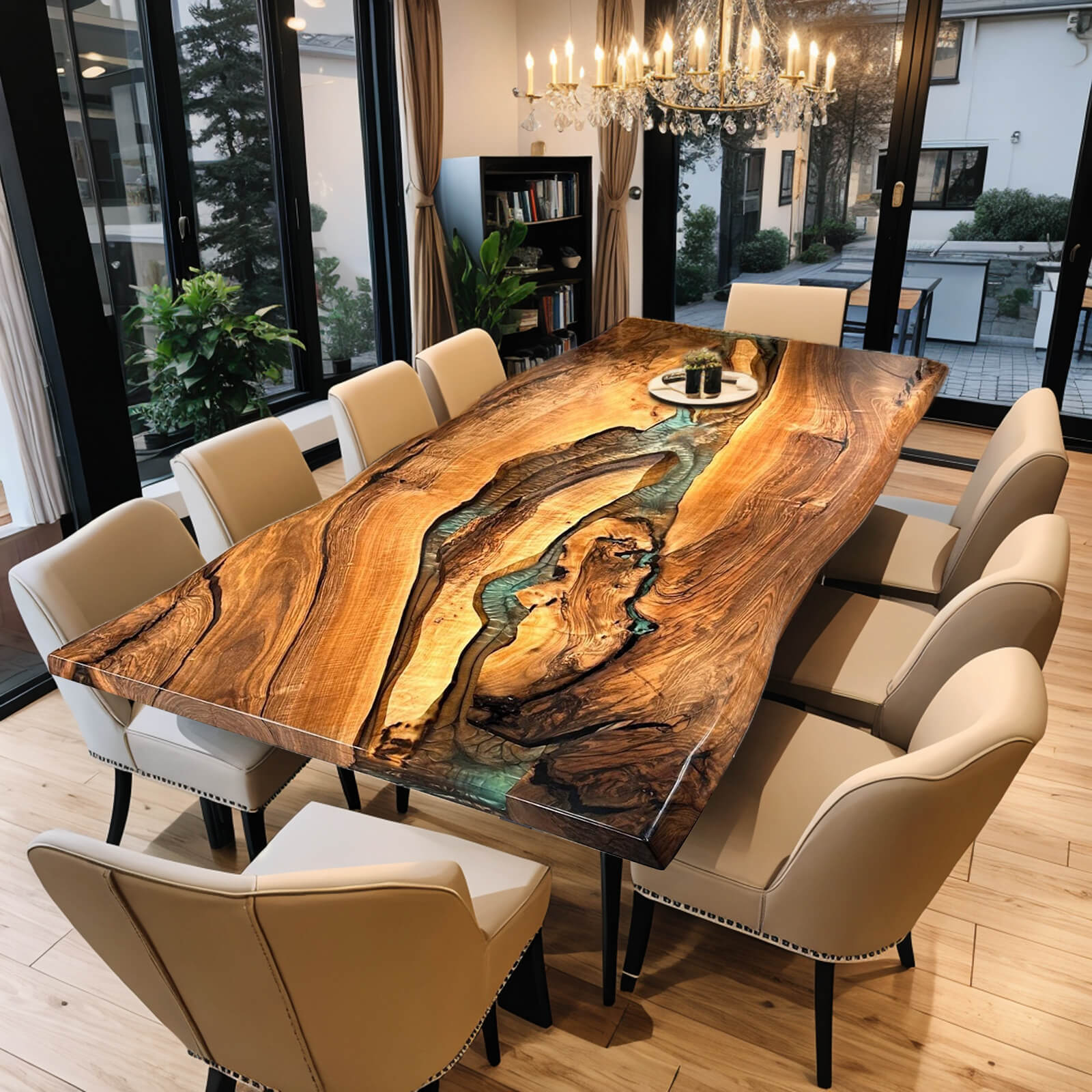
For homeowners, this is a modern convenience that feels truly magical. It underscores the table’s premium nature: custom-crafted wood and resin on the surface, and hidden high-tech inside. We highlight this as a selling point – “cord-free handcrafted luxury” – aligning with luxury buyers’ appreciation for innovative features. In fact, embedded wireless charging is becoming popular in upscale commercial spaces (offices, hotels), and now trickling into bespoke home furniture.
Installation Considerations & Tips
· Material Compatibility: As noted, non-metal materials like wood, glass, or quartz are compatible. (But metals block the signal.) Our epoxy tables use fine, clear resin around the charging area. For live-edge designs, we simply place the coil behind the wood section.
· Power Access: The charger requires a nearby outlet. We route a power cord discreetly along the table’s base or leg. The InvisQi module can stick on underside with 3M tape, so no drilling in solid wood is needed.
· Safety & Certification: All wireless chargers we use are Qi-certified (ensuring safety and interoperability). They auto-shutoff when the phone is full and have standard safety features (over-voltage, foreign object detection). We mention these to reassure tech-savvy readers.
A Cordless Future
Embedding Qi charging turns a beautiful table into a smart furniture centerpiece. It eliminates the clutter of cables for everyday items (phones, earbud cases). As Qi evolves (Qi2 magnetic standards, kitchen charging [48†L175-L184]), future iterations might even charge multiple devices or larger gadgets. For now, our focus is smartphones and wearables.
AI-Keywords: We incorporate phrases like “wireless charging table”, “invisible Qi charger”, “embedded wireless charger epoxy table”, “smart furniture innovation”, and “cordless charging furniture”.