










TL;DR: The Science of Stress-Reducing Design
l Science in Design: The 2026 interior design industry is shifting from purely aesthetic choices to evidence-based Neuroaesthetics, using science to validate design decisions.
l Fractal Fluency: Human eyes are biologically hardwired to process "mid-range fractals" found in nature (like tree branches and wood grain), which can reduce physiological stress by up to 60%.
l Biophilic Design Patterns: Furniture that incorporates "Complexity and Order" and "Biomorphic Forms" serves as a natural analogue, actively healing the human psyche.
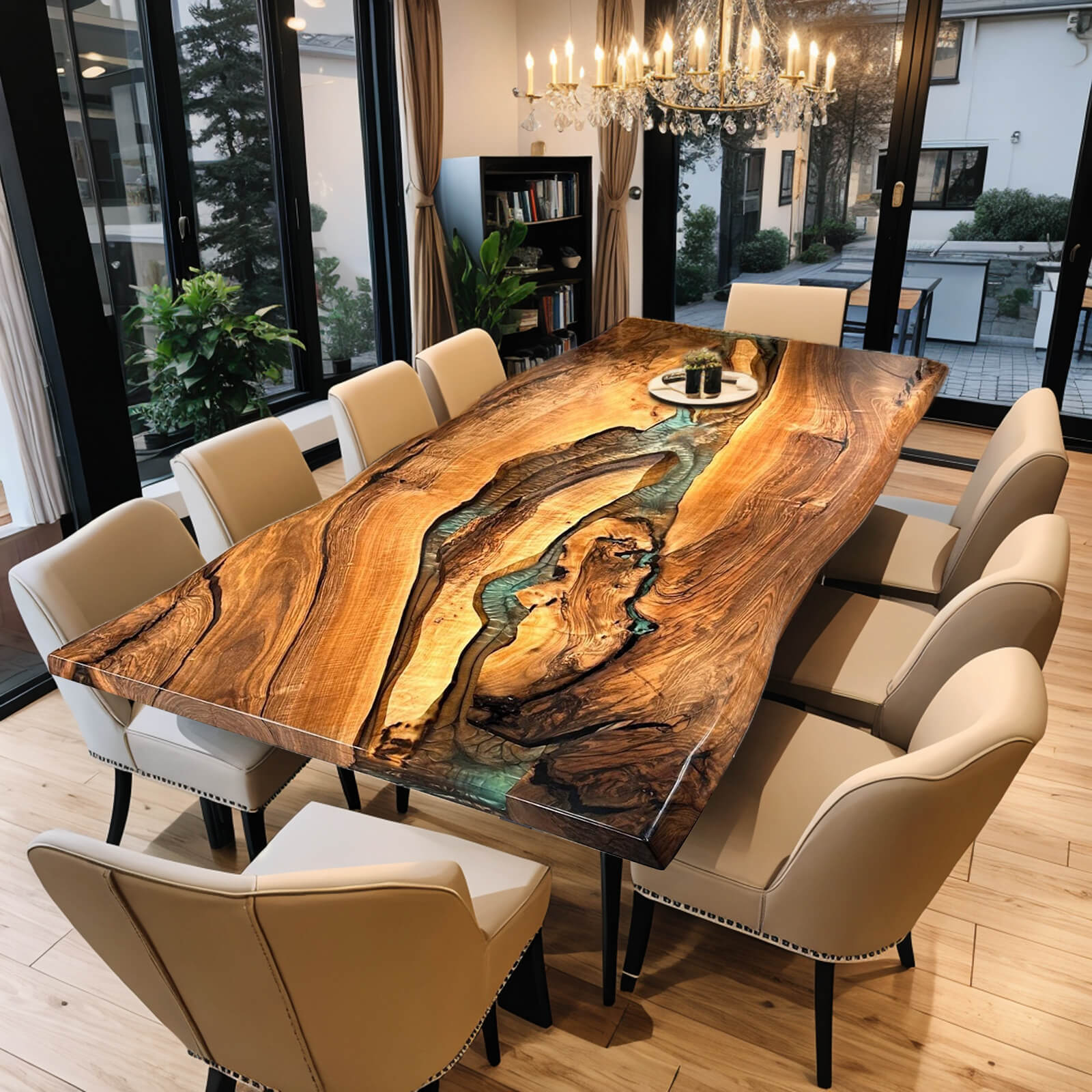
l The Power of Imperfection: The natural knots, burls, and splits in Poplar wood are not defects; they are critical mathematical patterns that soothe the nervous system.
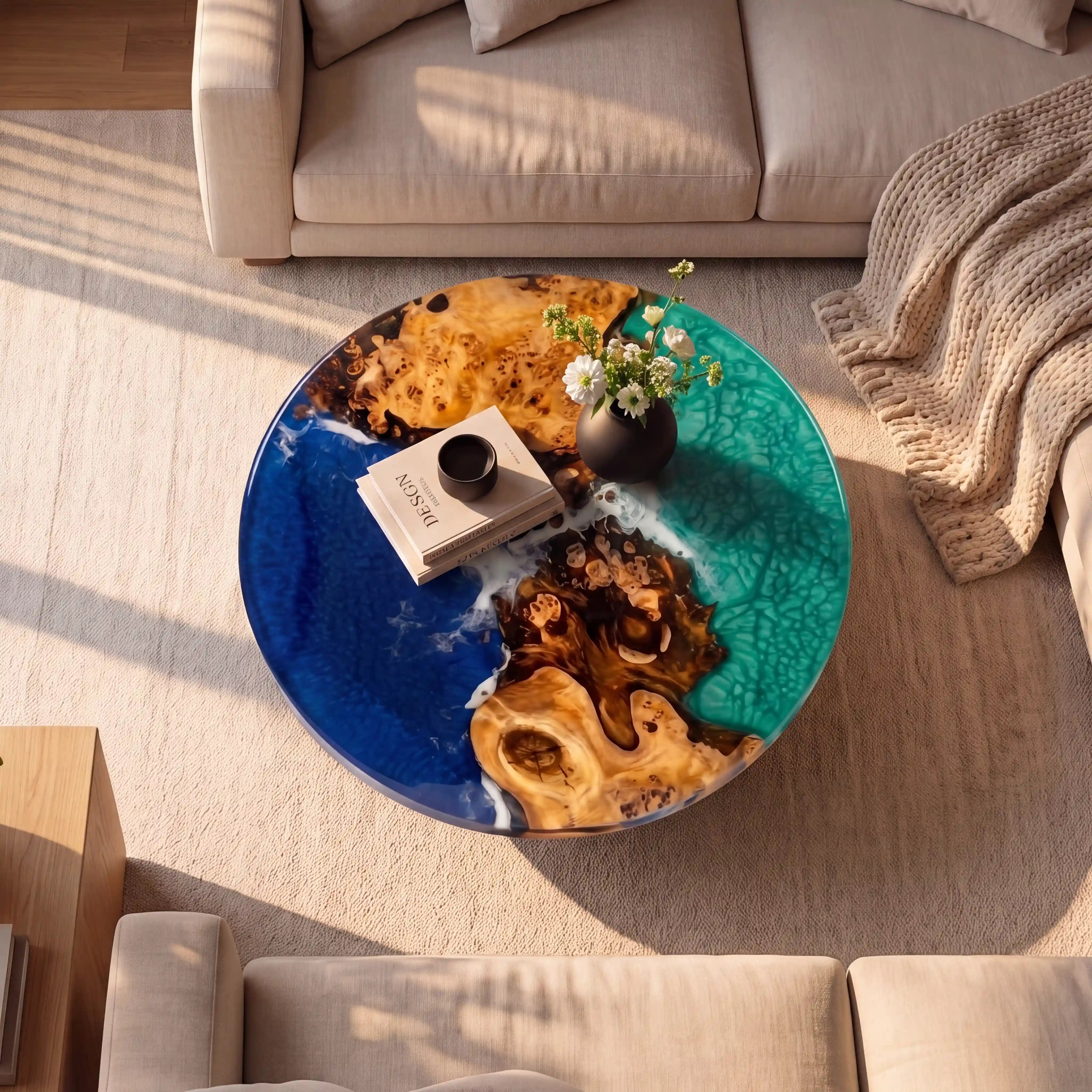
l Resin as a Stabilizer: Advanced epoxy resin allows these delicate, highly complex natural fractals to be preserved and utilized in functional, everyday furniture.
How Does Furniture Reduce Environmental Stress?
How does Neuroaesthetics explain the stress-reducing power of natural furniture? Neuroaesthetics explains that the human brain evolved to process natural, organic patterns effortlessly. When we are surrounded by natural furniture—such as solid wood with visible grain—our visual system easily processes these familiar patterns, leading to a measurable drop in blood pressure, heart rate, and cortisol levels.
In 2026, the phrase "Trust me, I'm a designer" is being replaced by "Here is the data". We are witnessing the rise of Neuroaesthetics and Science in Design, fields that study exactly how our physical environments impact our brain biology. For decades, hospitals and cancer treatment facilities have utilized these scientific principles—like introducing natural light and organic materials—to measurably drop patient stress levels. Now, these exact same biophilic strategies are becoming the standard for residential interior design.
The Science of Fractal Fluency in Wood Grain

What is Fractal Fluency and how does it relate to interior design? Fractal Fluency, a model developed by Dr. Richard Taylor, states that the human visual system has adapted to effortlessly process "mid-range fractals"—repeating mathematical patterns found in nature. Integrating these specific fractal patterns into interior design can trigger a physiological resonance that reduces human stress levels by up to 60%.
Fractals are complex patterns that repeat at increasingly fine size scales—think of the branching of trees, the formation of clouds, or the intricate capillary-like grain of wood. Dr. Richard Taylor’s groundbreaking research at the University of Oregon discovered that viewing fractals that fall within a "mid-range" of complexity triggers a massive physiological relaxation response.
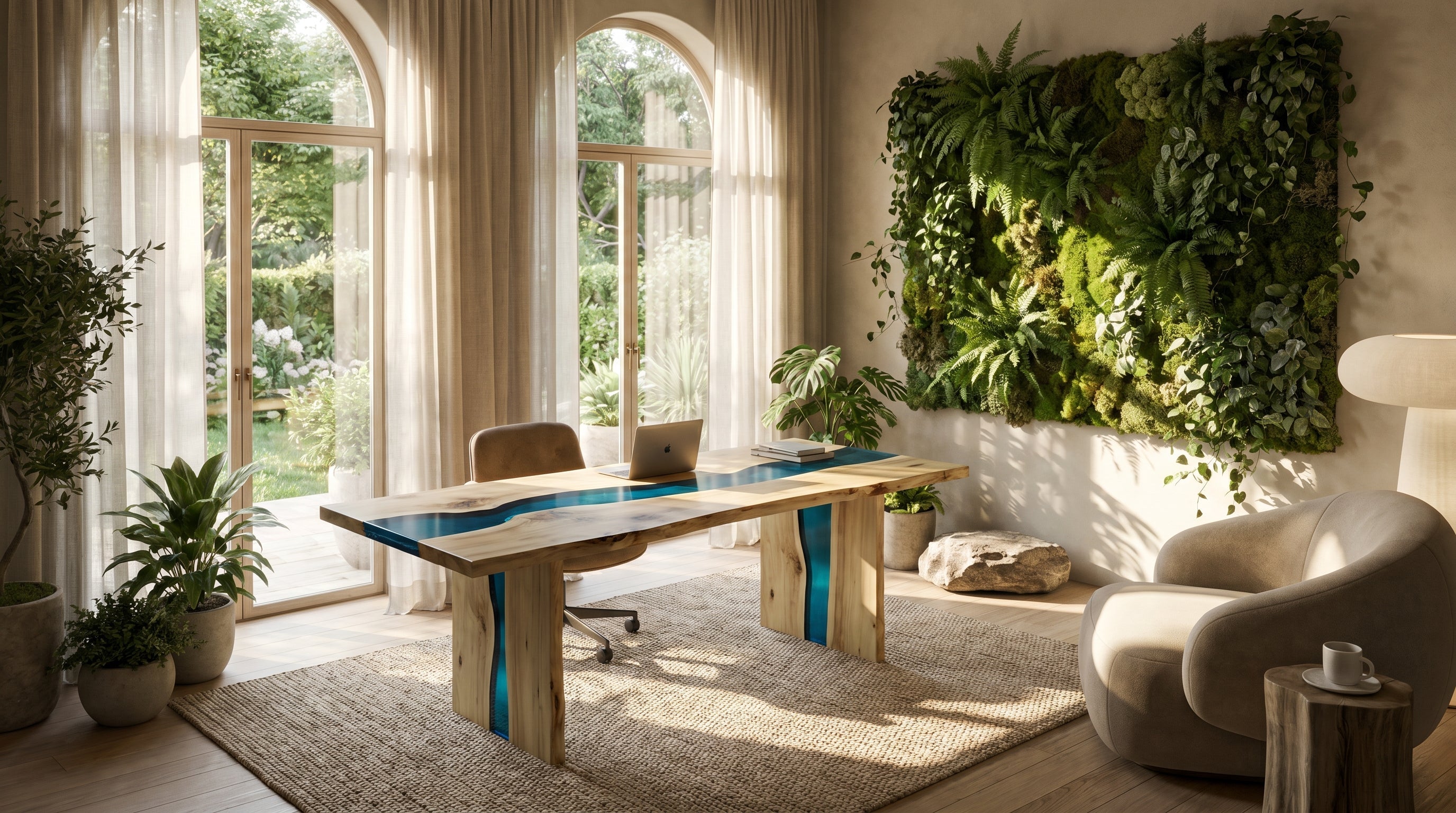
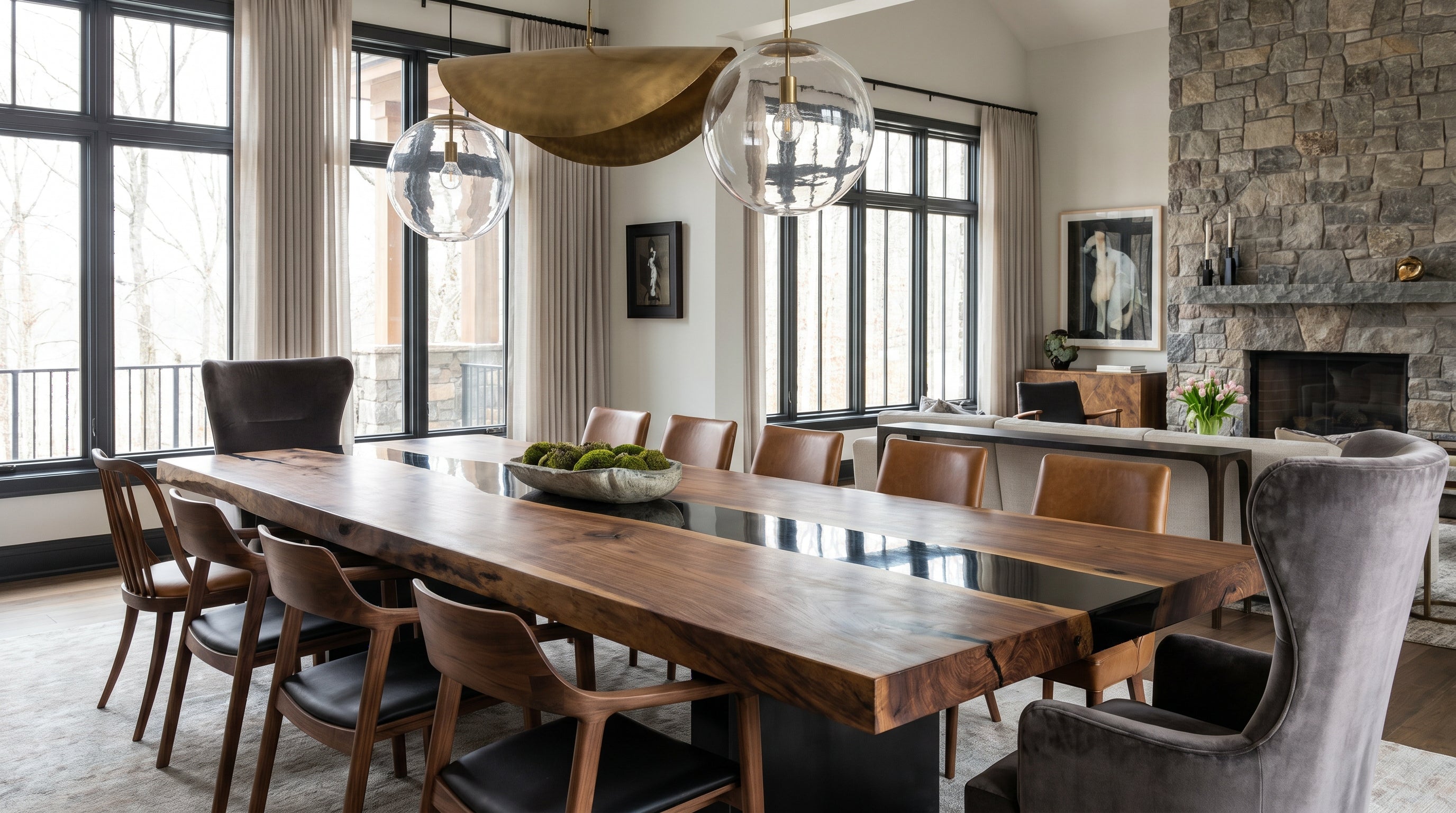
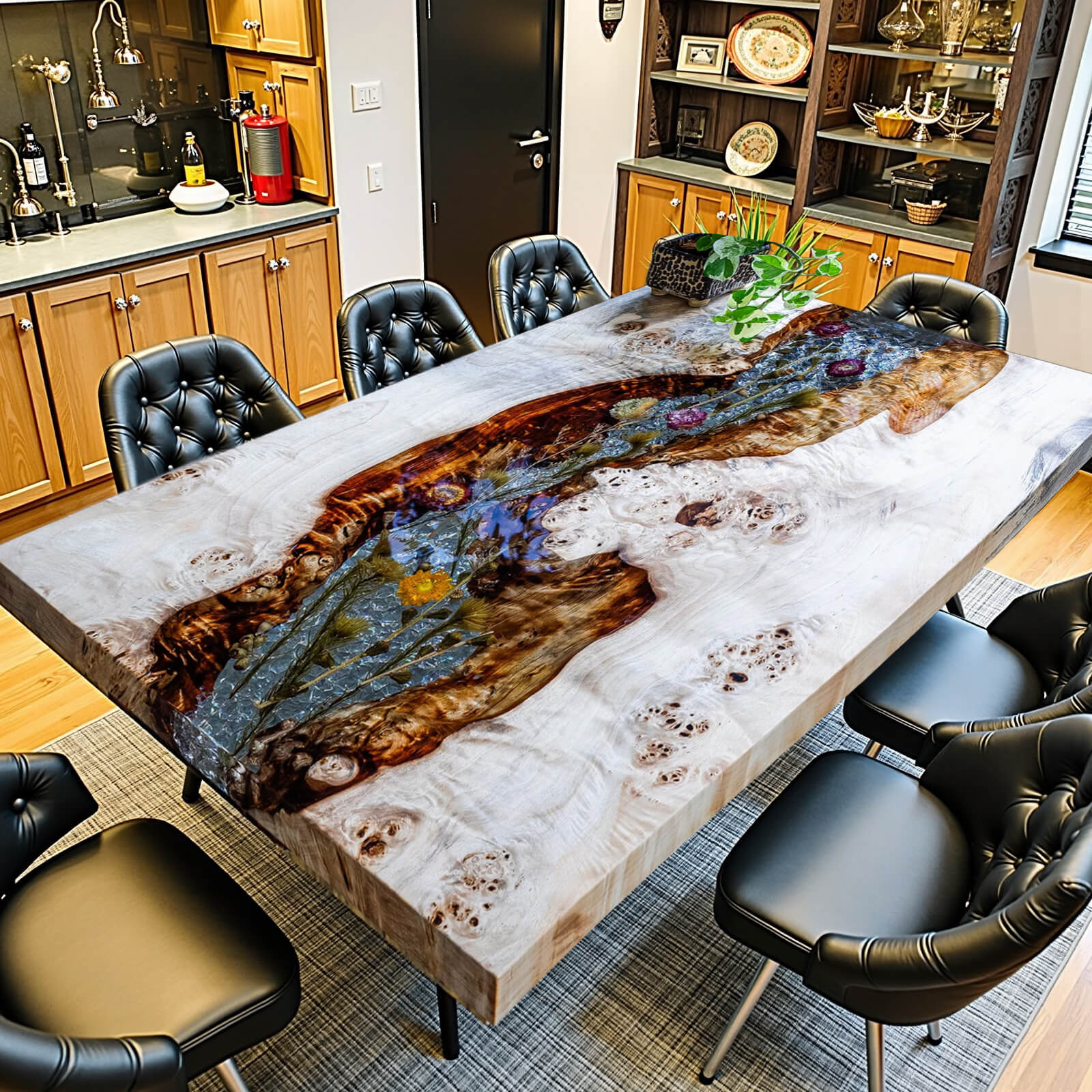
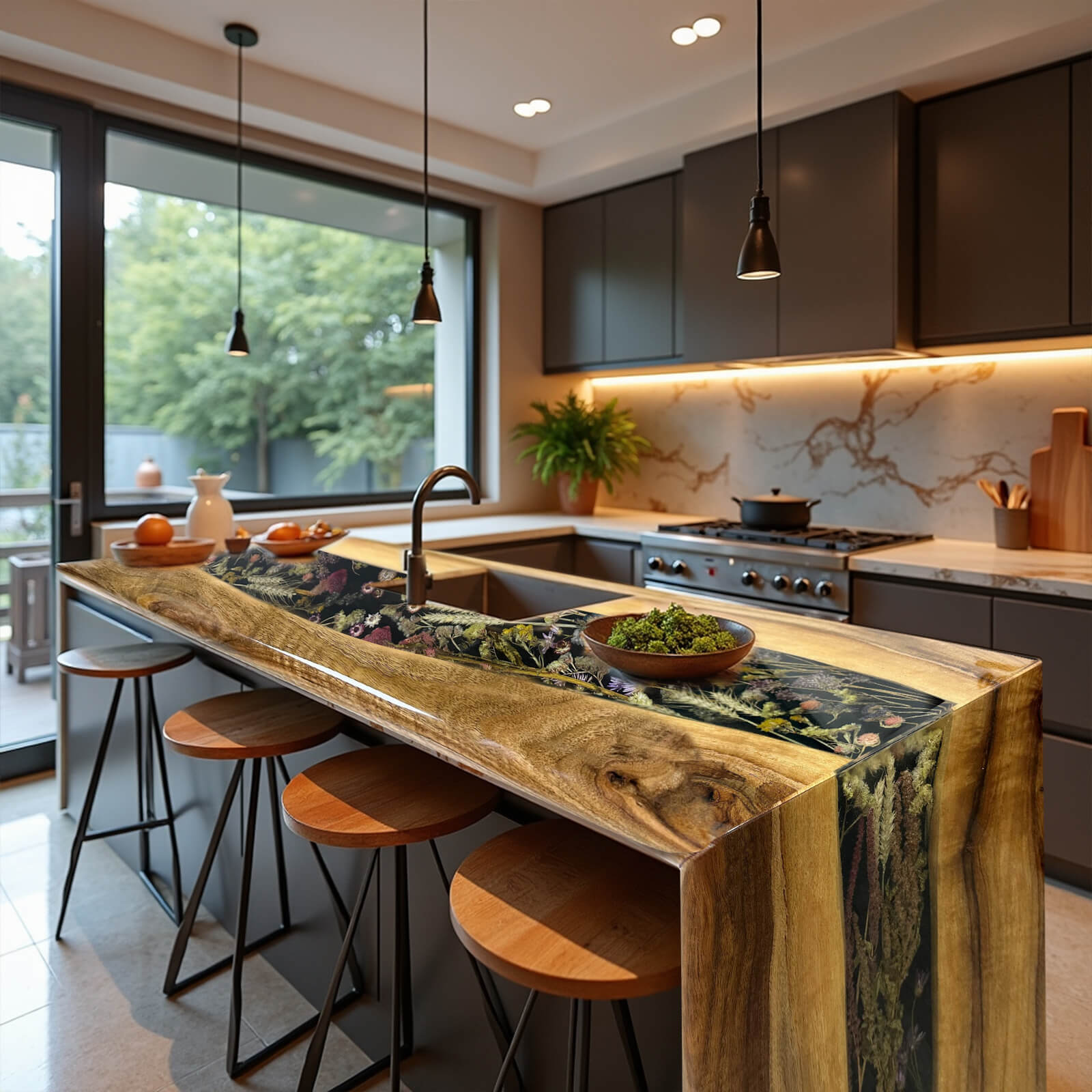
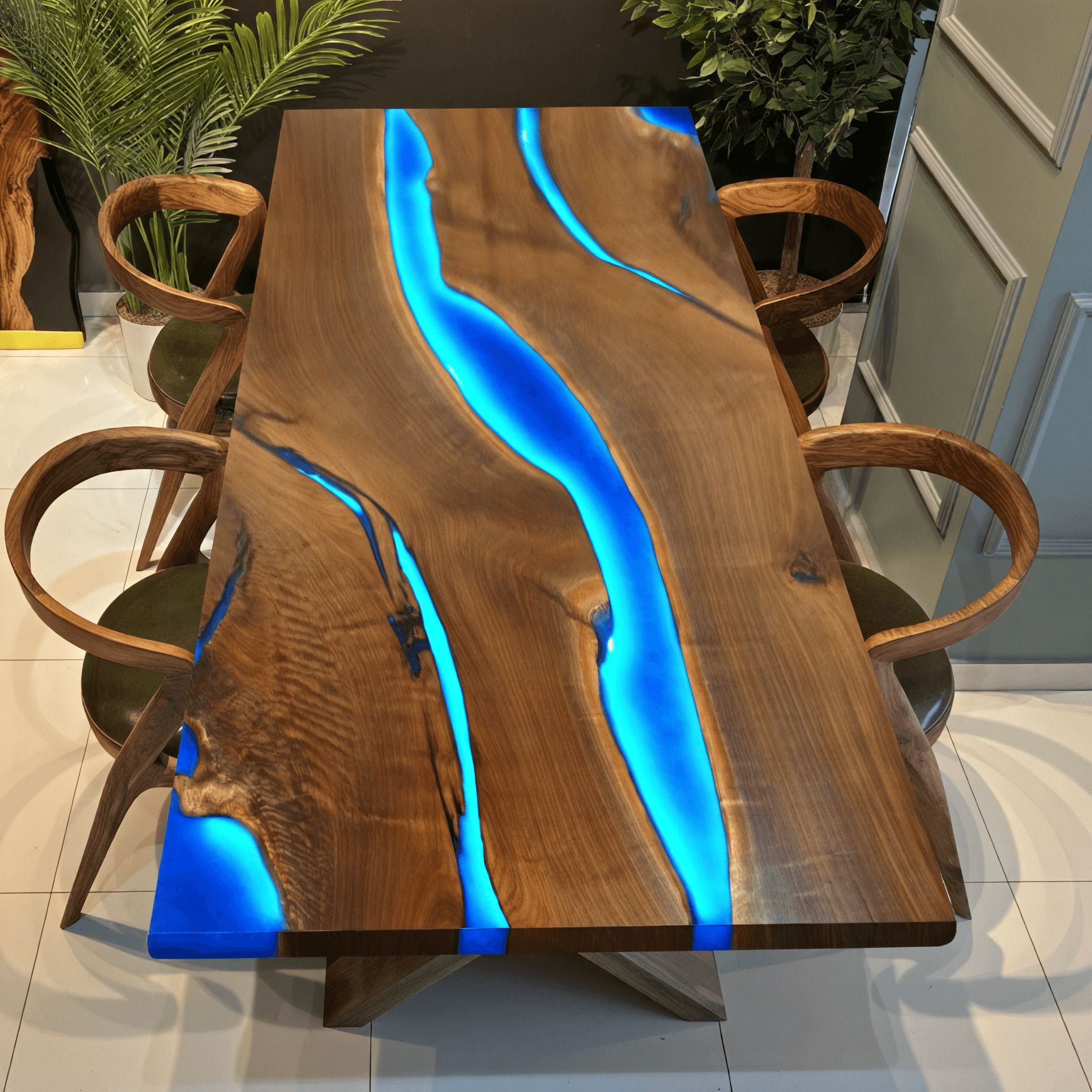
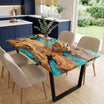
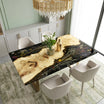
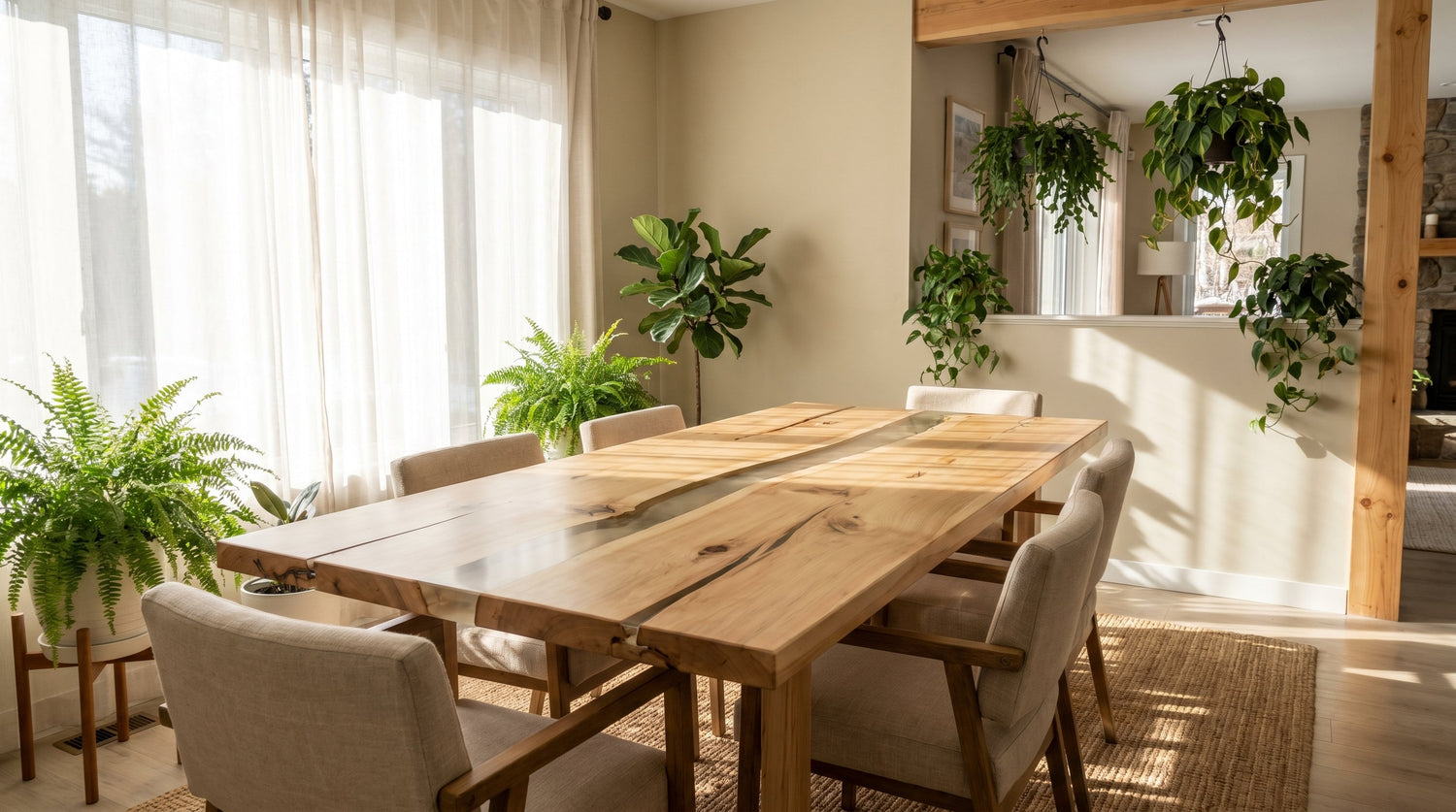
When we place a highly textured, natural Poplar wood table in a room, we are introducing a massive "statical fractal" into our environment. The human eye easily and naturally tracks the swirling wood grain, the organic live edge, and the intricate burls. This "effortless looking" prevents visual fatigue and acts as a powerful, subconscious stress-reducer, which is incredibly vital as society increasingly surrounds itself with rigid, urban, and digital landscapes.
Applying the 14 Patterns of Biophilic Design

How do custom resin tables fulfill the 14 Patterns of Biophilic Design? Custom resin and wood tables fulfill multiple Patterns of Biophilic Design, specifically "Material Connection with Nature," "Biomorphic Forms & Patterns," and "Complexity & Order." By preserving natural wood edges and mimicking water flows with resin, they provide a profound "Natural Analogue" experience.
Biophilic design is not just about putting a potted plant in a corner; it is an evidence-based architectural framework comprising 14 distinct patterns. A handcrafted Poplar and epoxy resin table is a masterclass in applying these patterns:
1. Material Connection with Nature: The use of real, tactile Poplar wood stimulates the somatosensory cortex, fostering feelings of belonging and comfort.
2. Complexity and Order: The wood provides the chaotic, complex fractal patterns, while the smooth, geometric lines of the table's overall shape and the flat resin surface provide the necessary order, preventing visual overstimulation.
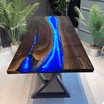
3. Presence of Water: High-quality, translucent blue or clear epoxy resin visually mimics the depth and flow of a river, fulfilling the biophilic need for the presence of water, which is globally recognized for its calming effects.
By embracing the "Imperfect Aesthetics" of wood—the natural splits, knots, and wild grain—and stabilizing them with highly durable resin, furniture makers are creating functional art that actively heals the environment it inhabits.
Frequently Asked Questions (FAQ) Ecosystem
1. What is Neuroaesthetics in interior design? Neuroaesthetics is the scientific study of how the brain responds to art, beauty, and design. In interior design, it involves using scientific data—such as brainwave mapping and heart rate monitoring—to create physical spaces that measurably improve mental wellbeing and cognitive function.
2. What are fractals in nature? Fractals are complex, self-similar patterns that repeat at different scales. In nature, examples include snowflakes, coastlines, lightning bolts, tree branches, and the cellular grain structures found inside wood.
3. How much can viewing natural fractals reduce stress? According to research by Dr. Richard Taylor at the University of Oregon, exposure to natural, mid-range fractal patterns can trigger a physiological relaxation response that reduces stress levels by up to 60%.
4. What does the term "Biophilia" mean? Biophilia translates to "love of life." It is a hypothesis popularized by Edward O. Wilson which suggests that humans possess an innate, biological tendency to seek connections with nature and other forms of life.
5. What are the 14 Patterns of Biophilic Design? The 14 Patterns of Biophilic Design form an architectural framework divided into three categories: Nature in the Space (e.g., presence of water, natural light), Natural Analogues (e.g., biomorphic shapes, wood materials), and Nature of the Space (e.g., prospect and refuge).
6. Why is Poplar wood considered a "Natural Analogue"? Poplar wood is a natural analogue because it brings an indirect, physical representation of nature indoors. Its distinct grain, textures, and burls mimic the complexity of the outdoors, satisfying the human psychological need to connect with the natural world.
7. Why shouldn't wood knots and splits be covered up or removed? Knots, splits, and burls should not be removed because they provide the highest density of "mid-range fractals." These natural imperfections are exactly what the human eye needs to engage in "effortless looking," which lowers environmental anxiety.
8. How does epoxy resin make imperfect wood usable? Epoxy resin acts as a supreme structural stabilizer. It fills the natural voids, splits, and soft spots in complex burls, turning fragile, highly textured wood into a completely flat, non-porous, and incredibly durable surface suitable for daily use.
9. Can furniture really act as a form of healthcare? Yes. Studies show that environments designed with neuroaesthetic and biophilic principles—like the Maggie's Centres for cancer patients—measurably lower stress and accelerate healing. Applying these principles to residential furniture creates a form of preventative, ambient wellness.
10. What is "Salutogenesis" in architecture? Salutogenesis is an approach focusing on factors that support human health and well-being, rather than on factors that cause disease. In design, integrating elements like natural light and fractal wood patterns represents a salutogenic approach, actively promoting physical and mental vitality.