










The Saturated Romance of Contemporary Spaces
For over a decade, high-end residential interiors were dominated by a cold, clinical aesthetic. Cool grey laminate floors, stark white walls, and wire-thin minimalist metal furniture created spaces that felt more like clinical galleries than welcoming homes. But homes are built to embrace us, not isolate us. In 2026, the interior design community has declared a passionate, long-overdue rebellion against sterile minimalism. We are welcoming a triumphant return of deep, saturated romance, lead by warm, earth-inspired palettes, organic textures, and a design technique that has captured the imagination of the world's leading architects: "Color Drenching".
According to the comprehensive 2026 Interior Design Survey published by 1stdibs, a striking 33% of elite designers have selected Chocolate Brown (Chocolate Brown) as their absolute favorite color for the year. This preference has nearly doubled over a short four-year period, rising from just 17% in 2022. At the same time, interest in rich, moody hues like Burgundy (Burgundy) has experienced a dramatic rebound, rising from 7% last year to a powerful 21% for 2026 , with forest green and sage following a similar upward trend.
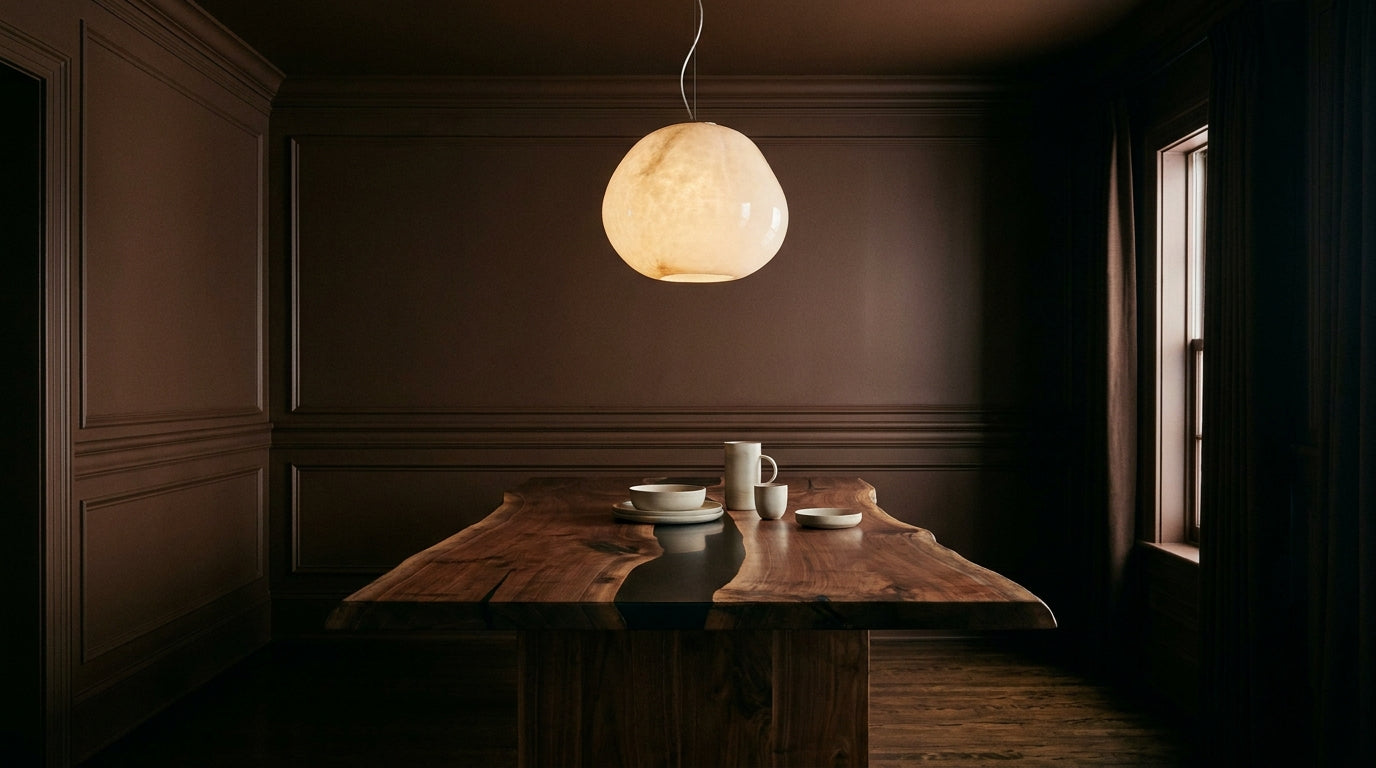
Color Drenching—where walls, baseboards, door frames, and even the ceiling (now famously called the "fifth wall") are painted in a single, deeply saturated, matte tone—creates an intimate, cocoon-like shelter. It is a look that feels incredibly luxurious, unified, and expressive. However, when you wash a dining room in a color as deep as a dark espresso, an inky Prussian blue, or a velvet burgundy, your furniture cannot be a simple afterthought. Standard, mass-produced, thin-profile wooden tables with matching chairs will simply dissolve into the background, leaving the room feeling flat, dark, and unanchored.
To rescue a color-drenched space from visual monotony, you need a dining table with genuine architectural scale and tactile soul.
Why Black Walnut is the Ultimate Anchor
When styling a deeply saturated or color-drenched dining room, your choice of wood species is the most critical decision. Pale, washed-out oaks, yellow pines, or synthetic wood veneers fail to provide the necessary visual gravity. This is why designers are turning back to the unparalleled majesty of kiln-dried North American Black Walnut.
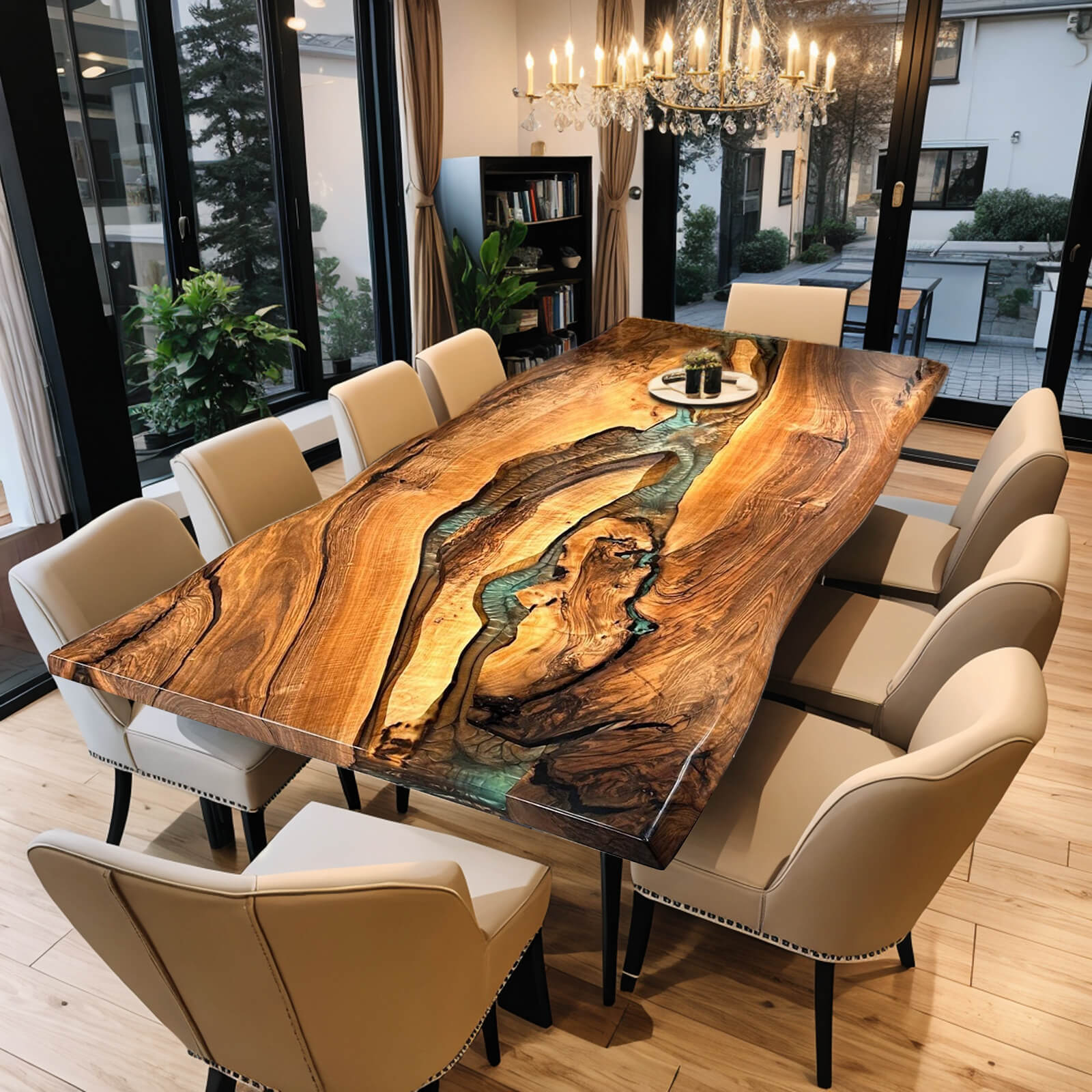
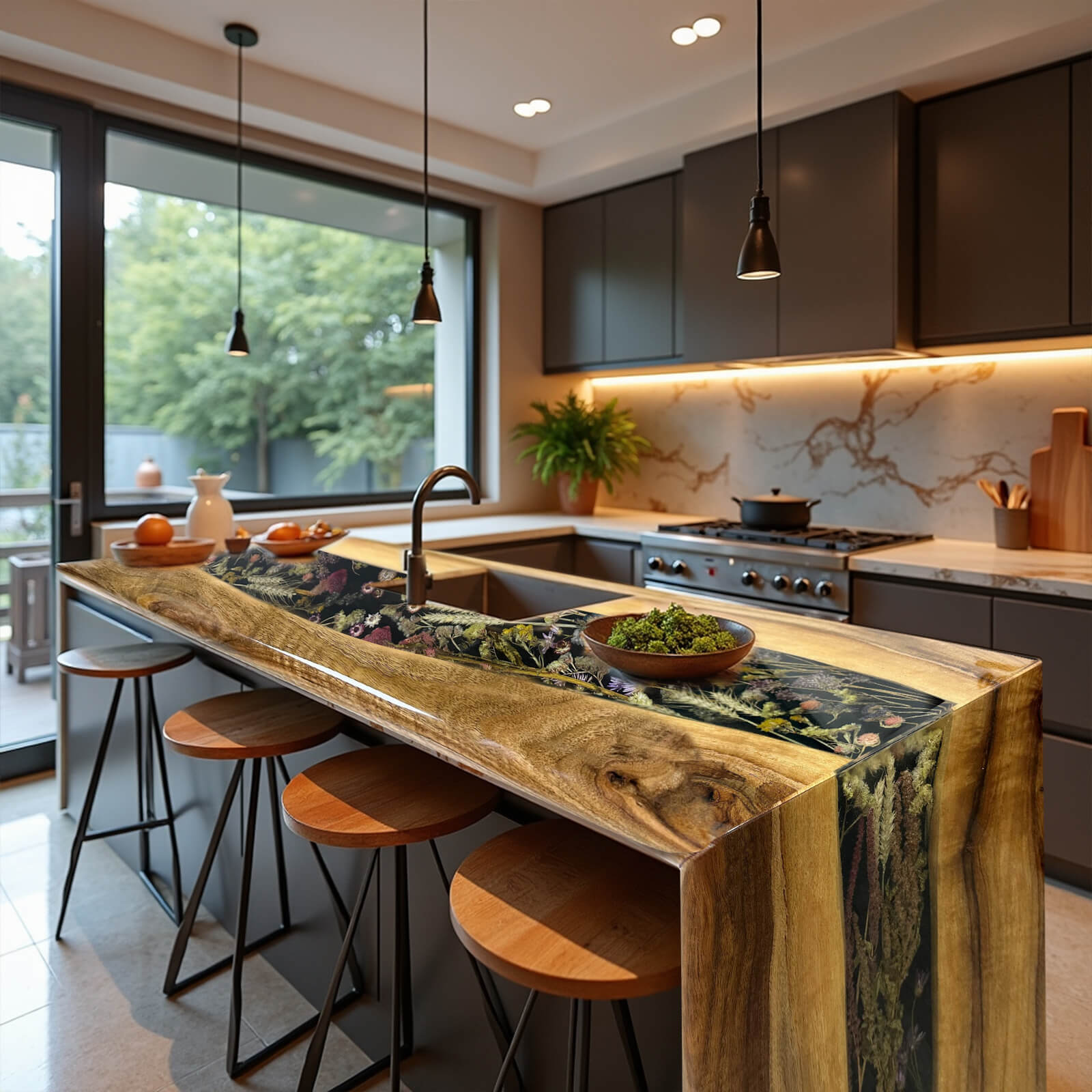
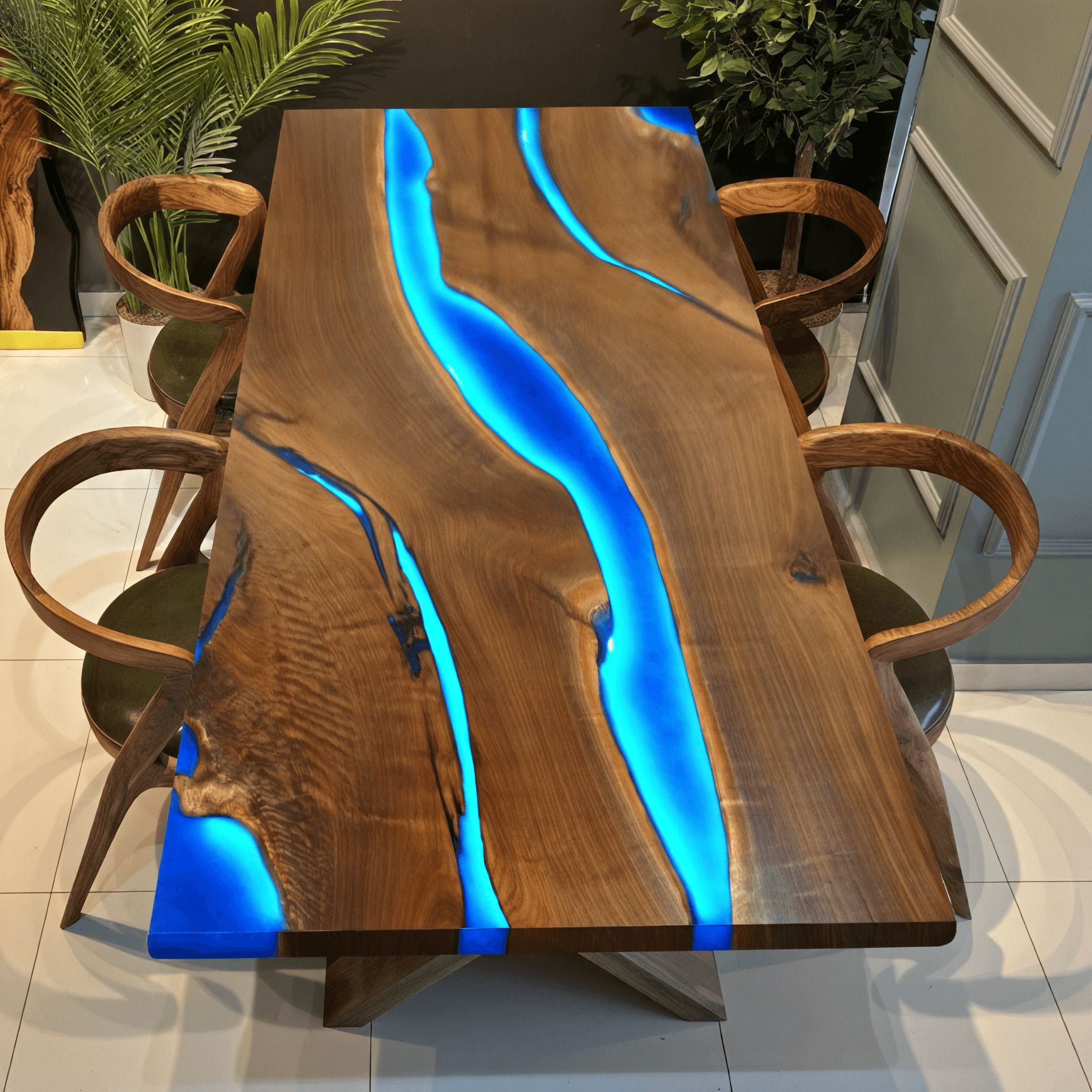
Black Walnut is celebrated by custom furniture makers for its rich chocolate-to-espresso undertones, accented by creamy sapwood borders and complex, swirly grain patterns. Because it naturally possesses a warm, deep tonal spectrum, a custom Black Walnut tabletop behaves like a massive natural canvas in the center of your room. It doesn't fight the surrounding wall colors; instead, it harmonizes with them, drawing out the organic undertones of chocolate browns, hunter greens, and rust oranges.
At createatable.com, we select each walnut slab not just for structural integrity, but for its artistic, "painterly" quality. When light hits our hand-finished, satin-smooth Black Walnut, the wood grain displays a subtle, three-dimensional depth. In a room washed in a solid, matte paint, this rich texture introduces a vital layer of tactile contrast. The table becomes the physical heart of the room—a place that invites touch, encourages lingering conversation, and commands attention.

The Rise of Monolithic Plinths and Sculptural Geometry
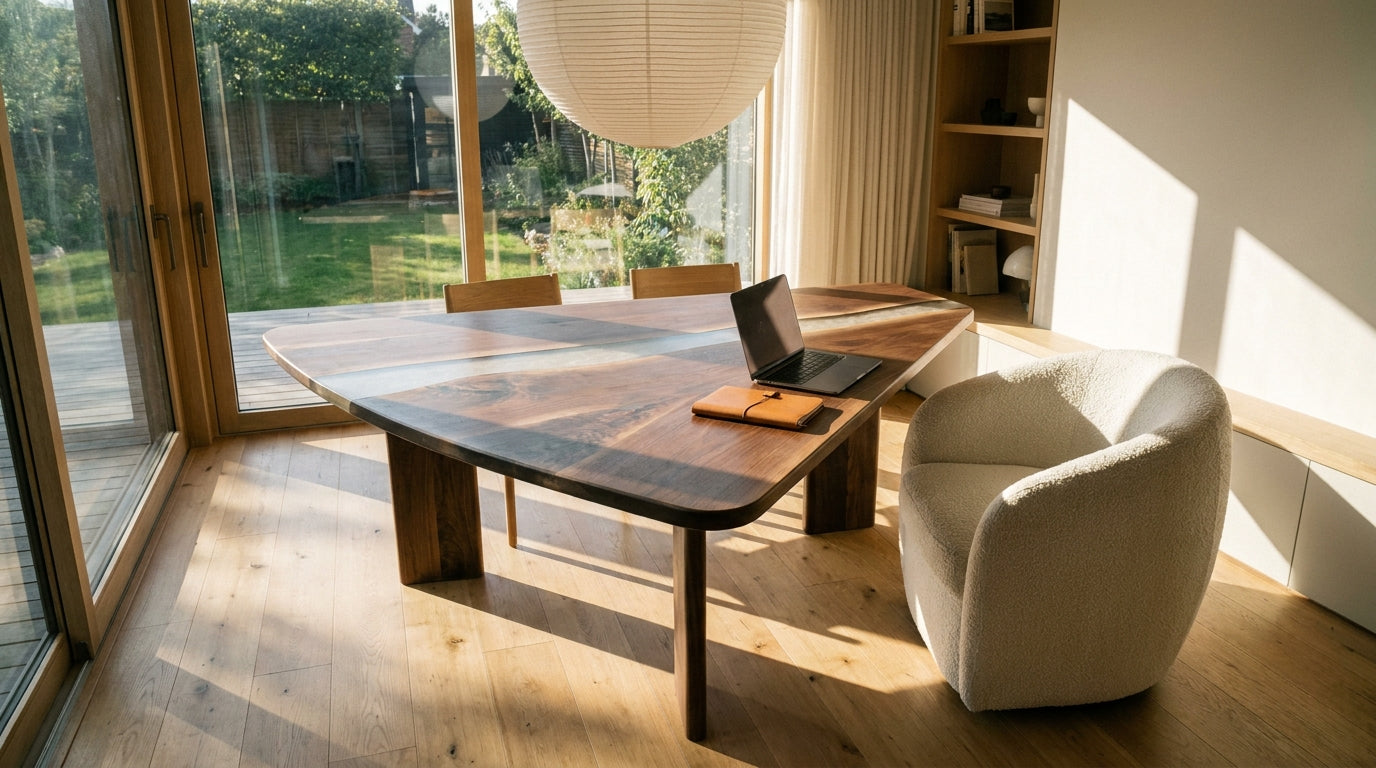
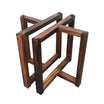
In 2026, the silhouette of the dining table has evolved beyond the predictable four-cornered legs. Designers are embracing bold, monolithic geometry—specifically, Plinth (block-style/columnar) bases and architectural pedestals.
A plinth base is a thick, solid column (often crafted from matching solid wood or contrasted with raw stone) that supports the tabletop from the center. Structurally, this design removes the visual clutter of corner legs, allowing the tabletop to appear as if it is floating elegantly in space. Visually, a heavy plinth base gives the table a grounded, monument-like quality that holds its own in large, open spaces or deeply colored rooms where thin furniture would look lost.
When styling your dining room, pair your sculptural Black Walnut plinth table with contrasting textures to create a layered, "collected" home:
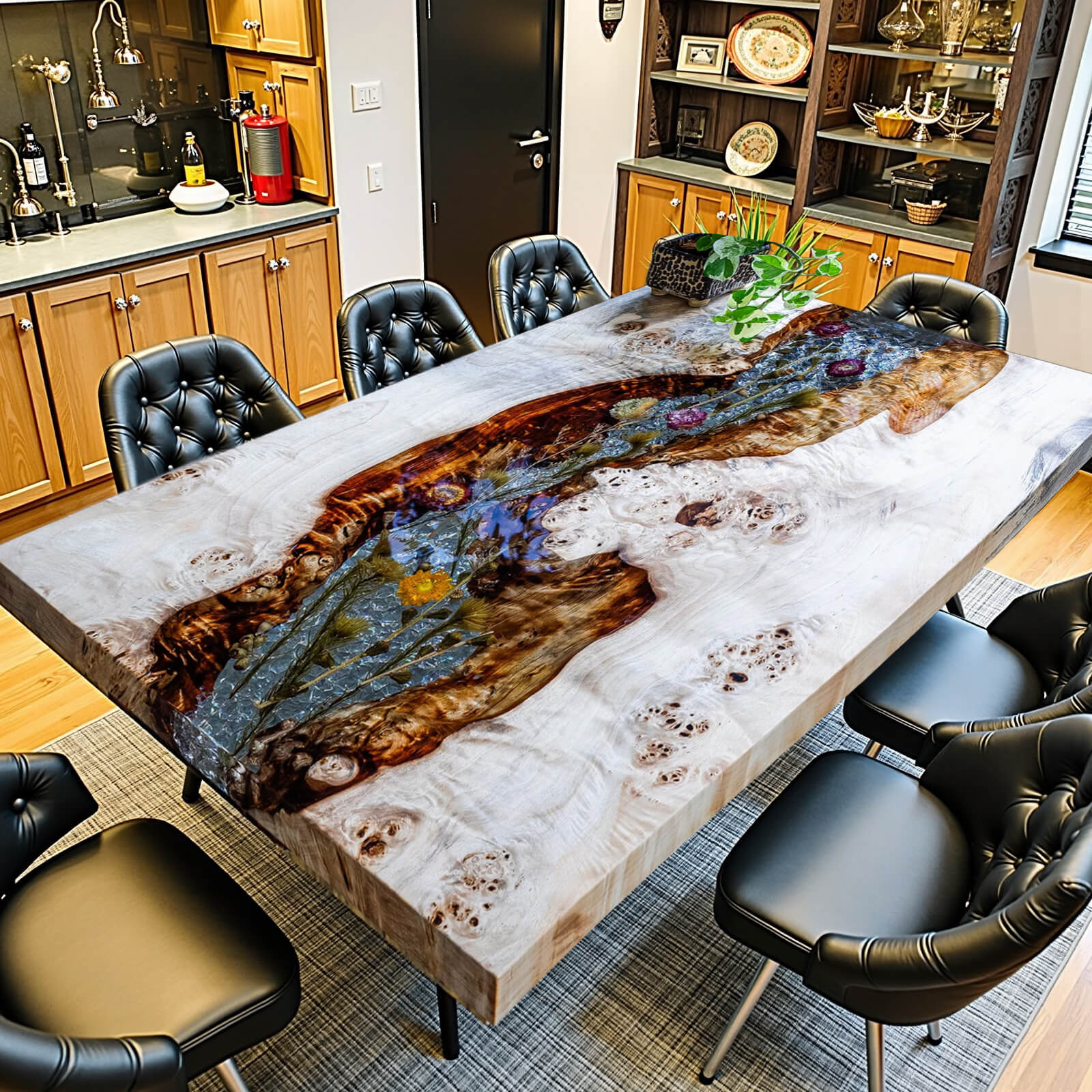
1. The Seating: Avoid perfectly matching wood-on-wood dining sets, which can feel stiff and overly staged. Instead, introduce mix-and-match seating. Surround your table with curved dining chairs upholstered in highly tactile, soft fabrics like creamy bouclé, warm terracotta velvet, or rich vintage leather. This soft upholstery contrasts beautifully with the hard, smooth surface of the wood.
2. The Lighting: In 2026, lighting is a major focus. According to 1stdibs, 28% of designers expect Murano-glass pendants to be the top lighting trend of the year. To elevate your sculptural table, hang a single, oversized artistic light fixture—such as a hand-blown Murano glass pendant or a dramatic plaster dome—exactly 75 to 85 centimeters above the tabletop. This focuses warm, low-glow illumination directly onto the natural beauty of the wood grain, creating an inviting, intimate circle of light.
3. The Fifth Wall: Don't leave your ceiling white! Consider wallpapering or painting your ceiling to match the color-drenched walls. This draws the eye upward, highlighting the height of the room and framing your custom table as a true, gallery-worthy installation.
By pairing the architectural weight of a custom plinth table with the dramatic intimacy of color drenching, you transform your dining room from a sterile showroom into a deeply personal sanctuary built for connection, warmth, and slow living.