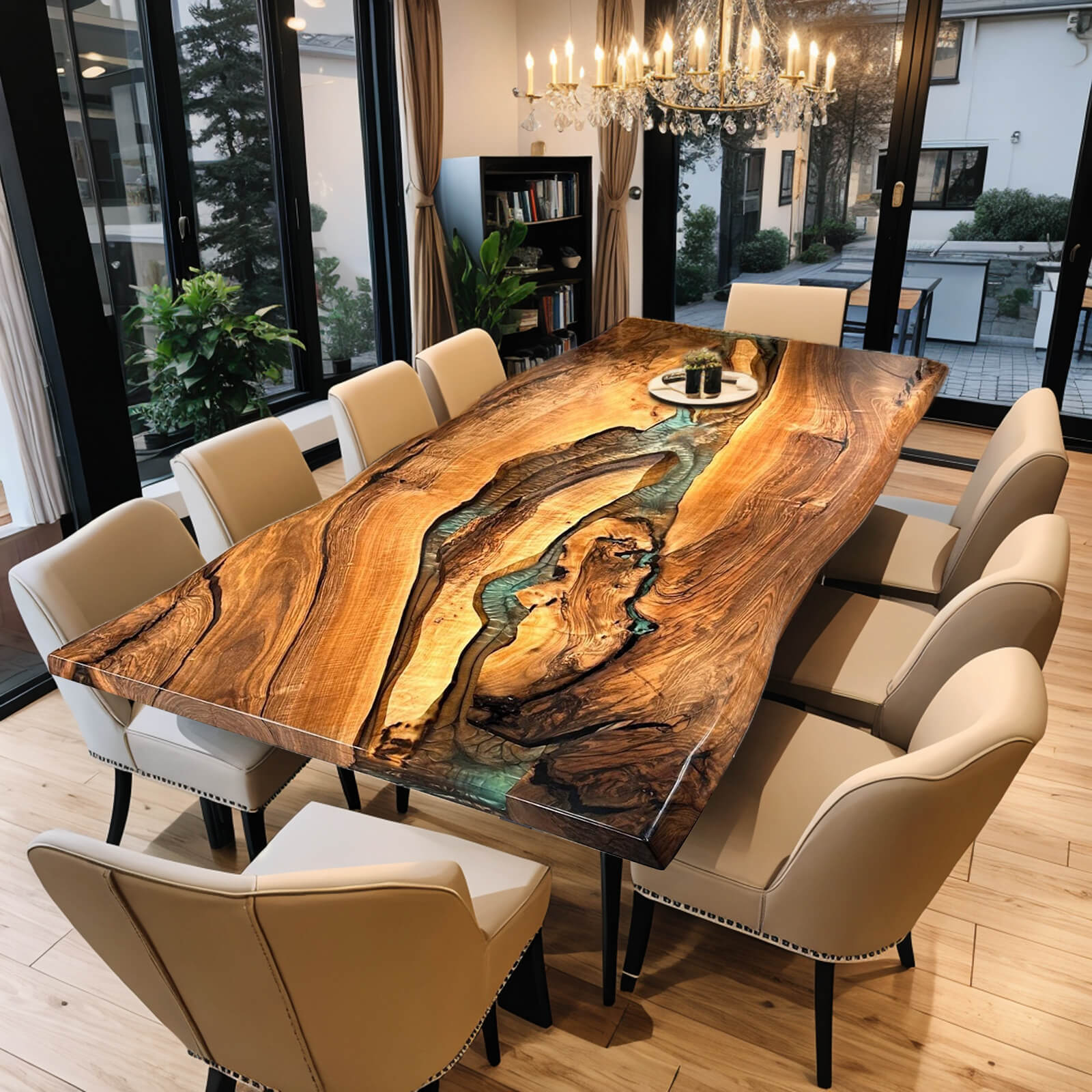
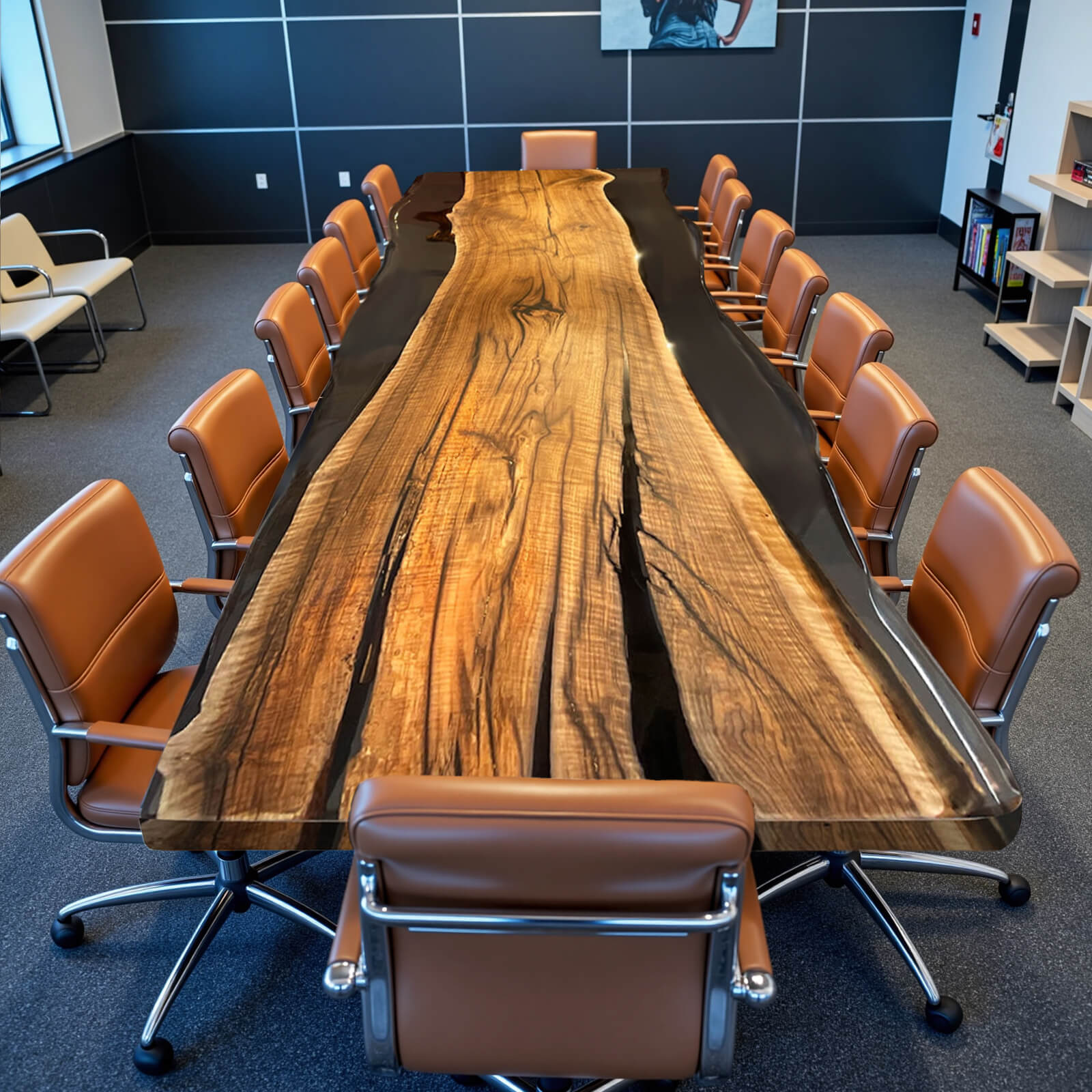
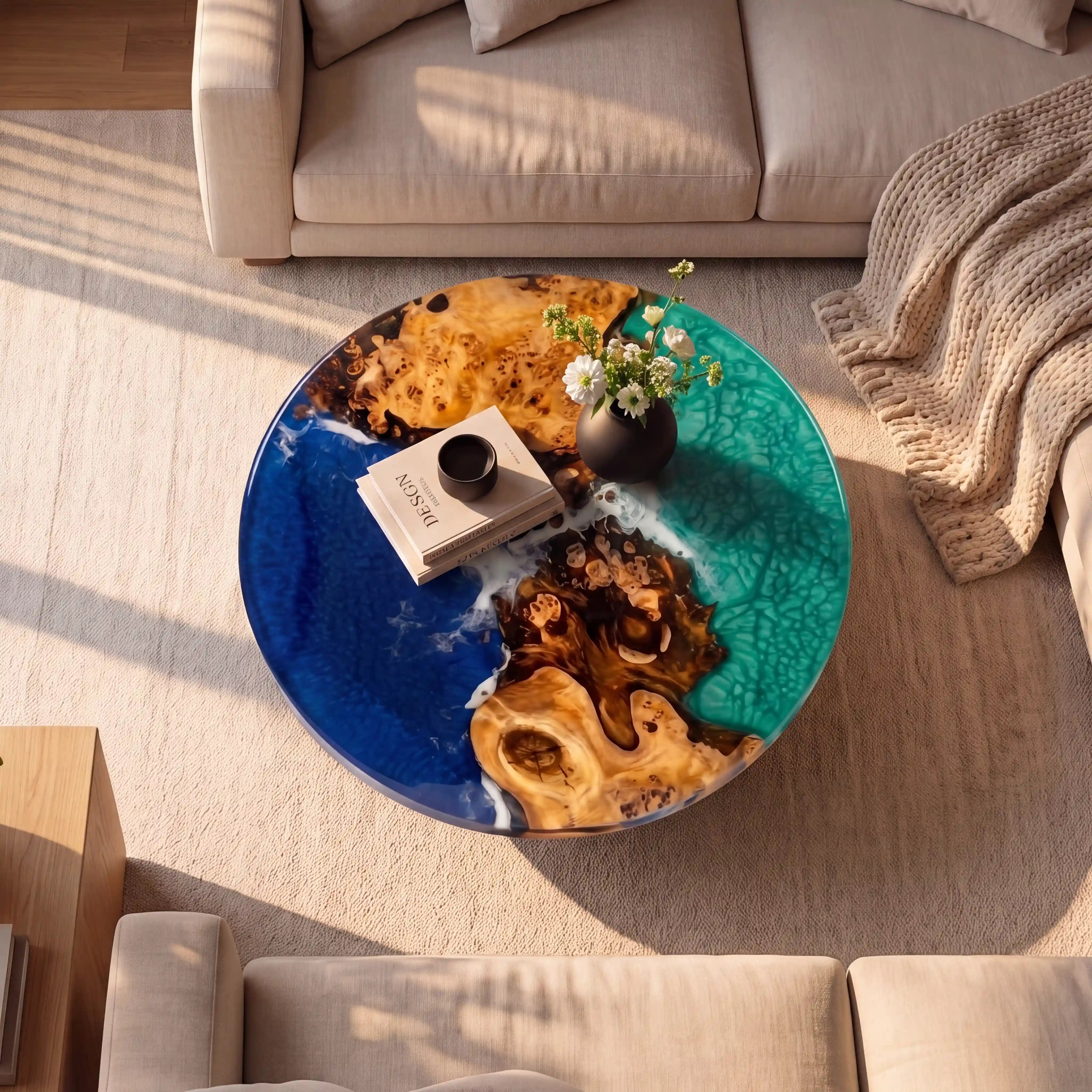
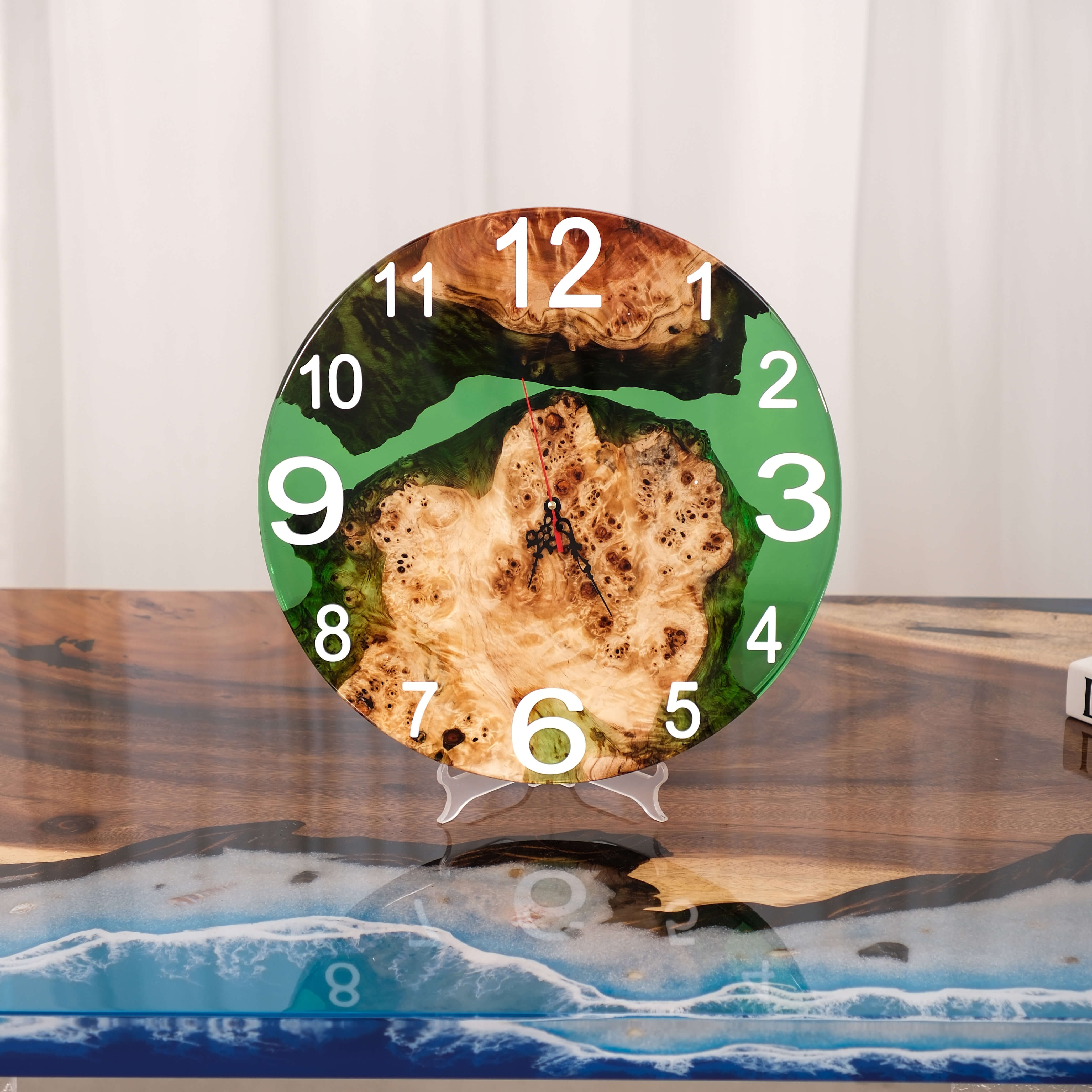
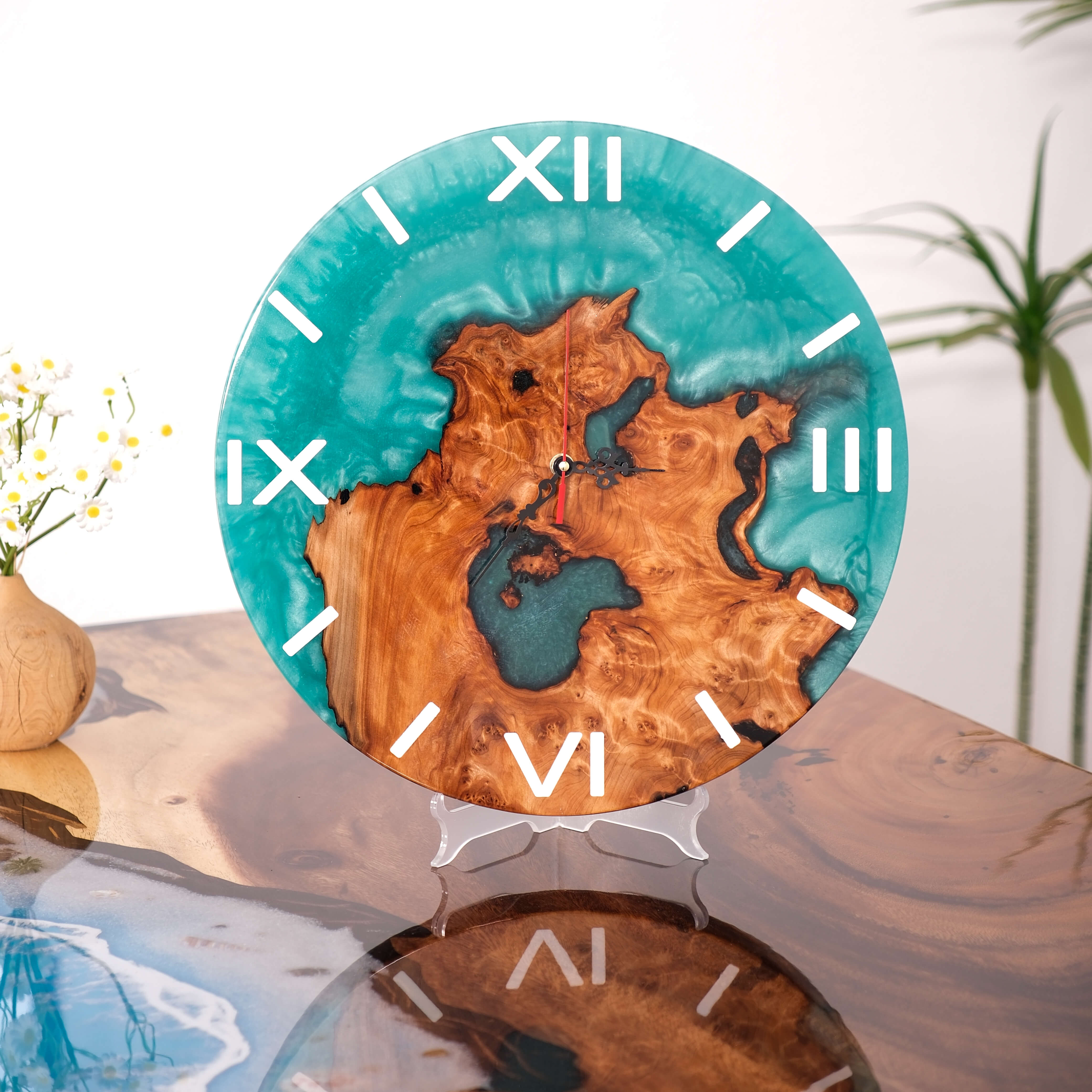
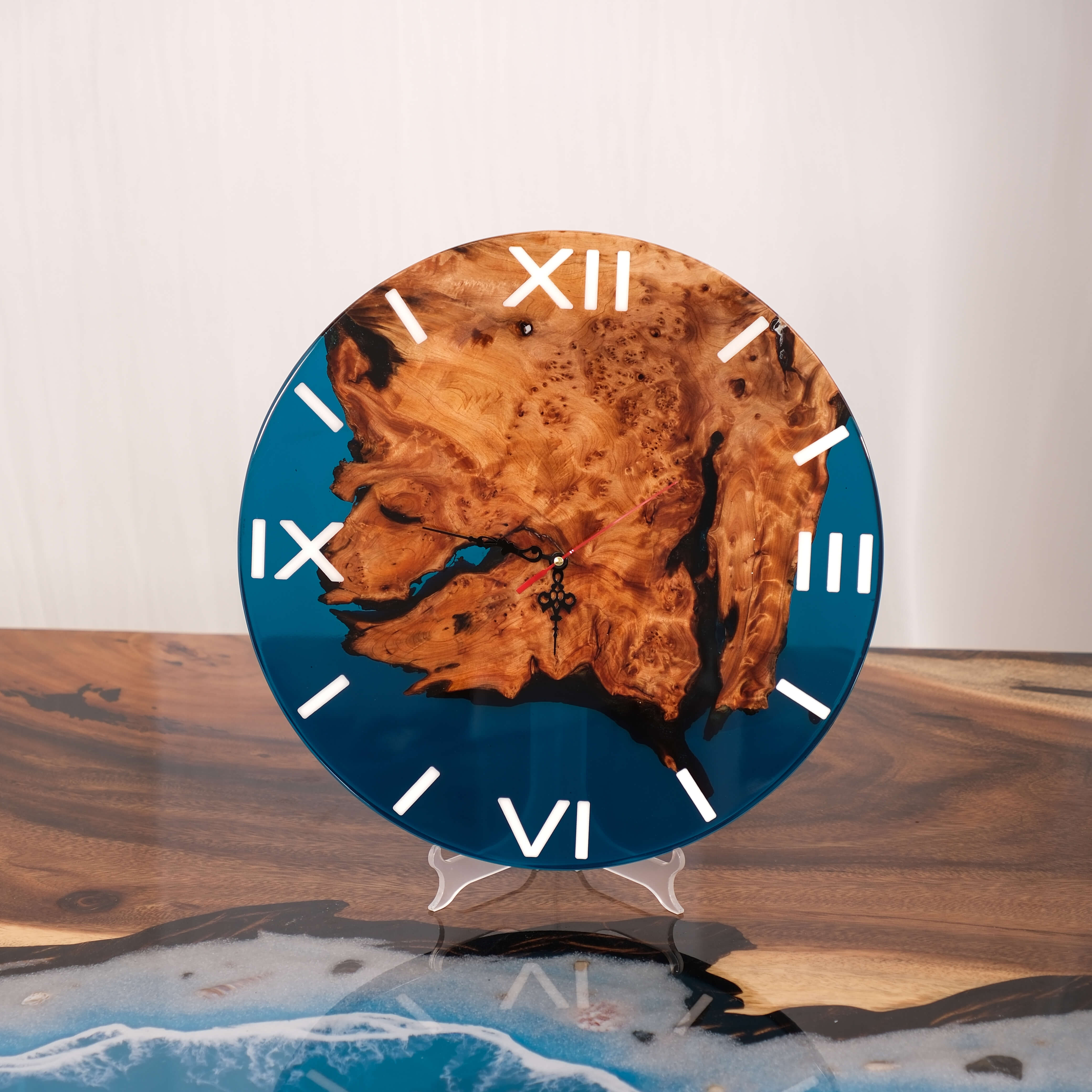
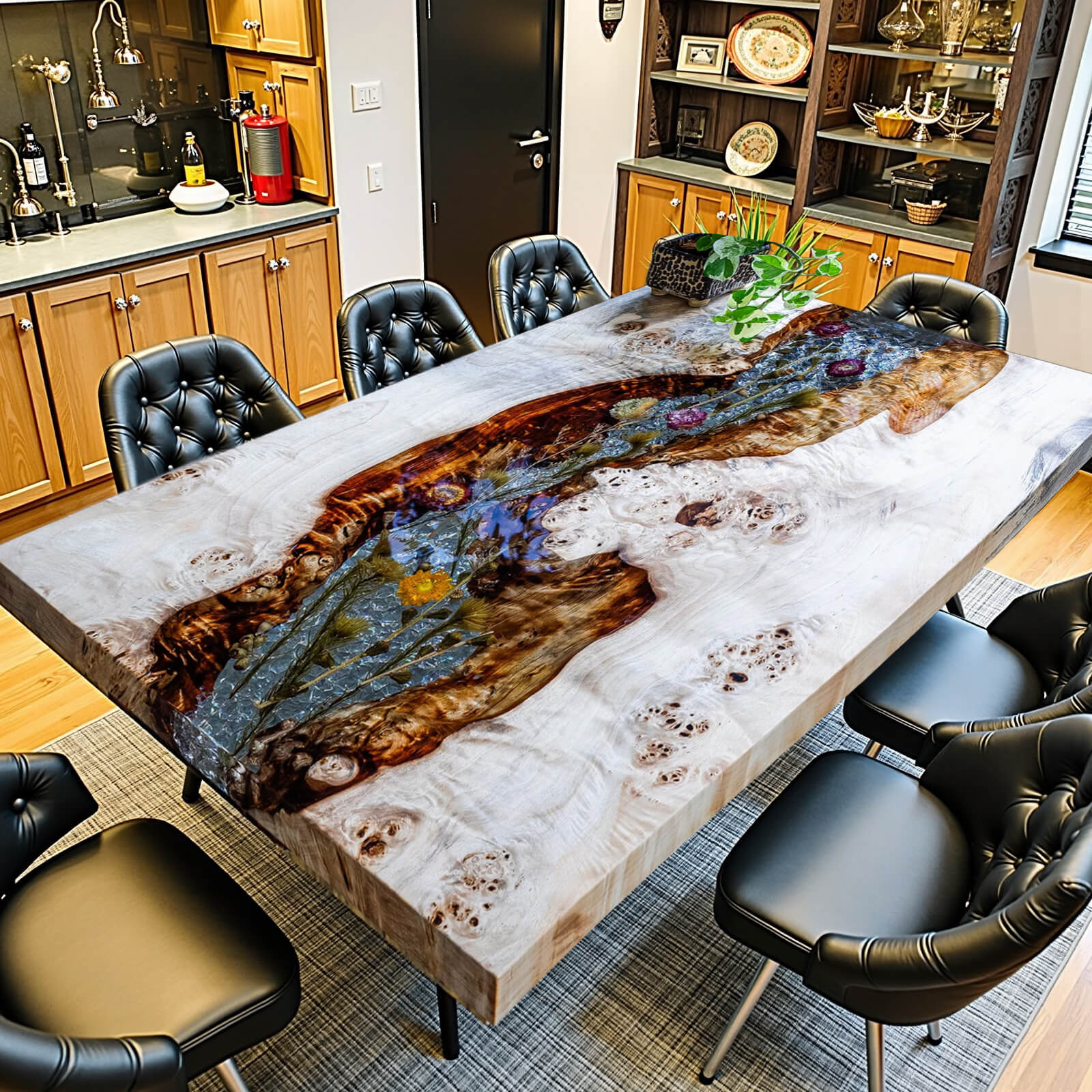
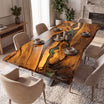


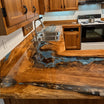


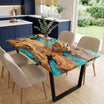
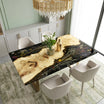
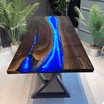




When people hear epoxy resin and wood slabs, the first image that usually comes to mind is an epoxy river table.
And for good reason.
Dining tables, coffee tables, and desks are among the most recognizable applications of this material combination.
But limiting wood slab and epoxy furniture to tables misses most of the possibilities.
The same materials can be used for doors, cabinets, wardrobes, media consoles, vanities, shelving, benches, nightstands, and custom architectural furniture.
In other words, wood slabs and epoxy resin are not a furniture category by themselves. They are a material system that can be adapted to many furniture categories.
So what can you actually make with wood slabs and epoxy?
Let's look beyond the river table.
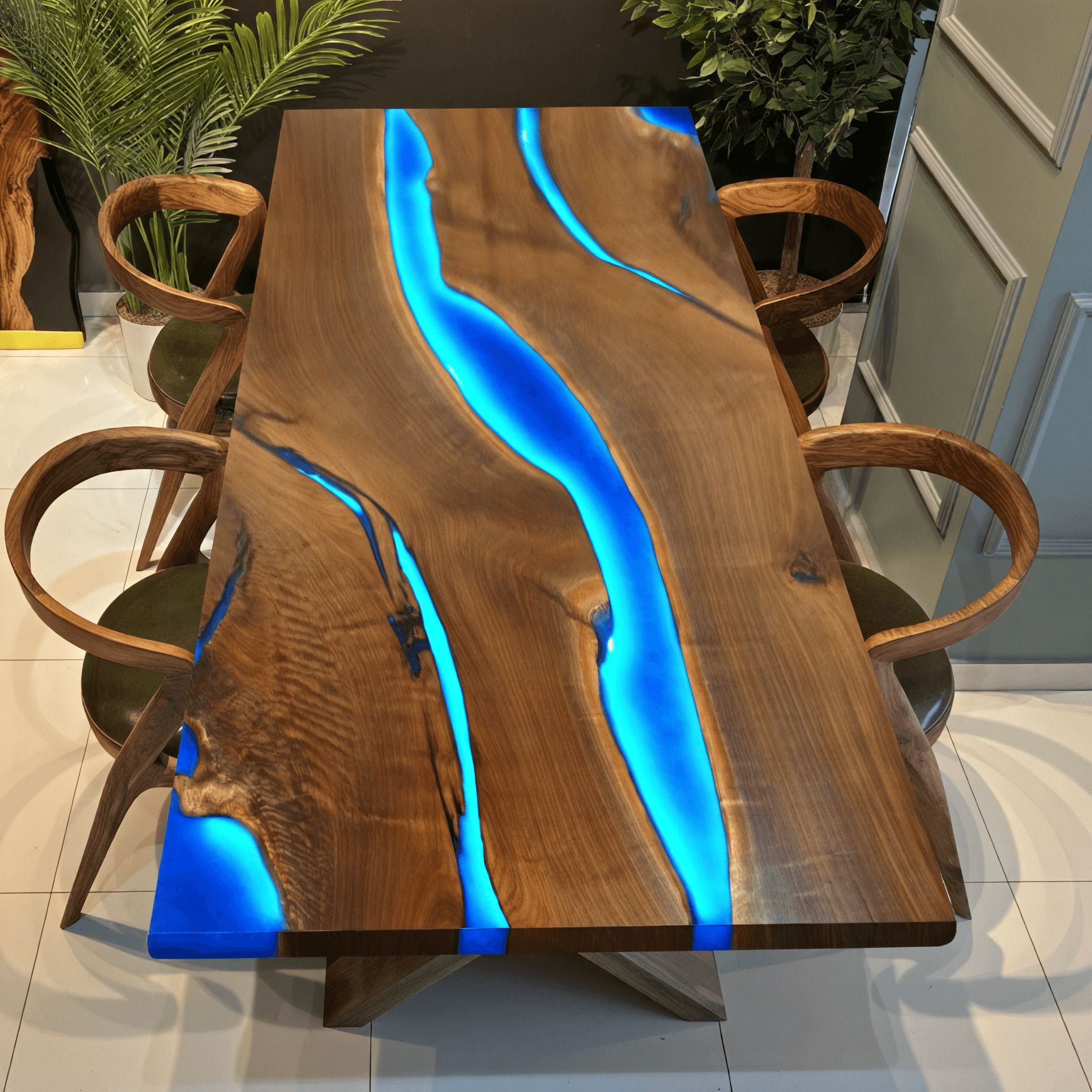
1. Dining Tables

Dining tables remain one of the strongest applications for large wood slabs.
A large slab can provide the surface area required for family dining while epoxy can highlight natural cracks, gaps, or irregular edges.
The important difference is that the resin doesn't have to dominate the design.
In more contemporary furniture, epoxy can function as a subtle visual accent rather than the entire centerpiece.
2. Coffee Tables

Coffee tables are another natural application, particularly when a slab has an interesting shape but isn't large enough for dining furniture.
A smaller piece of wood can showcase dramatic grain, natural edges, knots, and resin details.
This makes the coffee table a statement piece without overwhelming the room.
3. Desks and Home Office Furniture

A wood slab can also become a substantial home office desk.
This is especially relevant as residential workspaces continue to become more intentional.
A custom desk can be designed around monitor placement, working posture, room dimensions, cable management, and storage requirements.
Unlike a mass-produced desk, the slab itself can become the visual identity of the workspace.
4. Console Tables
Long, relatively narrow slabs are particularly suitable for console furniture.
They can be placed behind sofas, against entryway walls, beneath mirrors, or along hallways.
The long horizontal shape also allows dramatic wood grain to remain visible.
5. Benches

A wood slab doesn't have to become a table.
Long slabs can make excellent benches for:
· Entryways
· Dining rooms
· Bedrooms
· Mudrooms
· Dressing areas
· Hospitality spaces
A bench can also provide a simpler way to incorporate a dramatic piece of wood into a room.
6. Epoxy Wood TV Consoles

One of the most overlooked applications is the TV console.
A long wood slab can create a visually substantial media cabinet without making the room feel overly industrial.
The design can incorporate drawers, doors, open shelving, or concealed cable management.
This is particularly effective in modern interiors where homeowners want the television area to feel like furniture rather than an electronics station.
7. Barn Doors

This is where wood slabs become particularly interesting.
A dramatic natural slab can be transformed into a custom barn door.
Instead of using multiple small boards, a designer can use large sections of natural wood to create a visually continuous surface.
Epoxy can fill natural voids, cracks, or design features while preserving the character of the material.
8. Wardrobes and Armoires

Large wood slabs can also become the visual face of wardrobes and armoires.
This application works particularly well when the goal is to combine substantial storage with a strong natural material.
The slab doesn't need to form the entire cabinet.
It can instead become the door fronts, drawer fronts, or primary visual panels.
9. Cabinets and Storage Furniture

Cabinetry offers even more flexibility.
Wood slabs can be used for:
· Cabinet doors
· Drawer fronts
· Side panels
· Shelves
· Cabinet tops
· Accent sections
This allows the natural material to become a visual feature without requiring an entire cabinet to be constructed from a single slab.
10. Bathroom Vanities

A wood slab can create a dramatic bathroom vanity top or cabinet front.
The combination of natural wood, stone, and carefully controlled epoxy can introduce warmth into otherwise hard architectural surfaces.
11. Nightstands
Smaller pieces of wood can be used for nightstands.
This is one of the more practical applications because the smaller scale allows unusual slabs or offcuts to become functional furniture rather than unused material.
12. Shelving

Wood slabs can also become floating shelves, wall-mounted shelves, or substantial display shelves.
In these applications, the wood grain becomes a visual line running across the wall.
13. Fireplace Mantels

Another architectural application is the fireplace mantel.
A substantial wood slab can soften stone, concrete, or plaster while adding natural warmth.
This can be particularly effective in modern homes where the architecture itself is intentionally minimal.
14. Headboards

A large wood slab can become a statement bedroom headboard.
Rather than treating the wood as a small decorative accent, the entire slab can define the visual identity of the bed wall.
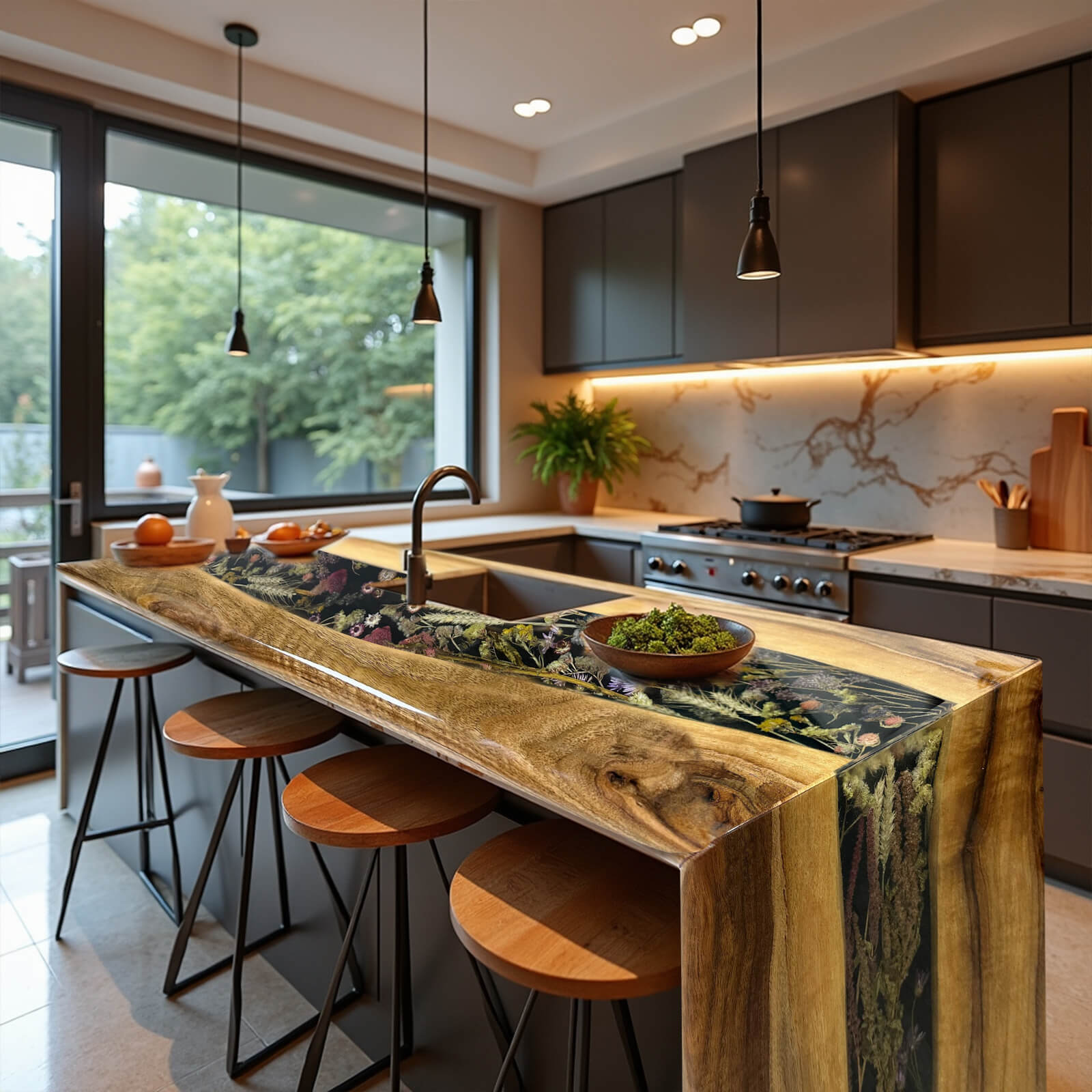
15. Kitchen Islands
Large wood slabs can also be incorporated into kitchen islands.
However, this application requires considerably more attention to structural support, moisture, heat, maintenance, and food-contact requirements than decorative furniture.
The wood may function as an island top, breakfast surface, or accent section rather than the entire island.
16. Bar Cabinets and Home Bars

A wood slab can also become part of a home bar.
The combination of natural wood, dark cabinetry, metal hardware, and controlled lighting can create a sophisticated hospitality-inspired atmosphere.
17. Dressing Tables and Vanities
Smaller slabs can become dressing tables, makeup vanities, or bedroom work surfaces.
This is another example of how furniture scale determines the most practical use of a slab.
18. Entryway Furniture

An entryway can combine several applications of wood slab furniture.
A custom composition might include:
· Bench
· Console
· Coat storage
· Shelving
· Mirror frame
· Cabinet
This turns the entryway into a coherent furniture system rather than a collection of unrelated products.
19. Media Walls and Built-In Furniture

This is one of the most interesting directions for wood slab furniture.
Instead of creating one standalone object, wood slabs can become part of an entire media wall.
They can appear as:
· Cabinet fronts
· Shelving
· Vertical panels
· Floating consoles
· Display niches
This approach allows natural wood to become part of the architecture itself.
20. Custom Statement Furniture

Finally, there is the category that doesn't fit neatly into a predefined furniture type.
A particularly unusual slab might become a sculptural bench.
Another might become a console.
Another could become a cabinet front or architectural door.
This is where custom furniture becomes fundamentally different from mass-produced furniture.
The material itself can influence the final form.
What Can You Make With Wood Slabs and Epoxy Resin?

At this point, the possibilities are much broader than the traditional epoxy river table.
A carefully selected wood slab can potentially become:
1. Dining table
2. Coffee table
3. Desk
4. Console table
5. Bench
6. TV console
7. Barn door
8. Wardrobe
9. Armoire
10. Cabinet
11. Bathroom vanity
12. Nightstand
13. Shelving
14. Fireplace mantel
15. Headboard
16. Kitchen island component
17. Home bar
18. Dressing table
19. Entryway furniture
20. Media wall
21. Custom statement furniture
The important factor isn't simply whether epoxy resin can be combined with wood.
It is how the wood slab's size, shape, thickness, grain, structural properties, and natural features determine the furniture application.
Why Wood Slabs Work Beyond Tables
The biggest advantage of a wood slab is its individuality.
A mass-produced panel begins with a standardized rectangle.
A natural slab begins with an existing form.
That means designers can work with the material's natural width, edge, grain, voids, knots, and color variations.
Epoxy adds another layer of flexibility.
It can stabilize certain natural features, visually connect separate sections, fill voids, and introduce controlled color or transparency.
The result is furniture that can be designed around the material rather than forcing the material into a standardized product.
Choosing the Right Furniture for Your Wood Slab
The best application depends on several factors.
Slab size
Large slabs are more suitable for dining tables, doors, headboards, and substantial furniture.
Smaller slabs may be better suited to nightstands, shelving, benches, and accent pieces.
Thickness
Thickness affects structural performance and visual weight.
Grain
Highly dramatic grain may deserve a large uninterrupted surface.
Natural edge
Organic edges can become a major design feature.
Cracks and voids
Natural openings can sometimes become part of the epoxy design.
Room function
A beautiful slab still needs to serve a practical purpose.
This is why custom furniture design begins with both material selection and intended use.
Is Epoxy Resin Furniture Only for Modern Interiors?
No.
One of the misconceptions about epoxy furniture is that it automatically belongs to a modern or industrial interior.
The final appearance depends heavily on the wood species, resin treatment, base design, proportions, and surrounding architecture.
A walnut slab with subtle transparent epoxy can work in a traditional home.
A dark resin design can work in a contemporary interior.
A natural-edge piece can complement organic modern design.
The material is flexible enough to move between different interior styles.
Why the Future of Epoxy Furniture Goes Beyond River Tables
The original popularity of epoxy furniture was driven heavily by dramatic river tables.
But furniture design is gradually moving toward more subtle and functional applications.
Instead of asking:
“How can we make another river table?”
Designers can ask:
“What can this piece of wood become?”
That question opens the door to doors, cabinets, wardrobes, media furniture, shelving, vanities, benches, desks, and architectural applications.
For homeowners interested in exploring different wood species:
For shoppers looking for finished pieces:
【Best-Selling Epoxy Furniture】
And for customers who want a piece designed around their own space and material preferences:
Final Thought
Epoxy resin and wood slabs shouldn't be defined by the river table.
They are a combination of materials capable of producing an entire family of furniture.
From a dramatic barn door to a custom wardrobe, from a media console to a bathroom vanity, from floating shelves to a statement headboard, the possibilities depend largely on the characteristics of the wood and the designer's imagination.
The most interesting question isn't:
“What kind of epoxy table should I buy?”
It's:
“What kind of furniture could this piece of wood become?”