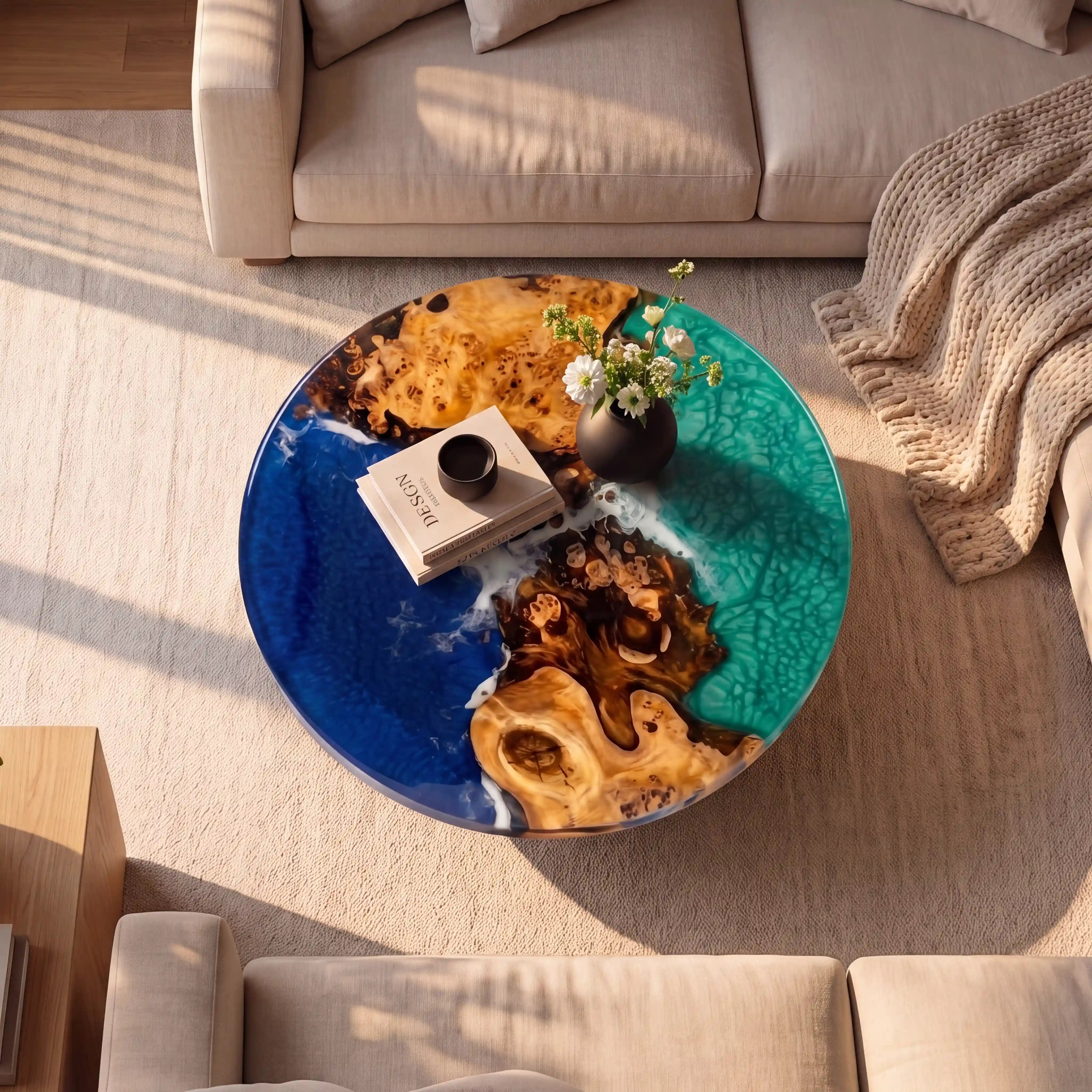
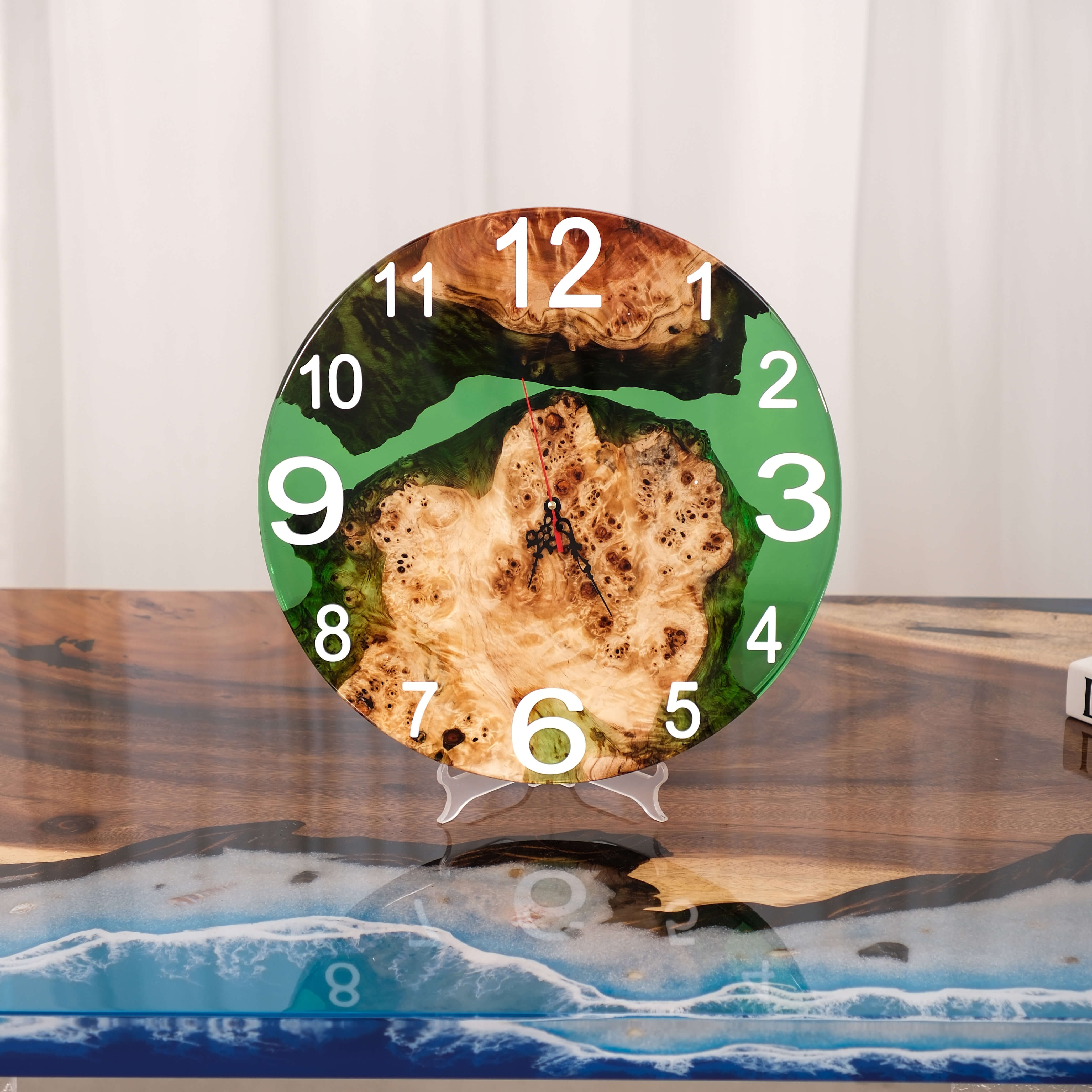
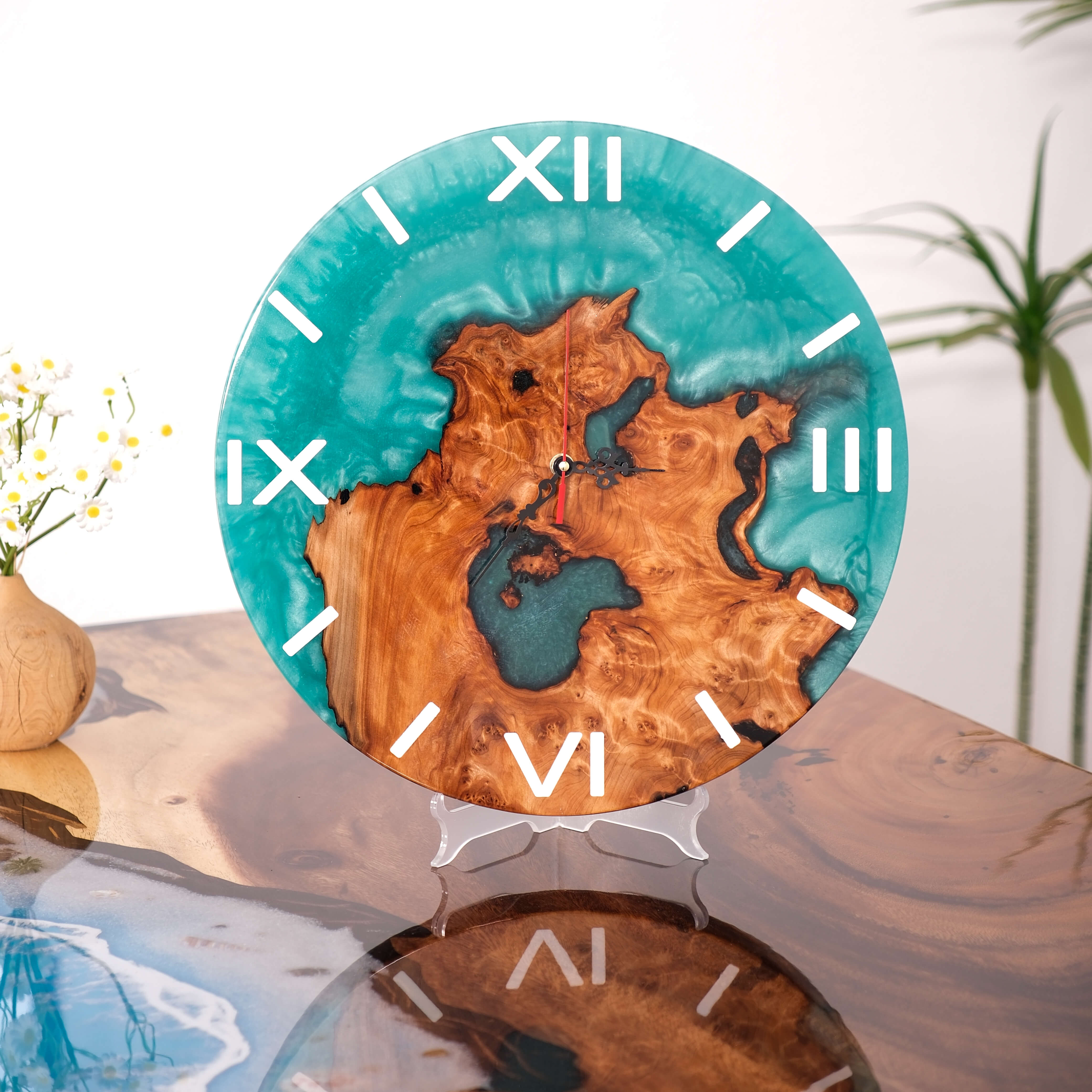
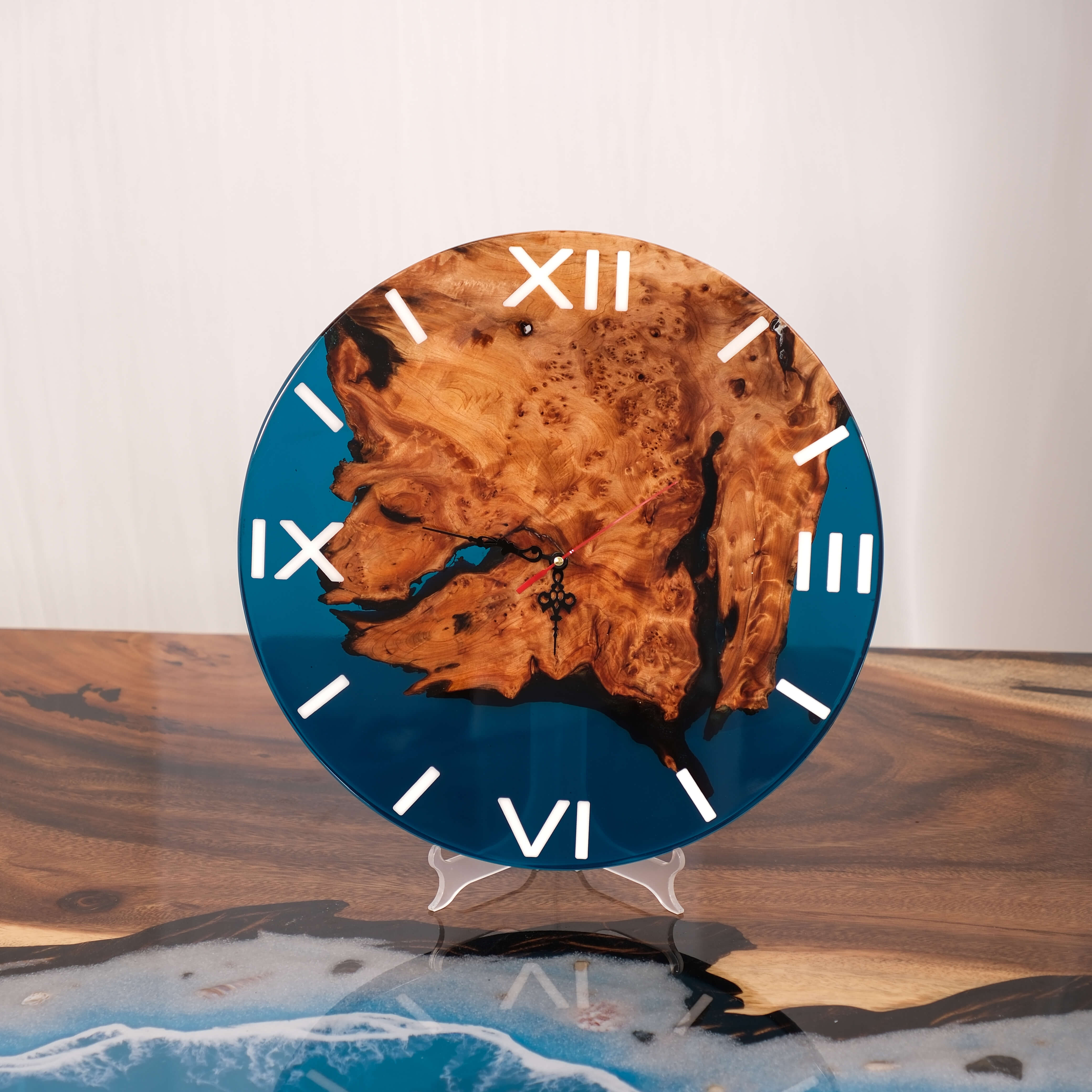
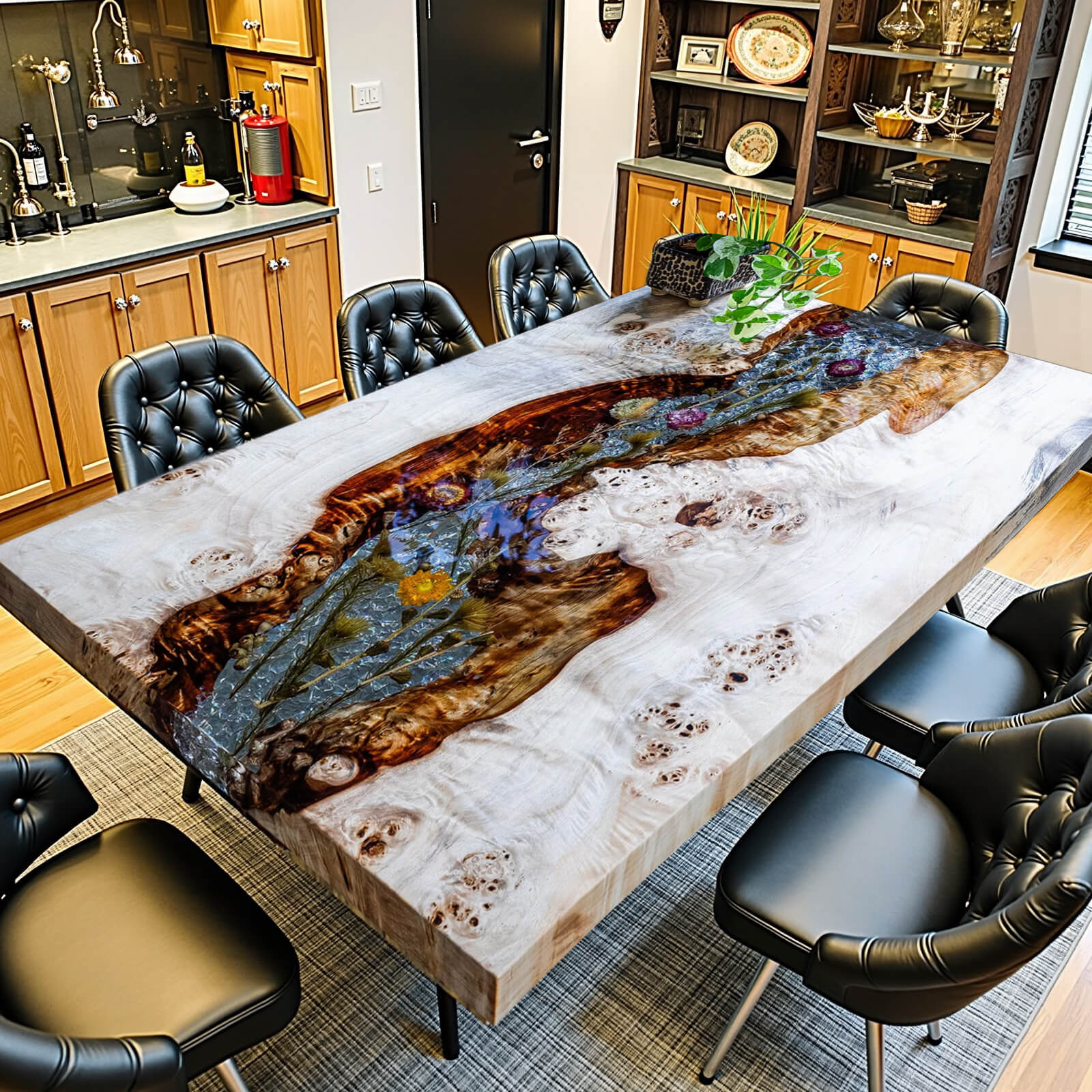
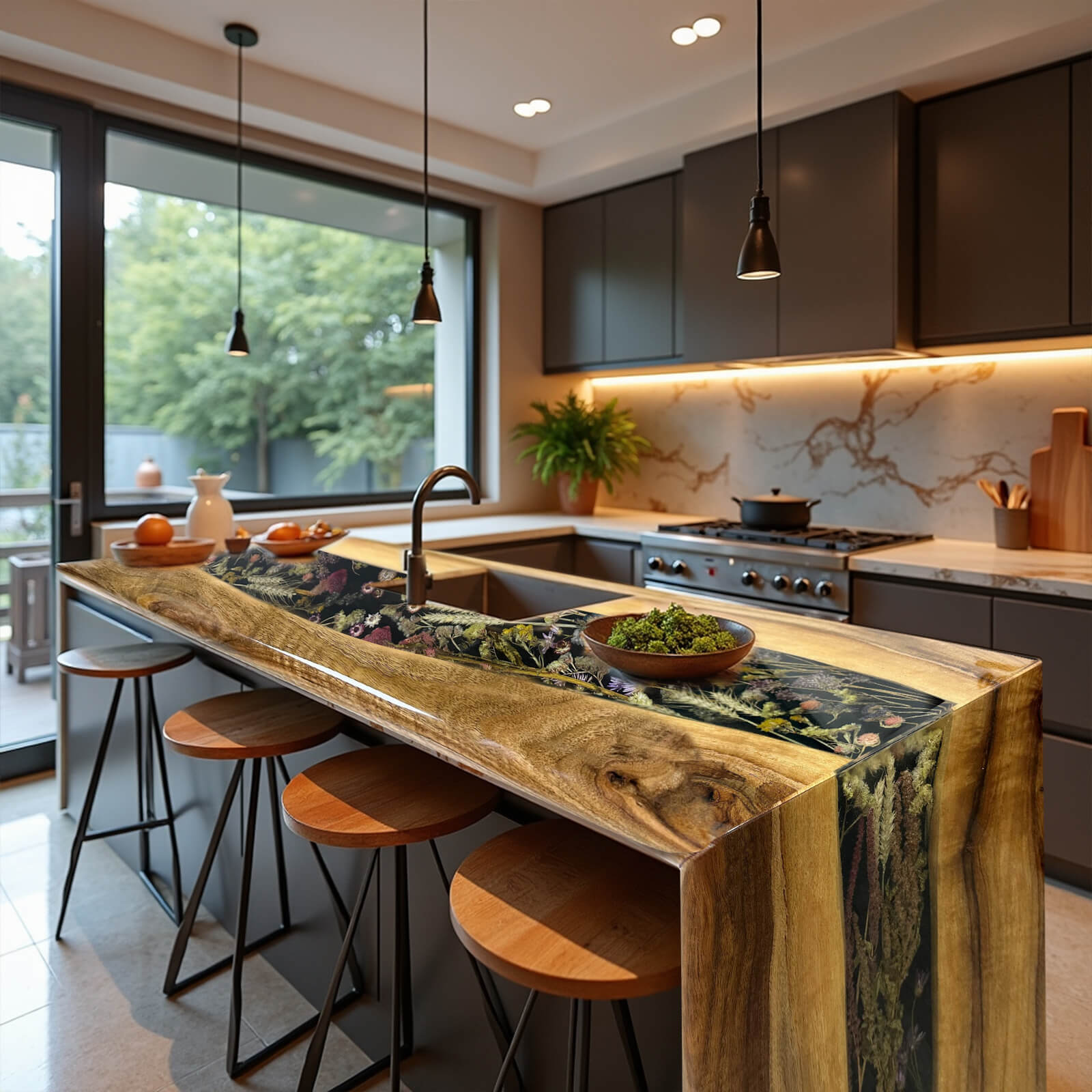
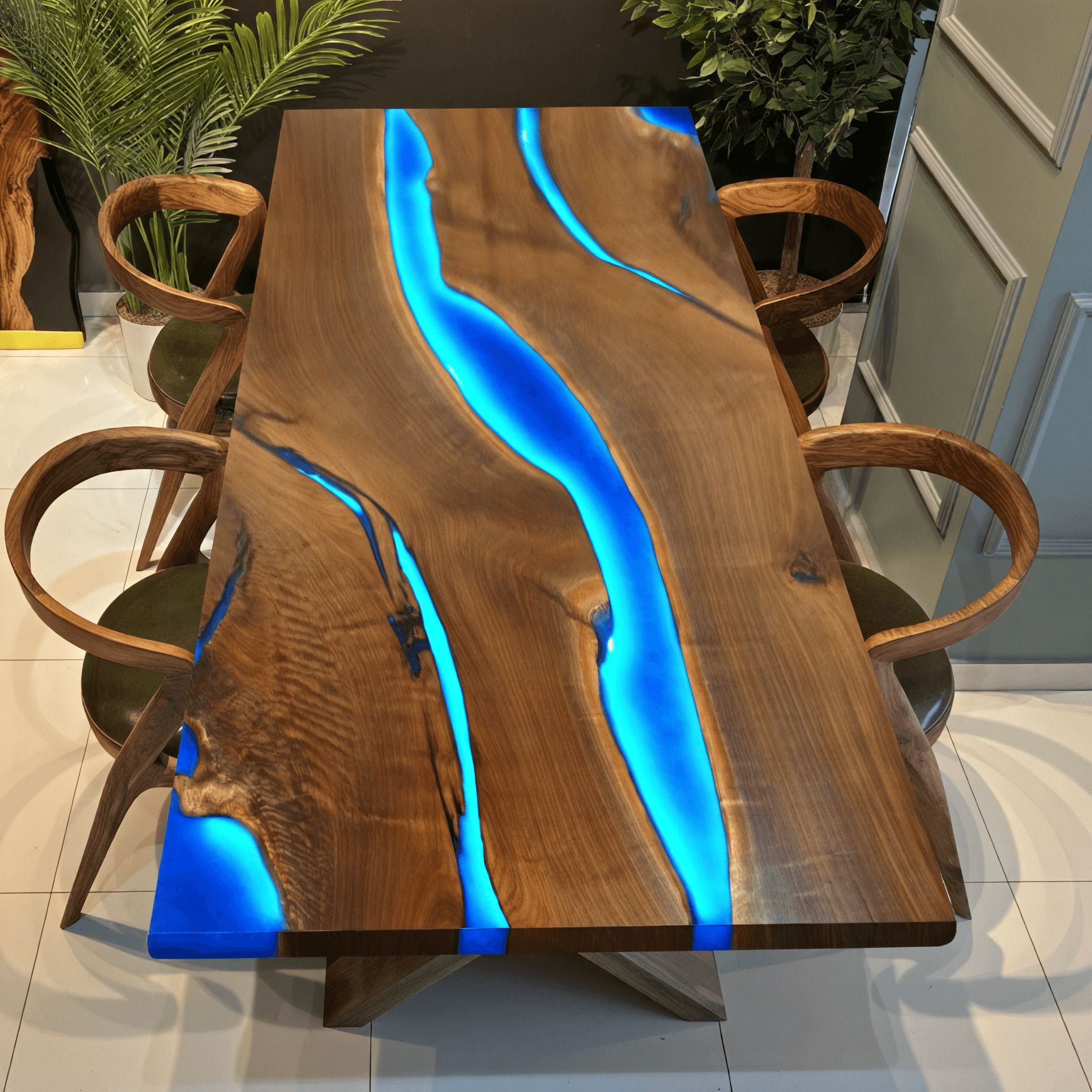








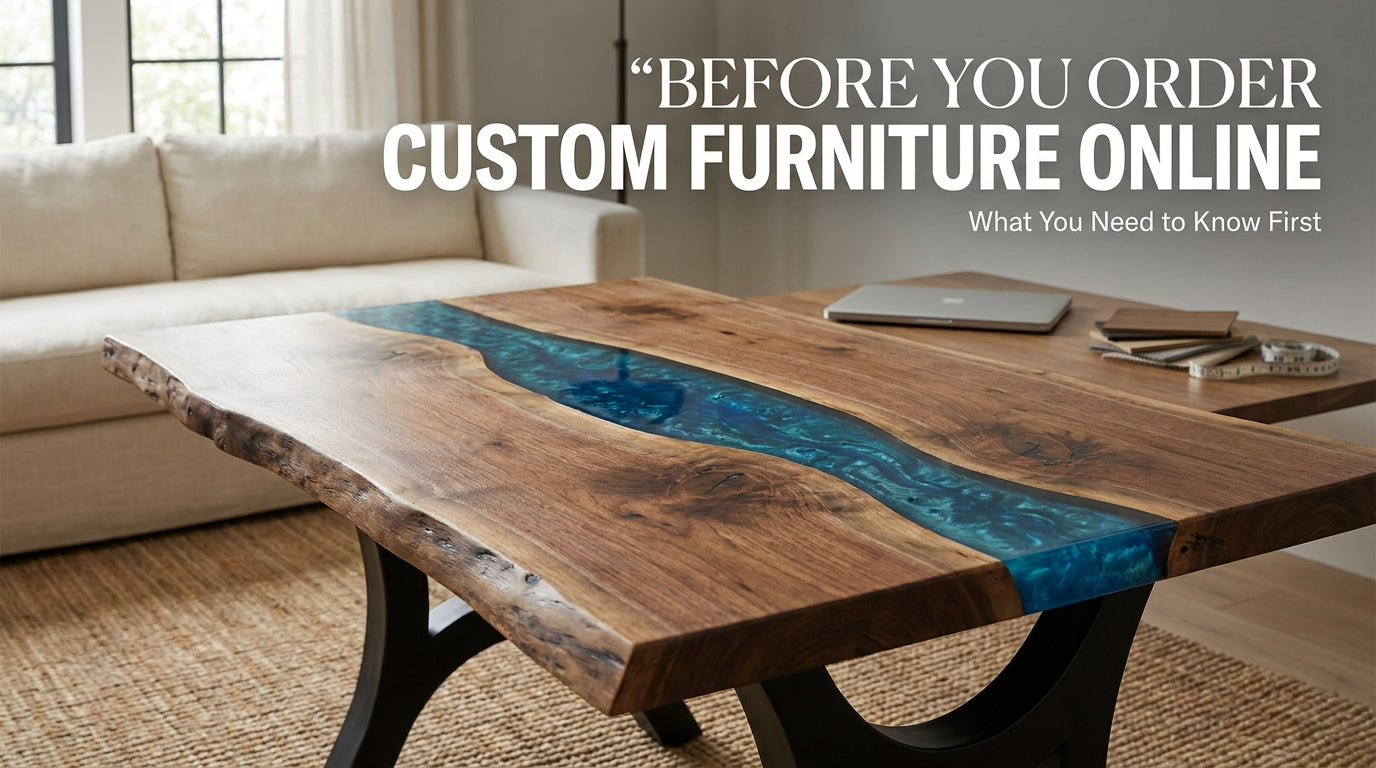
Ordering furniture online is easy when you are buying a small decorative piece. Ordering a large custom dining table, coffee table, console, or kitchen island is a completely different experience.
A custom furniture purchase involves dimensions, materials, craftsmanship, production time, delivery, and long-term maintenance. Because you cannot physically inspect the finished piece before placing the order, the quality of the information provided by the furniture maker becomes extremely important.
The good news is that buying custom furniture online does not have to be risky or complicated.
The key is knowing what questions to ask before production begins.
Start With Accurate Measurements

The first step is measuring the space.
Do not measure only the area where the tabletop will sit.
Consider:
l Wall-to-wall dimensions
l Doorways
l Hallways
l Stairways
l Kitchen islands
l Nearby cabinets
l Walking paths
l Chair clearance
l Ceiling height when relevant
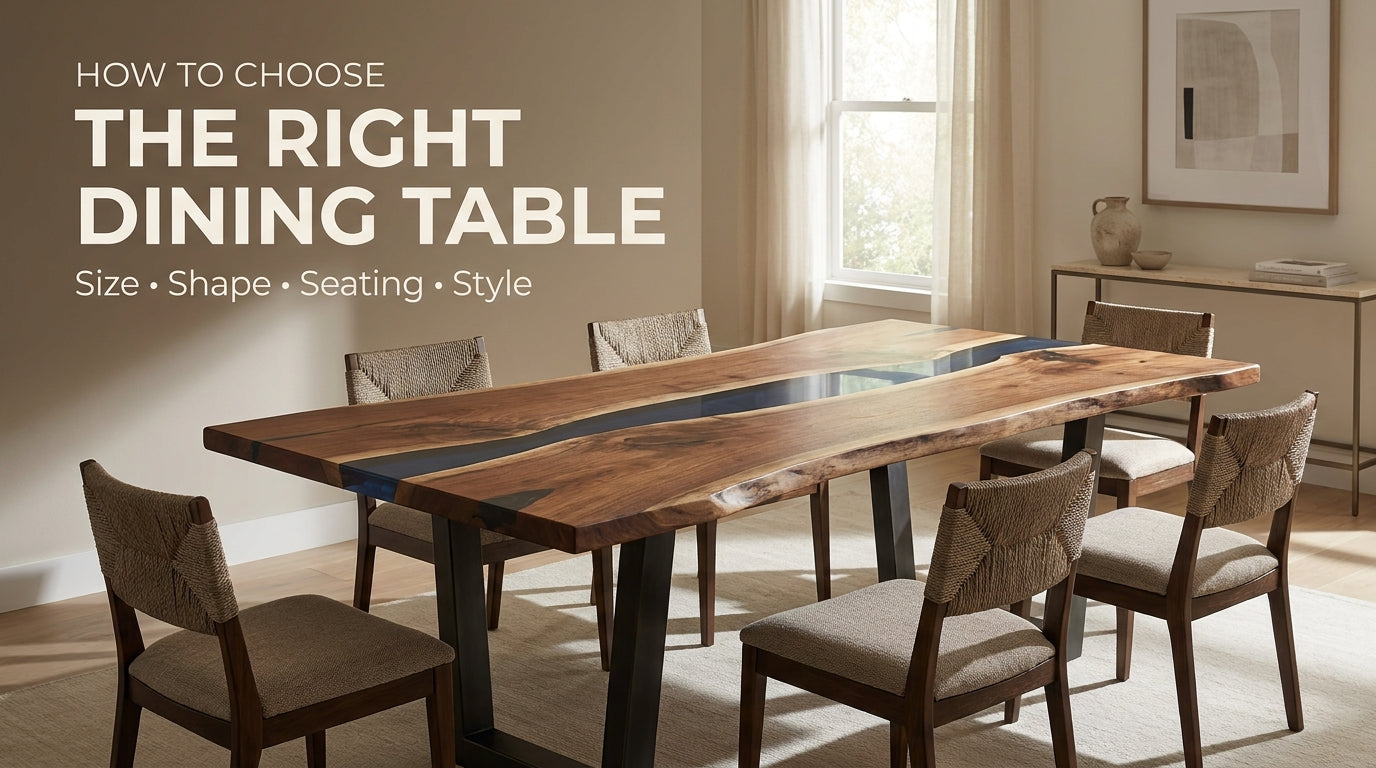
For a dining table, remember that chairs require additional space behind the tabletop.
A table can technically fit in a room and still make the room uncomfortable if chairs cannot be pulled out easily.
This is why Fit Confidence has become so important in online furniture shopping.
Consumers are increasingly looking for detailed dimensions, dimension diagrams, and realistic room photographs before making large furniture purchases.
Understand What “Custom” Means
The word “custom” can mean different things.
Some companies offer a small range of standard sizes with limited modifications.
Others allow customers to specify almost every major dimension and design feature.
Before ordering, ask:
l Can the length be changed?
l Can the width be changed?
l Can the height be changed?
l Can the tabletop shape be customized?
l Can the wood species be selected?
l Can the finish be customized?
l Can the legs be changed?
l Can special design elements be incorporated?
The more customization available, the more important the design approval process becomes.
Mass Customization
The furniture industry is increasingly moving toward personalization without requiring consumers to commission an entirely one-of-a-kind object from an independent artisan.
That makes custom furniture more accessible to a wider audience.
Ask Exactly What Materials Are Being Used

Never rely only on broad terms such as “premium wood” or “natural materials.”
Ask for specific information.
If the furniture uses solid wood, find out which species.
If it includes epoxy resin, ask how the resin is incorporated.
If it uses a live edge slab, ask how the slab has been prepared and stabilized.
Useful questions include:
l What wood species is used?
l Is it solid wood?
l How thick is the material?
l What finish is applied?
l How is the surface protected?
l Are natural knots and grain variations preserved?
l What type of epoxy resin is used when applicable?
Natural wood is inherently variable.
Two slabs of the same species can have completely different grain patterns, tones, knots, and natural characteristics.
That variation is part of the appeal of genuine wood.
Authentic Materials
Look at More Than One Product Photograph

A single lifestyle photograph is rarely enough information for a major furniture purchase.
Look for:
l front views
l side views
l close-up details
l tabletop thickness
l edge profiles
l leg construction
l underside details
l dimension drawings
l material close-ups
l photographs showing the furniture in a real room
This is where Visual Commerce matters.
Online shoppers need visual information that helps them understand scale and materials without physically touching the furniture.
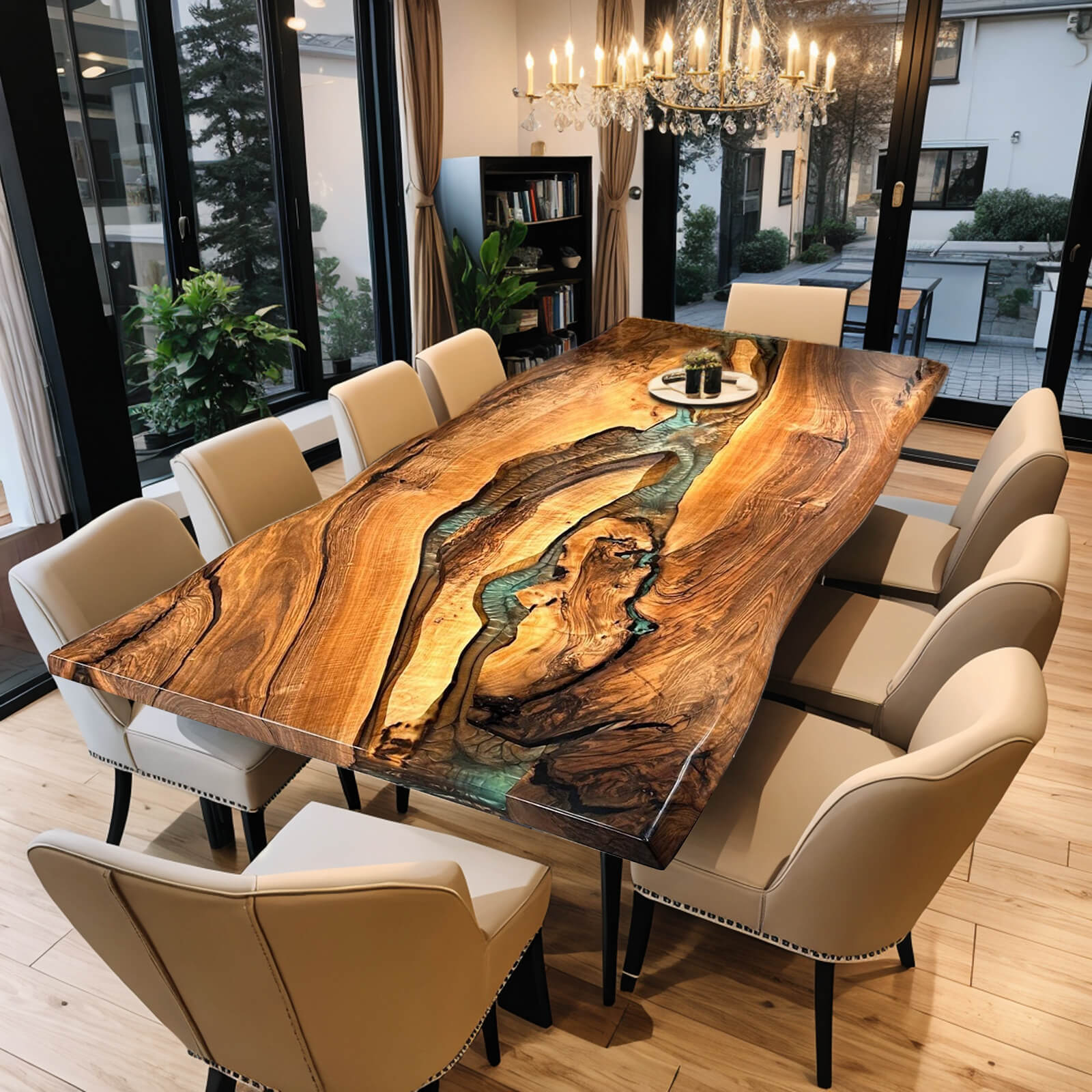
A photograph showing a table beside standard dining chairs can communicate size much more effectively than a product description alone.
Read Reviews Beyond the Star Rating
A five-star rating is useful, but the details inside the reviews are often more valuable.
Look for comments about:
l Craftsmanship
l Communication
l Dimensions
l Delivery
l Packaging
l product accuracy
l customer service
l how the furniture looks in person
A custom furniture company is responsible for more than the final object.
The buying experience matters too.
For a large furniture purchase, good communication can significantly reduce uncertainty.
Ask About Production Time
Custom furniture is not the same as buying inventory that is already sitting in a warehouse.
Production may involve:
1. aterial selection
2. design confirmation
3. Preparation
4. construction
5. finishing
6. Inspection
7. packaging
8. delivery
Ask for an estimated lead time before ordering.
If you need the furniture for a particular event, move, or holiday gathering, allow additional time rather than planning around the shortest possible estimate.
Made-to-Order Furniture
The longer production process is one of the trade-offs of personalization.
In return, the customer receives a piece designed around specific requirements rather than simply choosing from available inventory.
Understand Delivery

Large furniture requires specialized logistics.
Ask:
l Is delivery curbside?
l Is inside delivery available?
l Is white-glove delivery available?
l Does the piece require assembly?
l How is it packaged?
l What happens if it arrives damaged?
l Does someone need to be present?
l Is shipping insurance included?
White-Glove Delivery
For expensive or oversized furniture, delivery is part of the overall customer experience.
A beautifully made table does little good if the customer does not know how it will arrive or what to do if damage occurs.
8. Review the Damage and Return Policy
Before ordering custom furniture, understand the policies.
Look for information about:
l order cancellation
l design changes
l Customization
l Returns
l damage claims
l Replacement
l Repair
l warranty coverage
Custom furniture may have different return conditions from standard products because it is made specifically for the customer.
A trustworthy seller should explain these terms clearly before payment.
Think About Long-Term Use

Do not evaluate custom furniture only by how it looks today.
Consider how you expect to use it five or ten years from now.
Will the dimensions still work?
Will the style remain appropriate?
Will the material age well?
Will the surface require special care?
This is part of the appeal of Heirloom Furniture.
Instead of treating furniture as temporary décor, many homeowners are becoming more interested in pieces that can remain in a home for years and potentially be passed between generations.
Consider Personalization
Customization is not simply changing dimensions.
It can involve:
l wood species
l tabletop shape
l edge profile
l tabletop thickness
l resin color
l Finish
l leg design
l seating capacity
For a dining table, even small changes can have a major effect on the final appearance.
A thicker tabletop can create a stronger architectural presence.
A refined edge can make a substantial slab feel more contemporary.
A custom leg design can change the visual weight of the entire table.
This is where custom furniture becomes more than a practical purchase.
It becomes part of the design language of the home.
Make Sure the Piece Fits Your Interior
A custom piece should not be considered separately from the room.
Look at:
l Flooring
l Cabinetry
l Lighting
l wall finishes
l nearby furniture
l architectural details
l overall color palette
You do not need every piece to match.
In fact, the growing Collected Interior approach favors rooms with a mixture of materials, eras, and textures.
A distinctive dining table can contrast with modern cabinetry.
A natural wood coffee table can soften a minimalist living room.
A sculptural console can introduce warmth into a contemporary hallway.
The objective is visual balance rather than perfect matching.
Ask the Furniture Maker the Right Questions
Before ordering, you should be able to answer several basic questions.
What are the exact dimensions?
What materials are being used?
What customization options are available?
How long will production take?
How will the piece be delivered?
What happens if it arrives damaged?
What does the warranty cover?
How should the furniture be maintained?
If these answers are difficult to find, ask directly.
A good custom furniture experience should feel like a conversation, not a guessing game.
Custom Furniture vs. Mass-Produced Furniture
Mass-produced furniture has obvious advantages.
It is usually faster to purchase, easier to compare, and often less expensive.
Custom furniture offers a different value proposition.
You may be paying for:
l specific dimensions
l selected materials
l individual craftsmanship
l design flexibility
l personalization
l unique construction
l a piece made specifically for your space
The question is not whether custom furniture is always better.
The question is whether the additional customization solves a real problem or provides a meaningful design benefit for your home.
Final Thoughts
Ordering custom furniture online becomes much easier when you know what to evaluate.
Start with accurate measurements.
Then investigate materials, customization options, production time, delivery, reviews, warranty coverage, and maintenance requirements.
Most importantly, look beyond the photograph.
A custom furniture purchase is not just about how an object looks on a screen. It is about whether that object will fit your home, suit your lifestyle, arrive safely, and remain valuable to you over time.
When the process is transparent and the furniture is genuinely made around your needs, ordering online can provide something standard furniture cannot: a piece that feels intentionally created for your home.
Custom Furniture Buying Checklist
Before ordering:
l Measure the room.
l Measure access points.
l Confirm exact dimensions.
l Confirm materials.
l Review customization options.
l Ask about lead time.
l Understand delivery.
l Read customer reviews.
l Review damage and return policies.
l Confirm warranty coverage.
l Understand maintenance requirements.