













A kitchen island can be one of the most important pieces of furniture in a modern kitchen.
It may provide workspace, storage, seating, serving space, and a natural gathering point for family and friends. In many American homes, the kitchen island has become much more than a place for food preparation.
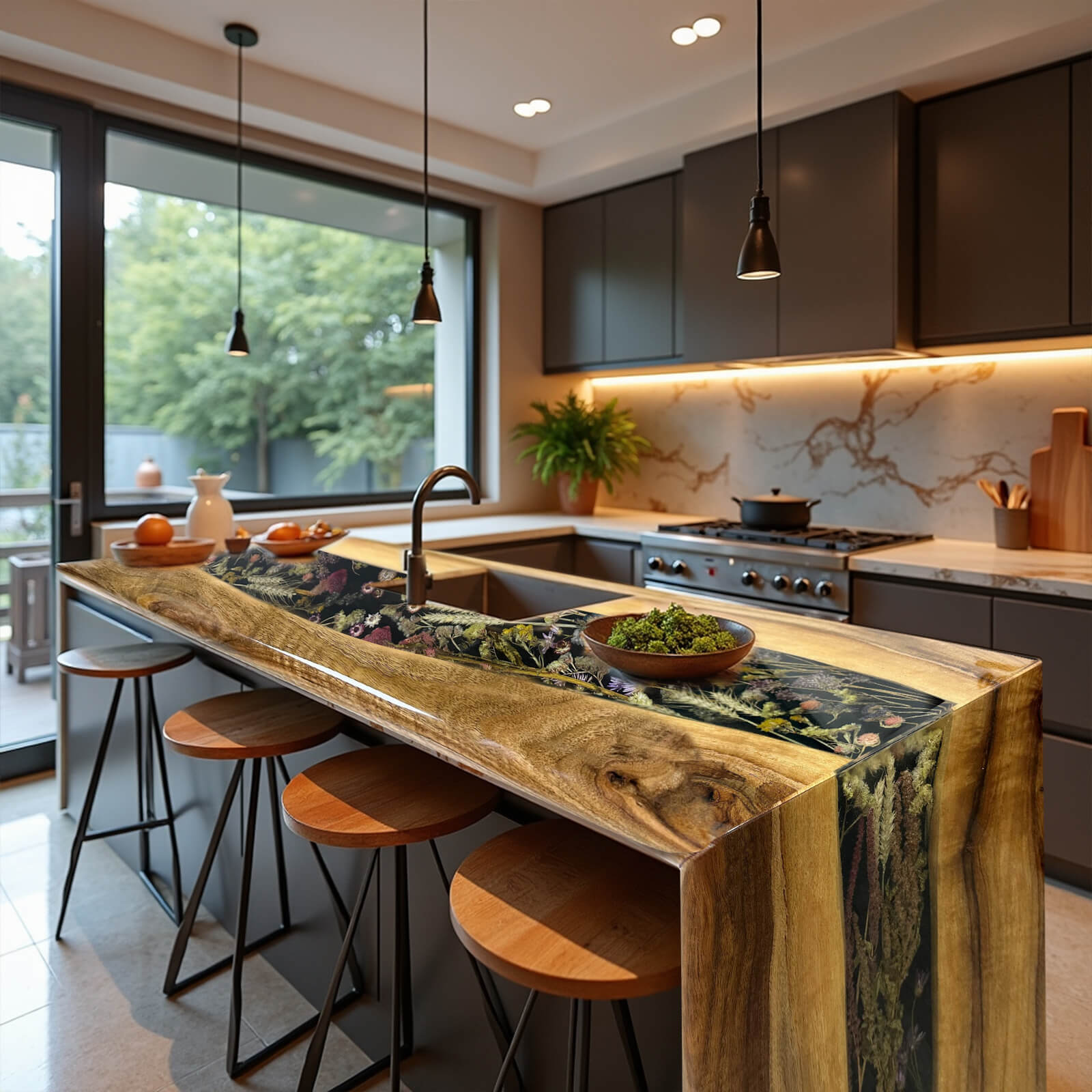
An epoxy kitchen island adds another layer of design flexibility by combining epoxy resin with wood or another substrate to create a highly customized surface.
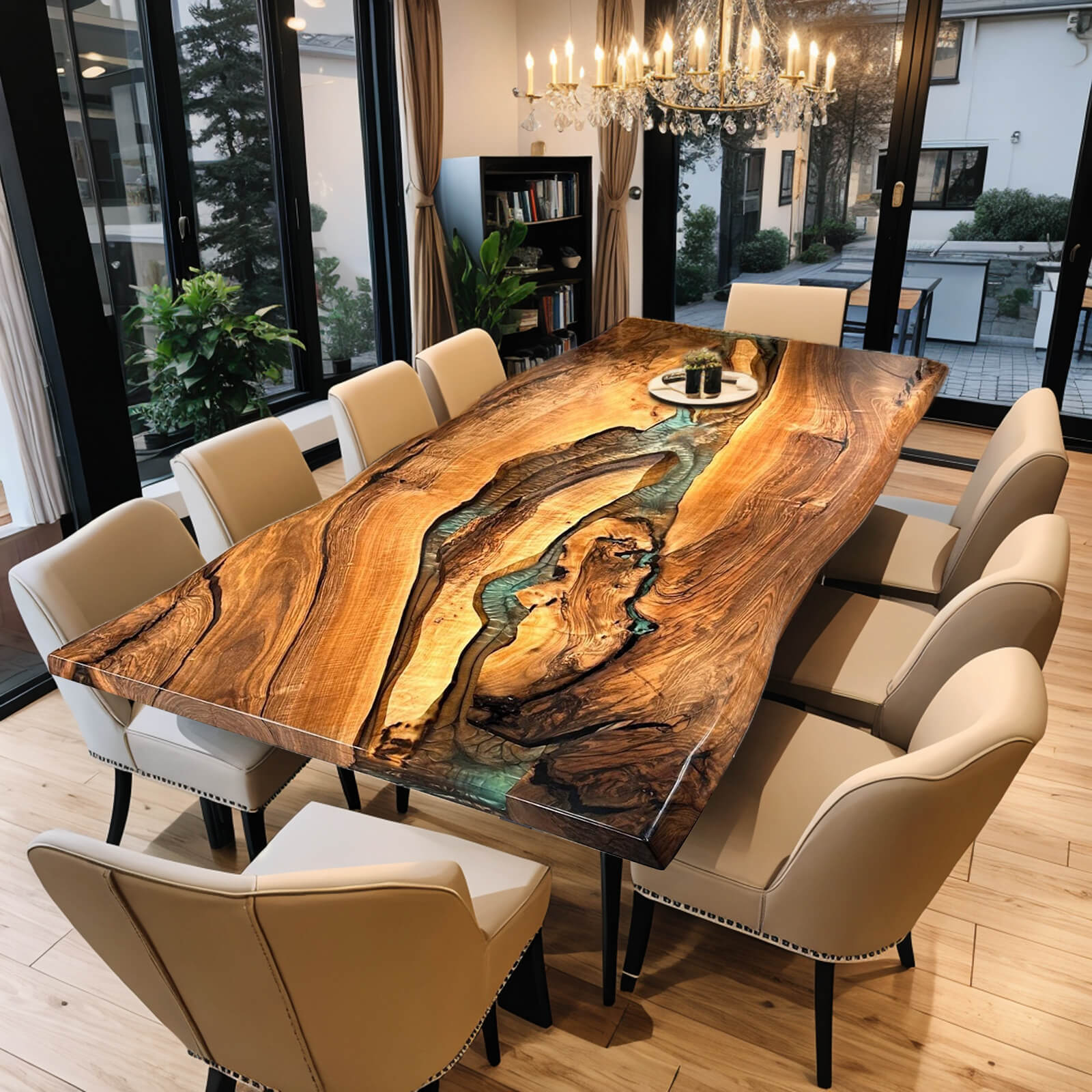
Depending on the design, epoxy can fill natural voids in wood, connect individual sections, introduce color, create contrast, or emphasize the organic character of a slab.
The result can be subtle and natural or dramatic and sculptural.
But before choosing an epoxy kitchen island, it is important to understand what it actually is, how it is made, how durable it can be, and what maintenance it requires.
What Is an Epoxy Kitchen Island?

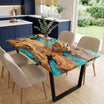
An epoxy kitchen island is a kitchen island featuring a surface that incorporates epoxy resin.
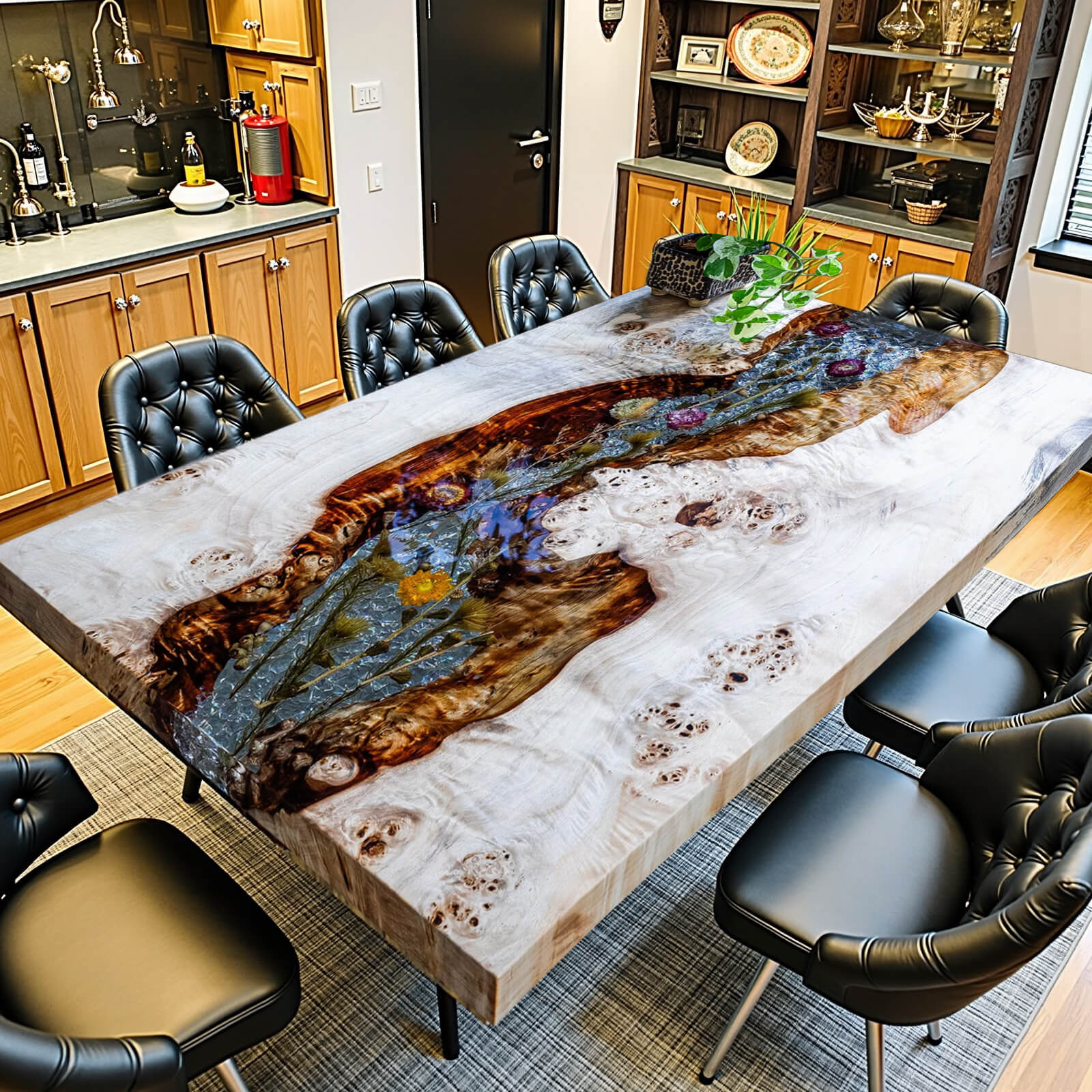
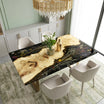
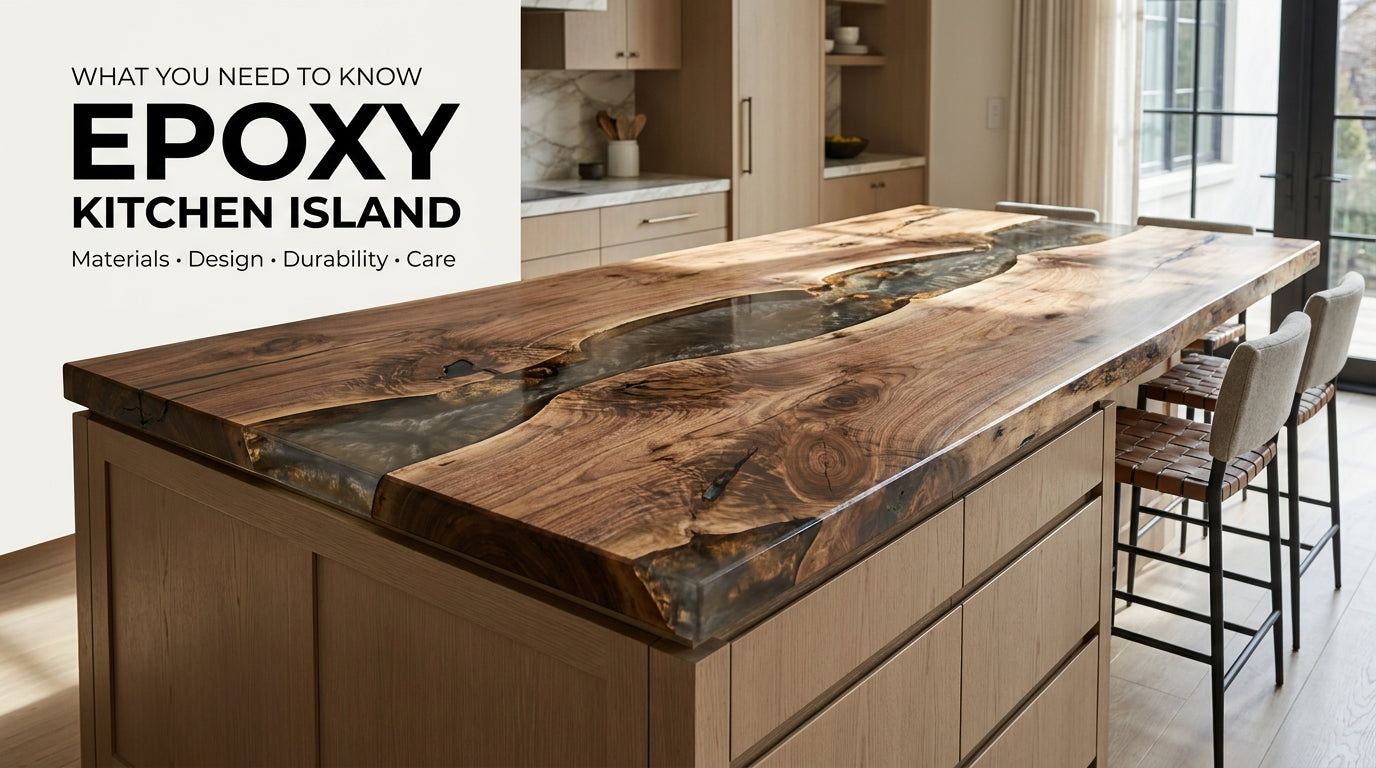
One of the most distinctive versions combines a natural wood slab with epoxy resin.
In a live edge design, the natural edge and grain of the wood remain visible while epoxy is used to fill cracks, voids, gaps, or selected areas of the slab.
Epoxy is a two-part polymer system that cures into a solid material.
When properly prepared and applied, it can create a smooth, visually continuous surface while preserving elements of the natural material underneath.
This is one reason epoxy and wood work particularly well together.
Wood contributes warmth, texture, and natural variation.
Epoxy contributes transparency, color, depth, and design flexibility.
Natural Materials
The combination also fits into the broader movement toward kitchens that use more tactile and authentic materials rather than relying exclusively on uniform manufactured surfaces.
How Is an Epoxy Kitchen Island Made?

The exact process depends on the design and manufacturer.
For a custom wood-and-epoxy island, the process may begin with selecting a suitable wood slab.
The slab is evaluated for:
l length
l width
l thickness
l grain
l natural edge
l knots
l cracks
l voids
l stability
The wood is then prepared.
Natural voids may be cleaned and stabilized before epoxy is introduced.
The resin is mixed according to the manufacturer's process and poured into the prepared areas.
Depending on the design, multiple pours may be required.
After curing, the surface can be shaped, sanded, polished, and finished.
The quality of the final island depends heavily on preparation and craftsmanship.
Epoxy itself does not automatically make a surface high quality.
The underlying wood, construction, resin system, finishing process, and installation all matter.
Why Combine Wood and Epoxy?

The appeal comes from contrast.
Wood has natural variation.
Epoxy can be visually consistent.
Wood is warm and organic.
Epoxy can be transparent, colorful, or visually deep.
When these materials are combined carefully, the result can feel contemporary without losing the character of the natural wood.
This makes epoxy particularly interesting for homeowners who want their kitchen island to function as statement furniture rather than simply another countertop.
Epoxy Islands and 2026 Kitchen Design
Kitchen design continues to move toward spaces that combine functionality with personalization.
The kitchen is increasingly treated as a social hub where cooking, eating, working, entertaining, and conversation overlap.
Kitchen as a Social Hub
Current kitchen design research also points toward greater personalization, natural materials, and islands designed around how homeowners actually live. NKBA's 2026 kitchen trends research highlights lifestyle-focused spaces and increased interest in wood grain and natural materials.
Another relevant direction is Furniture-Style Islands.
Rather than making the island look identical to every cabinet in the kitchen, homeowners can use contrasting materials, decorative legs, furniture-inspired bases, or distinctive surfaces to make the island feel like an individual piece.
Mixed Materials Can Create More Visual Depth
An epoxy kitchen island does not have to look entirely different from the rest of the kitchen.
Instead, it can introduce a controlled contrast.
For example:
l warm wood against light cabinetry
l dark resin against natural oak
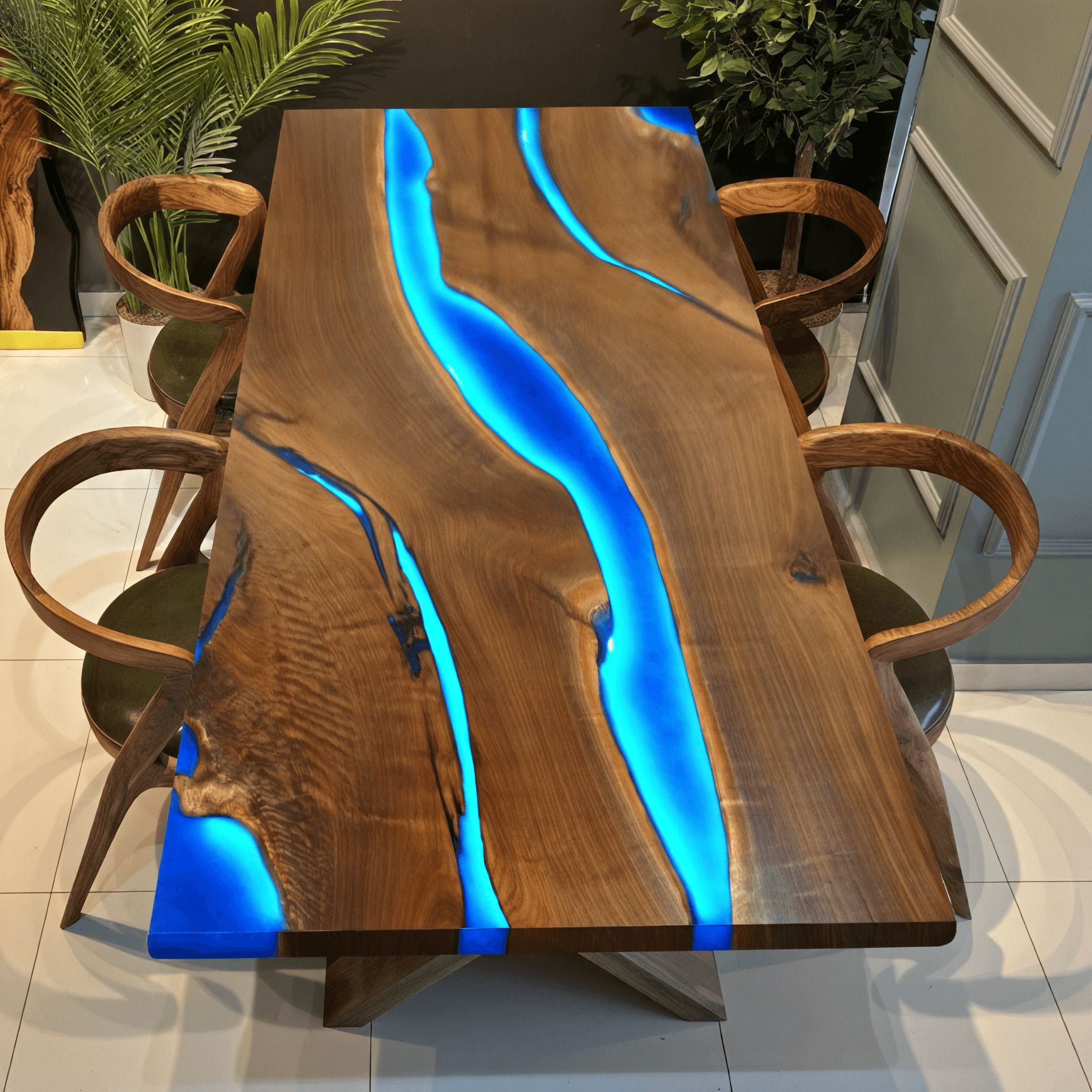
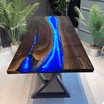
l translucent resin against walnut
l organic edges against clean architectural lines
l natural wood against stone countertops
This supports the broader Mixed Materials approach.
Using contrasting materials can help visually separate the island from the surrounding cabinetry without making the entire kitchen feel disconnected.
Are Epoxy Kitchen Islands Durable?

Durability depends on the epoxy system, construction, thickness, finish, and intended use.
A properly made epoxy surface can be hard and durable, but it should not be treated as indestructible.
Like many finished surfaces, epoxy can potentially be affected by:
l excessive heat
l sharp objects
l heavy impact
l abrasive cleaners
l certain chemicals
l improper maintenance
The manufacturer's specifications matter.
A kitchen island used mainly for serving and dining will experience different stresses from one used as a heavy-duty food-preparation surface.
That is why understanding the intended use is essential before selecting the material.
Is Epoxy Heat Resistant?
This is one of the most important questions homeowners should ask.
Epoxy should not automatically be treated as heat-proof.
Extremely hot cookware can potentially damage a finished surface depending on the resin and finish.
Always follow the manufacturer's temperature recommendations.
If the manufacturer recommends trivets or heat-resistant pads, use them.
The best approach is to ask specifically:
l What temperatures can the surface tolerate?
l Can hot cookware be placed directly on it?
l Is a trivet required?
l What finish protects the surface?
l What happens if heat damage occurs?
Avoid relying on vague claims such as “heat resistant” without understanding the actual specifications.
Can You Cut Directly on an Epoxy Island?
A cutting board is generally a better choice than cutting directly on the finished surface.
Knives can scratch many hard surfaces, and repeated cutting can leave marks.
A cutting board also creates a dedicated food-preparation area.
Before designing an island, think about its primary functions.
Will it be used for:
l food preparation?
l breakfast seating?
l serving?
l entertaining?
l casual dining?
l multiple activities?
This should influence the dimensions, material selection, and layout.
How Do You Clean an Epoxy Kitchen Island?

Follow the care instructions provided by the manufacturer.
For many finished surfaces, routine cleaning can involve:
l a soft cloth
l gentle cleaning products
l prompt removal of spills
l avoiding abrasive tools
l avoiding harsh chemicals unless specifically approved
The wood finish is also important.
A wood-and-epoxy island contains more than one material, so maintenance should account for both.
This is why the exact finish should be discussed before ordering.
Low-Maintenance Design
The goal is not simply to choose a visually impressive material.
It is to choose a material whose care requirements fit your lifestyle.
Epoxy vs. Quartz
Quartz offers a highly consistent engineered appearance and is widely used for contemporary kitchens.
Epoxy and wood offer a very different visual experience.
The combination can preserve natural grain and organic variation while introducing resin as a design element.
For homeowners who want a highly individualized island, this flexibility can be a major advantage.
Epoxy vs. Natural Stone
Natural stone provides authentic mineral variation and a strong architectural presence.
Different stones also have different maintenance and performance characteristics.
Epoxy wood islands approach the design problem differently.
Instead of selecting a stone slab primarily for its natural pattern, the homeowner can design the relationship between wood and resin intentionally.
That makes the final piece more customizable.
Why Custom Design Matters
A standard kitchen island is designed around common dimensions.
A custom epoxy island can be designed around the actual kitchen.
That may include:
l exact island length
l exact width
l seating capacity
l cabinet configuration
l appliance placement
l walkway clearance
l wood species
l resin color
l edge profile
l tabletop thickness
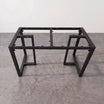
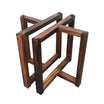
l leg or base design
This is particularly useful in kitchens with unusual dimensions or open-plan layouts.
Personalized Kitchen Design
Instead of asking:
“Which island fits my kitchen?”
the homeowner can ask:
“What island should be designed for my kitchen?”
That is a fundamental difference between standard and custom furniture.
Curved and Organic Kitchen Islands
Not every kitchen island needs to be a perfect rectangle.
Current kitchen design trends are increasingly exploring softer geometry, including rounded islands and curved peninsulas. Houzz's 2026 emerging trends research identified increased interest in curved kitchen elements.
Curved Kitchen Islands
For epoxy and natural wood, organic shapes can be particularly interesting because the resin can emphasize the movement of the wood rather than forcing the material into a perfectly uniform geometric form.
The result can feel architectural while remaining connected to natural material.
What Should You Ask Before Ordering?

Before commissioning an epoxy kitchen island, ask:
What wood species is being used?
How is the wood prepared?
What type of epoxy resin is used?
What is the recommended heat tolerance?
What finish is applied?
How should the surface be cleaned?
What are the exact dimensions?
How will the island be delivered and installed?
What happens if the surface is damaged?
These questions help you evaluate the material based on real use rather than appearance alone.
Final Thoughts
An epoxy kitchen island can combine natural wood, resin, craftsmanship, and custom design into one of the most distinctive features in a kitchen.
Its greatest strength is not simply the visual effect of epoxy.
It is the ability to combine different materials and design the result around the actual kitchen.
For homeowners interested in natural materials, statement furniture, and personalized interiors, a custom epoxy island can provide a level of individuality that standardized surfaces cannot easily reproduce.
But the best result comes from understanding the material before choosing it.
Consider heat, durability, maintenance, dimensions, seating, construction, and intended use.
When those decisions are made carefully, an epoxy kitchen island can be both a functional surface and a defining piece of furniture.
Frequently Asked Questions
What is an epoxy kitchen island?
It is a kitchen island featuring a surface that incorporates epoxy resin, often combined with natural wood.
Are epoxy kitchen islands durable?
They can be durable when properly constructed and maintained, but they are not indestructible.
Is epoxy heat resistant?
Some epoxy systems can tolerate significant heat, but the exact temperature limits vary. Always follow the manufacturer's specifications.
Can you put hot pans on epoxy?
Do not assume that direct contact with hot cookware is safe. Use appropriate protection when recommended.
Can epoxy be combined with live edge wood?
Yes. Live edge wood and epoxy are commonly combined to preserve natural wood contours while filling or highlighting selected voids.
How do you clean an epoxy kitchen island?
Follow the manufacturer's care instructions. Gentle, non-abrasive cleaning methods are generally preferable.
Is an epoxy island better than quartz?
Neither is universally better. Quartz may suit homeowners seeking a consistent engineered surface, while wood-and-epoxy designs may be better suited to homeowners prioritizing customization and natural character.