







Walk into a professionally staged home and you may immediately notice how attractive everything looks.
The furniture is correctly proportioned.
The colors are coordinated.
The surfaces are clean.
The accessories are carefully placed.
Nothing appears accidental.
And yet, something can be missing.
The room may look beautiful without feeling like anyone actually lives there.
That difference is becoming increasingly important in 2026 as homeowners move toward lived-in design, personalized interiors, tactile materials, and spaces that reflect individual experiences rather than generic design formulas. Recent design coverage points toward more individuality, patina, natural materials, vintage objects, and less sterile visual perfection.
So what actually makes a home feel personal?
1. A Home Needs Evidence of a Life

The fastest way to make a home feel staged is to remove every sign of living.
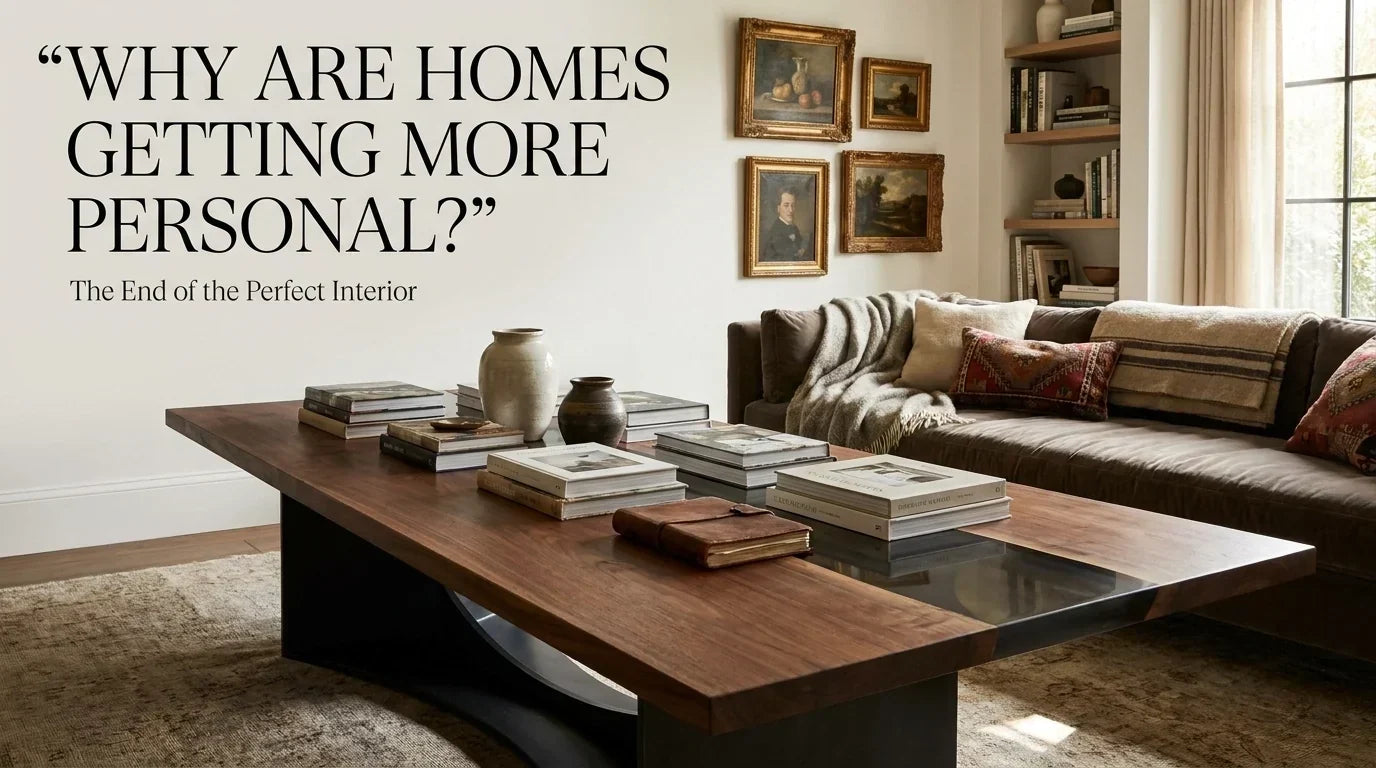
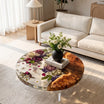
A perfectly empty coffee table.
No books.
No photographs.
No objects with history.
No variation in texture.
No visual evidence of hobbies or interests.
A personal home does the opposite.
It allows some evidence of life to remain visible.
That doesn't mean leaving everything messy.
It means displaying things that communicate who lives there.
Books you actually read.
Artwork you actually like.
A ceramic piece purchased while traveling.
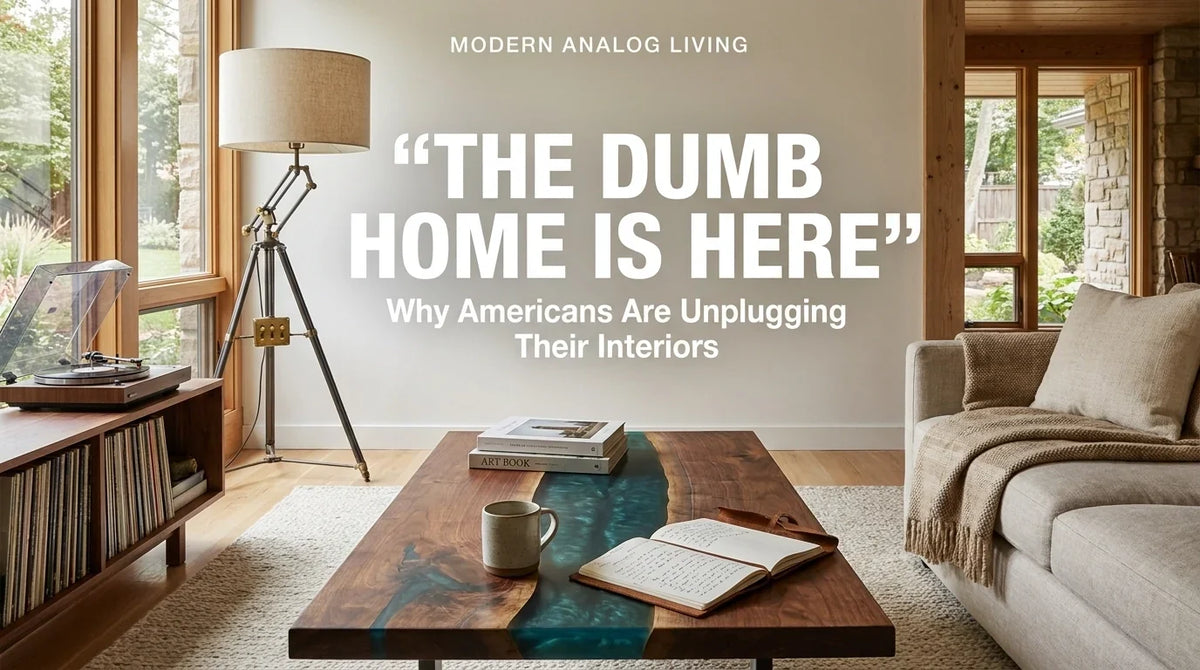
A record player.
A collection.
A family photograph.
A piece of furniture inherited from someone important.
These objects create emotional design.
2. Personal Furniture Creates an Anchor

Furniture is often more powerful than accessories because it occupies more physical and visual space.
A standard dining table may simply fill a room.
A distinctive table can define it.
The difference can come from:
· wood grain
· proportions
· edge profile
· resin color
· base design
· dimensions
· material contrast
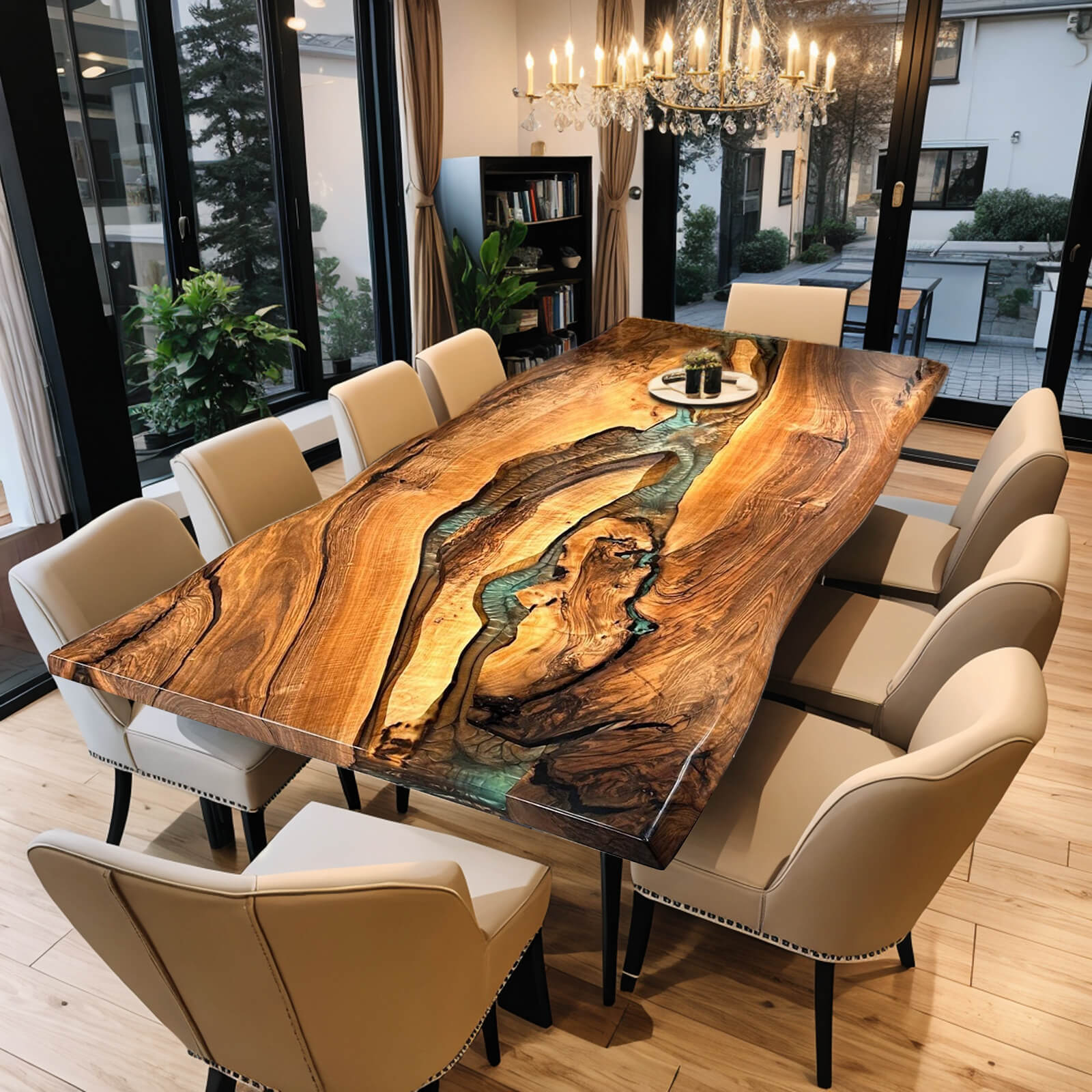
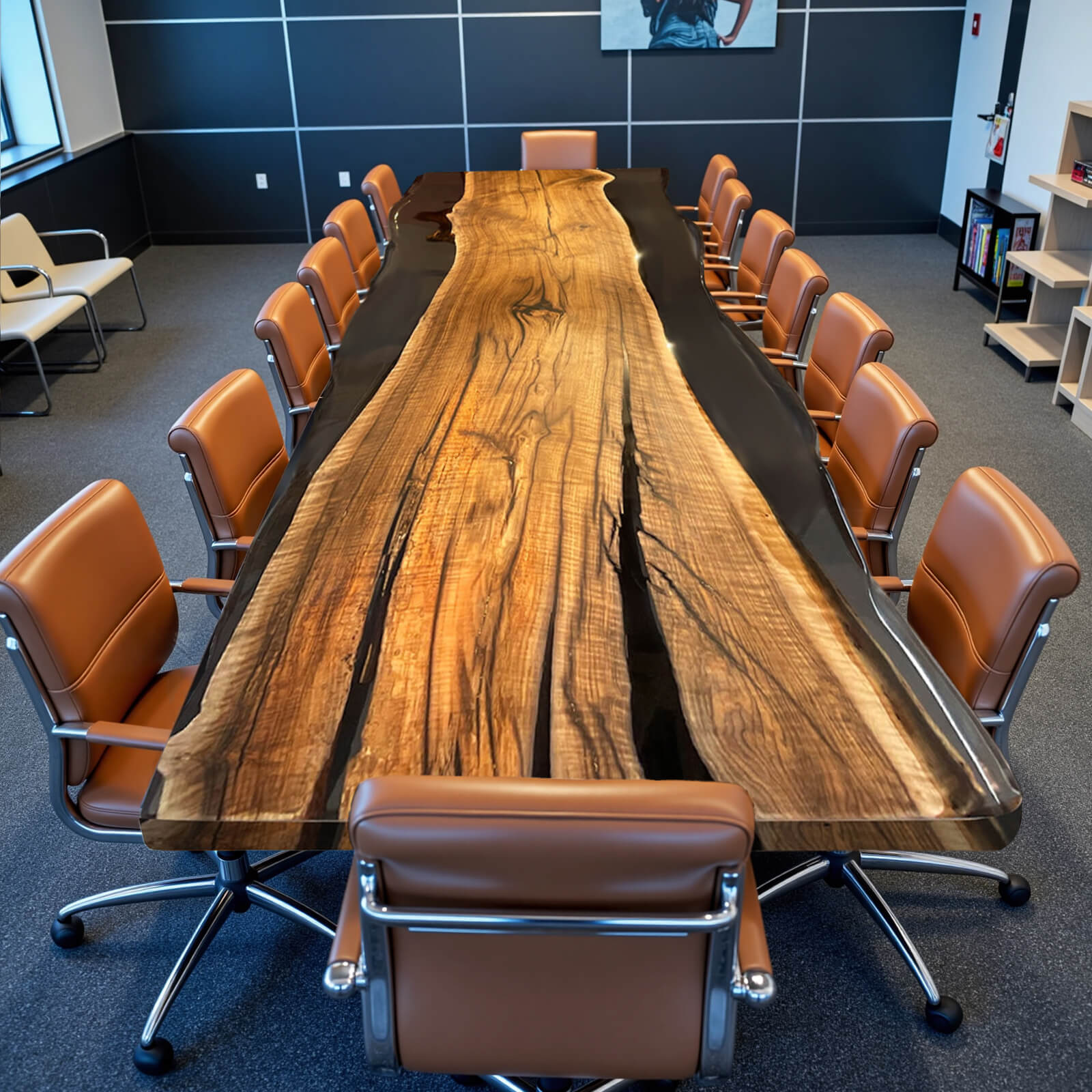
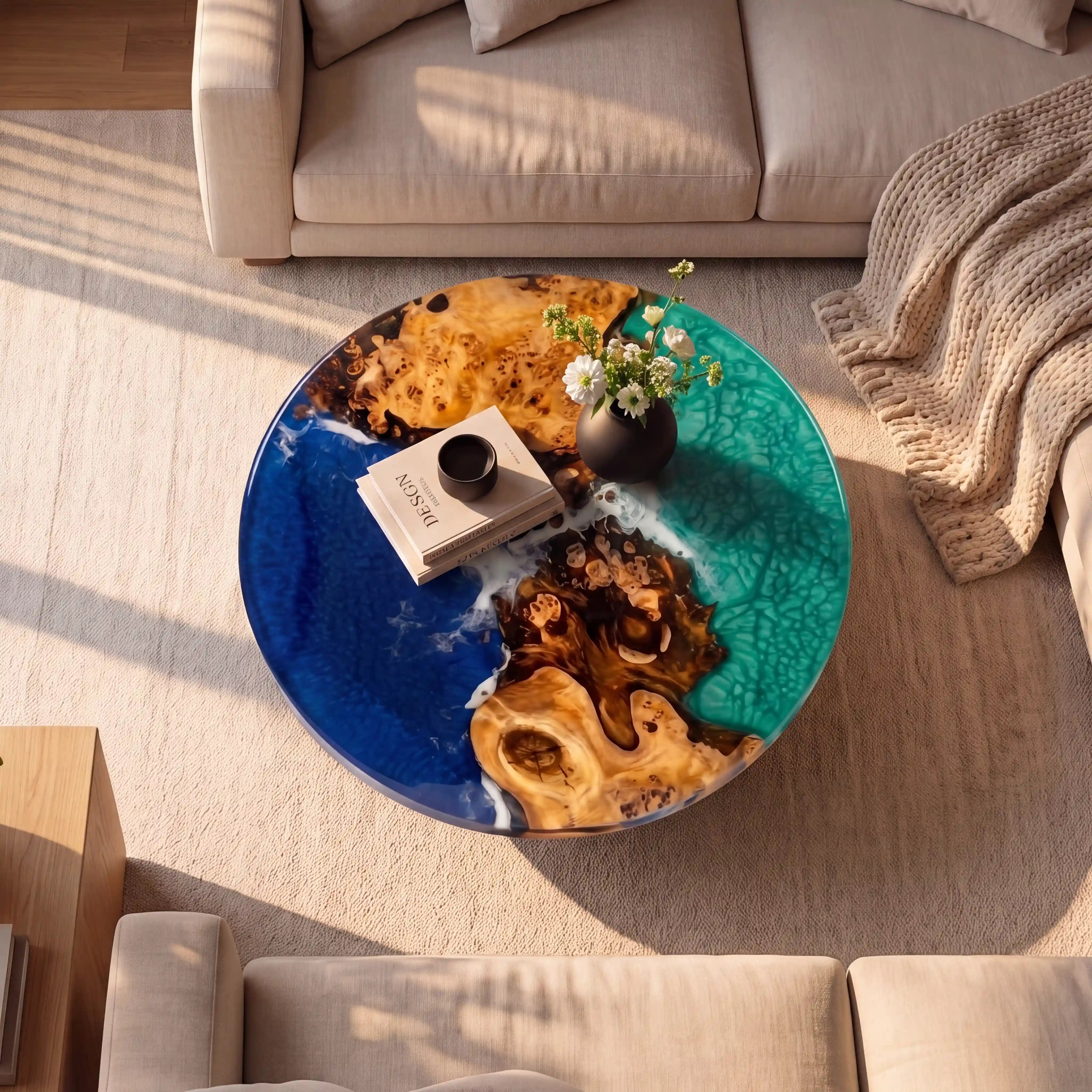
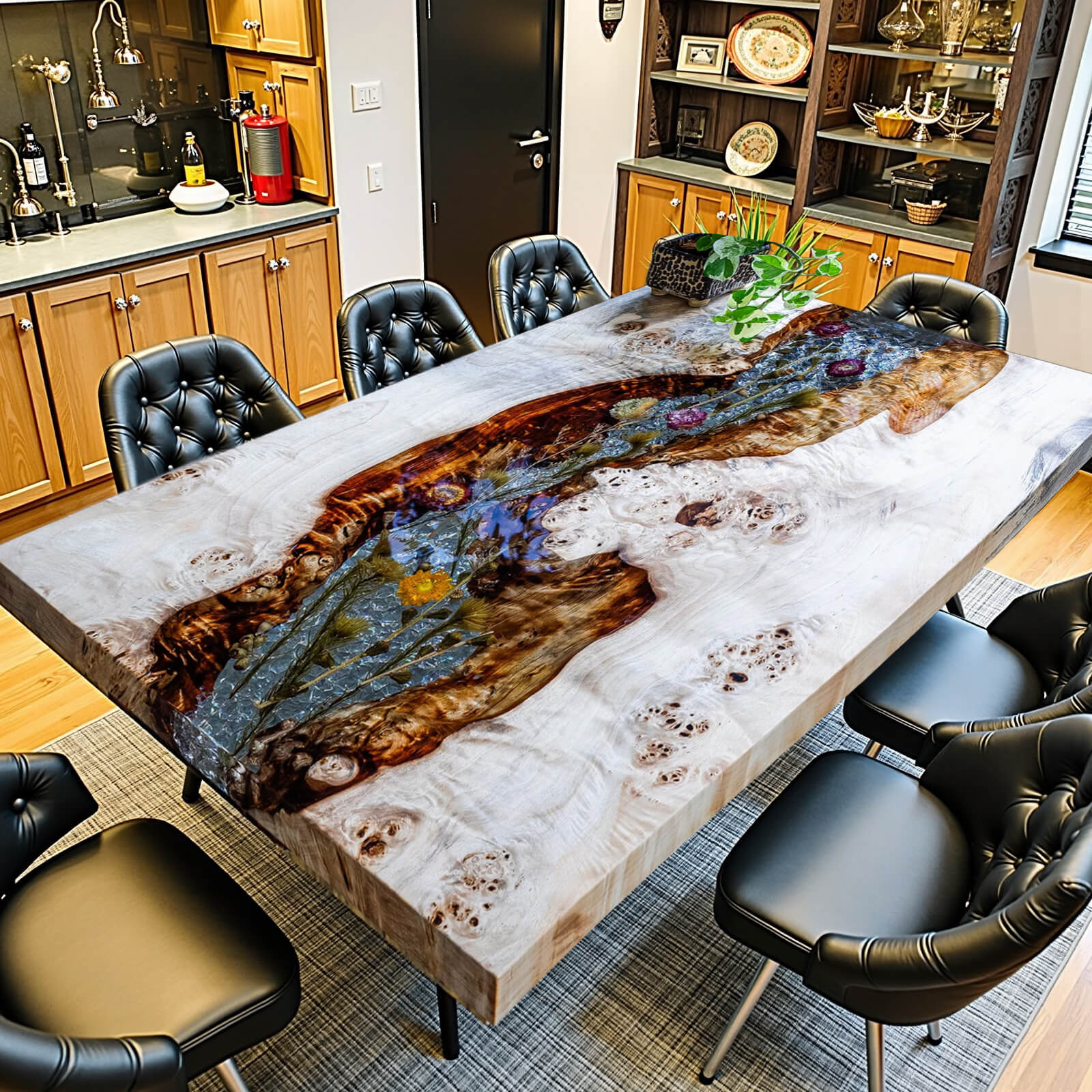
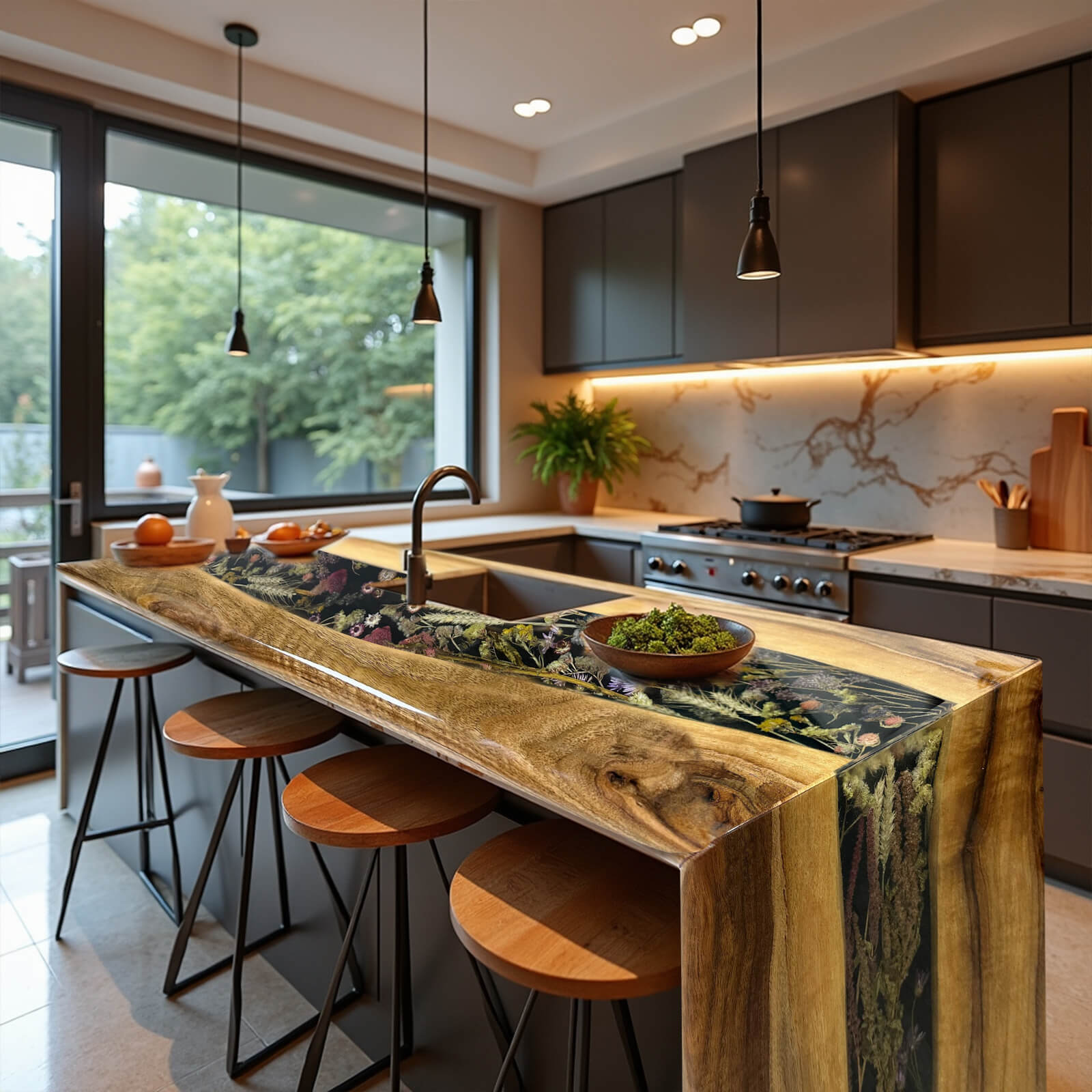
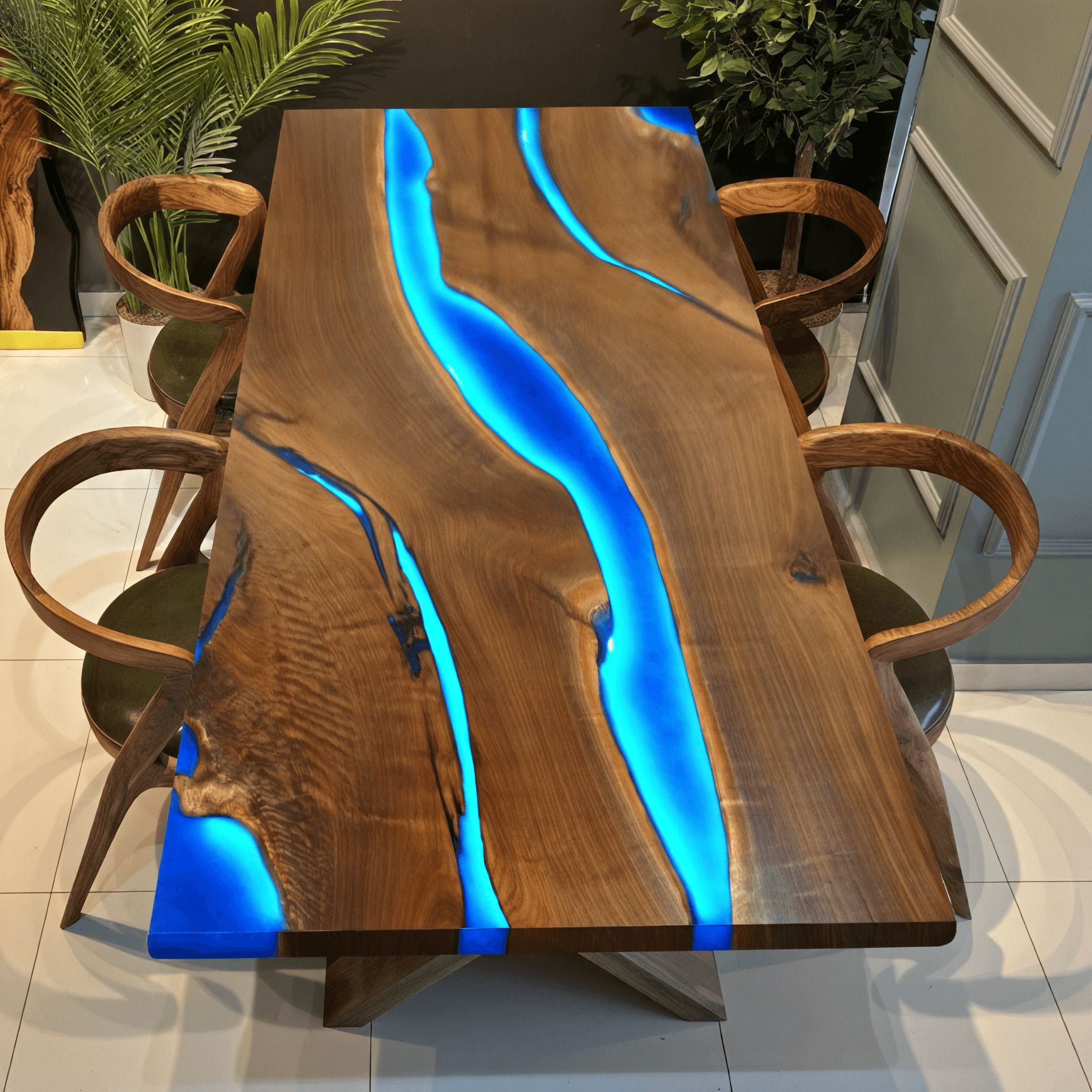
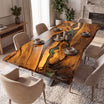
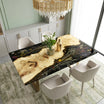
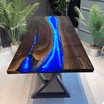
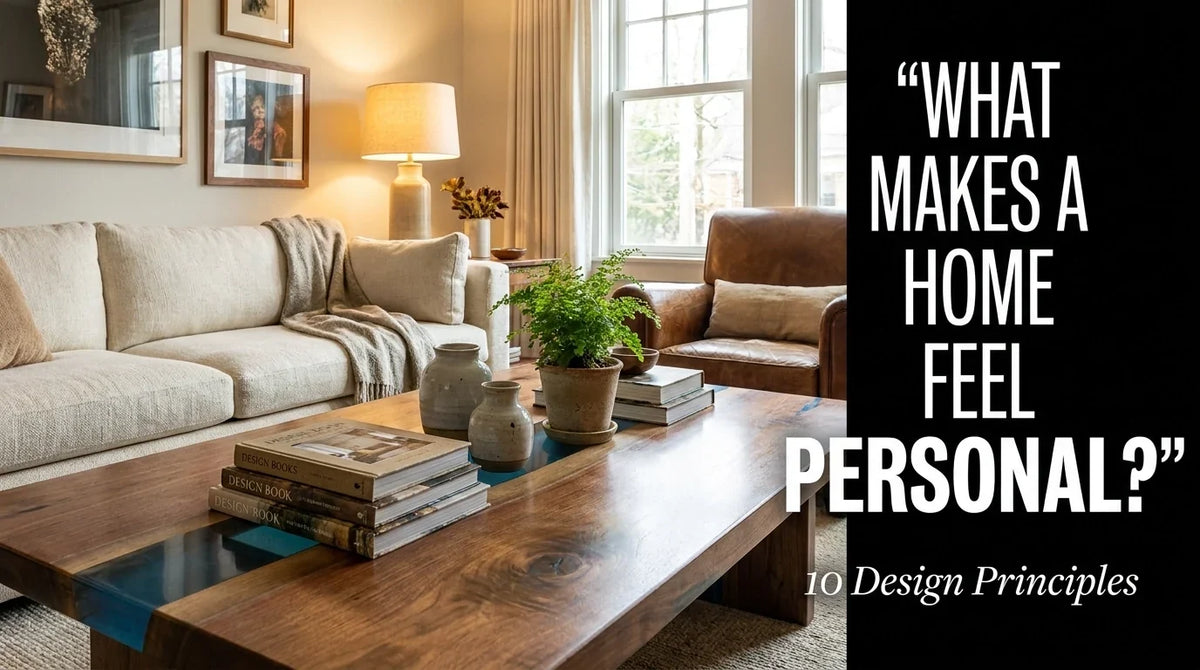
A natural wood slab with carefully integrated epoxy resin can become a visual anchor without requiring the rest of the room to be overly decorated.
This is particularly effective in quiet luxury and organic modern interiors, where one strong material-focused object can carry much of the room's personality.
3. Natural Materials Introduce Variation

One reason natural materials work so well in personalized interiors is that they resist repetition.
A wood slab does not have perfectly uniform grain.
Stone contains natural variation.
Linen has texture.
Leather develops character.
Metal changes with age.
These differences create visual depth.
This is part of the growing appeal of tactile interiors.
A room becomes more interesting when it invites the eye—and sometimes the hand—to explore different surfaces.
Natural wood is particularly useful because its variation is immediately legible.
You can recognize that the tabletop is not simply a printed pattern.
It is a physical material with its own structure and history.
4. Stop Matching Everything
One of the clearest signs of a professionally staged interior is excessive matching.
Matching sofa.
Matching chairs.
Matching side tables.
Matching cabinets.
Matching accessories.
The result can be visually coherent but emotionally flat.
A more personal home often uses collected interiors instead.
The pieces coordinate without matching.
A modern sofa might sit beside a vintage side table.
A contemporary dining chair might surround a rustic wood table.
A modern lamp might illuminate an antique cabinet.
This creates tension.
And tension creates character.
5. Let One Thing Be Unusual
Personal interiors don't need ten statement pieces.
Often, they need one.
It could be:
· an unusual table
· an oversized artwork
· an antique mirror
· sculptural lighting
· an unusual chair
· a dramatic wood slab
This idea is particularly useful for homeowners who prefer minimalist rooms.
Instead of adding more decoration, make one existing element more distinctive.
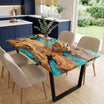
A custom epoxy table can perform exactly this role.
It provides visual interest through material contrast without requiring the entire room to become maximalist.
6. Use “Curated Clutter,” Not Random Clutter

The phrase curated clutter describes an interesting middle ground.
The room isn't empty.
But the objects aren't random either.
A stack of art books might sit beside a ceramic bowl.
A small sculpture might sit on a console.
A vintage object might appear beside contemporary furniture.
The objects feel accumulated over time.
That sense of accumulation is important because real homes rarely appear to have been decorated in a single afternoon.
7. Choose Materials That Age Well

A personal home should be able to change.
Furniture that looks appropriate only for one trend can quickly make a room feel dated.
Materials with visual depth tend to adapt better.
Walnut, oak, stone, leather, linen, metal, and other natural materials can work across different styles because they don't depend entirely on one temporary aesthetic.
The current dark wood revival is a good example.
Dark walnut and espresso-toned woods are increasingly appearing in contemporary interiors because they provide warmth, contrast, and visual weight without requiring ornate styling.
8. Design Around Real Habits
A professionally staged home is often designed around visual presentation.
A personal home is designed around behavior.
Ask:
Where do you actually eat?
Where do you work?
Where do people gather?
Where do you put your keys?
Where do children do homework?
Where do friends sit when they visit?
Where do you read?
Furniture should respond to those habits.
This is one reason custom furniture can be especially useful.
If a room has an unusual footprint, a standard table may force the room to adapt around it.
A custom table can be designed around the room instead.
Design Your Epoxy Table is useful for homeowners who need to consider dimensions, wood, resin, and overall design together rather than simply selecting a fixed piece from a catalog.
9. Keep Some Imperfection

Personal spaces don't need to look untouched.
A small variation in wood grain.
A natural edge.
A vintage object with patina.
A handmade ceramic with slight irregularity.
These details create authenticity.
Importantly, this is different from designing a room to look intentionally messy.
The objective is authentic imperfection.
The room should feel refined but not manufactured.
10. Give the Home a Story
Ultimately, personalization comes from narrative.
Ask yourself:
Why is this table here?
Why did you choose this artwork?
Where did that chair come from?
Why does this material matter to you?
The best homes have answers.
This is why heirloom furniture can be so powerful.
A table can begin as a design purchase and eventually become part of the family's history.
That is something a perfectly staged room cannot manufacture.
How to Make Your Home Feel More Personal
If your home currently feels too generic, don't redesign everything.
Start with three changes:
First: remove a few things that exist only because they are trendy.
Second: introduce one material with strong natural character.
Third: add one object that has genuine personal meaning.
A custom table can combine the second and third.
The natural wood provides material authenticity.
The custom dimensions and design provide individuality.
And over time, the table accumulates memories.
For homeowners looking for a ready-made starting point, CREATEATABLE Best Sellers provides examples of custom epoxy and solid-wood designs.
For those who already know their preferred material direction, exploring the Wood Type options can help narrow the visual character before choosing dimensions and design.
The Difference Between Beautiful and Personal
A beautiful home can be created with a shopping list.
A personal home usually takes longer.
It accumulates.
It changes.
It reflects preferences, memories, habits, and relationships.
That is why the future of interior design may not be about making homes look more perfect.
It may be about making them more recognizable.
The best compliment for a home may no longer be:
“It looks like a magazine.”
It might be:
“This feels exactly like you.”